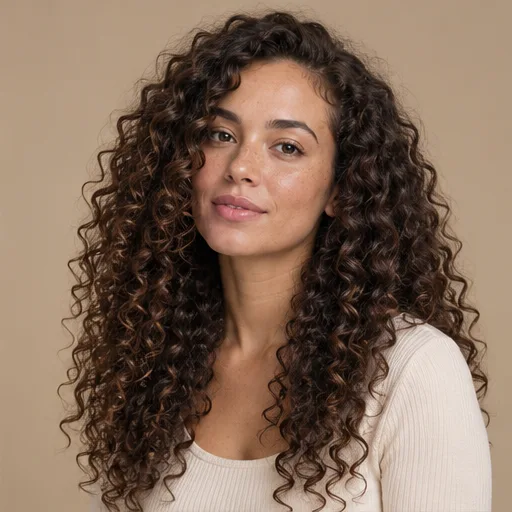
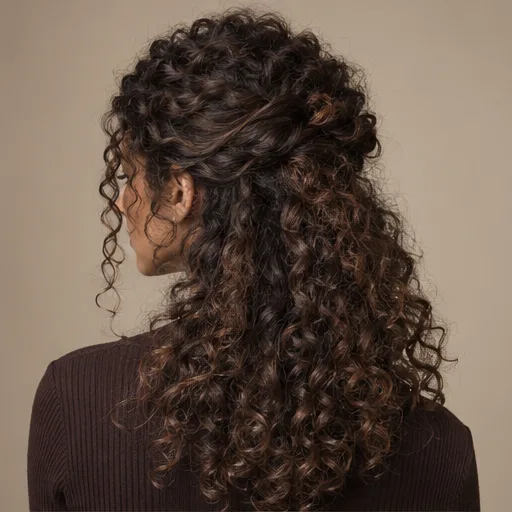
Texture & density
Choose a wavy haircut around your real pattern
Compare wavy lobs, longer layers, soft shags and shorter crops with guidance on uneven patterns, air-drying, fringe and grow-out.
Upkeep: Assess the shape after your ordinary drying routine. Refresh the specific area that stops sitting as intended, and preserve shorter pieces if the goal is a less layered outline.
Effort is a planning estimate. The specific option and your routine change the commitment.
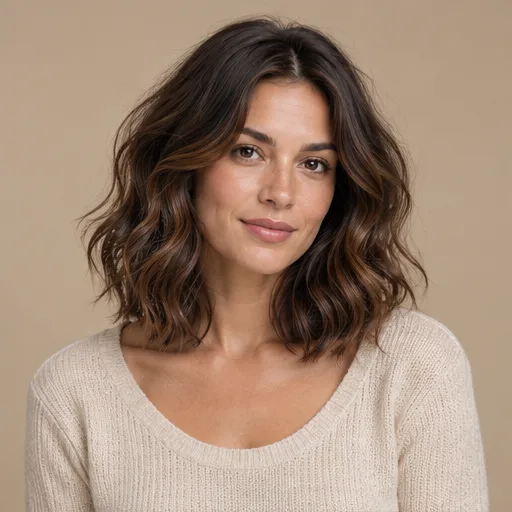
The starting point
Choose a wavy haircut from the way your hair dries on an ordinary day, not its most polished or most cooperative moment. Waves can be looser in some areas and stronger in others. Start with the dry outline you want, then decide how much layering, fringe and deliberate styling you are willing to use to support it.
Compare the visual directions
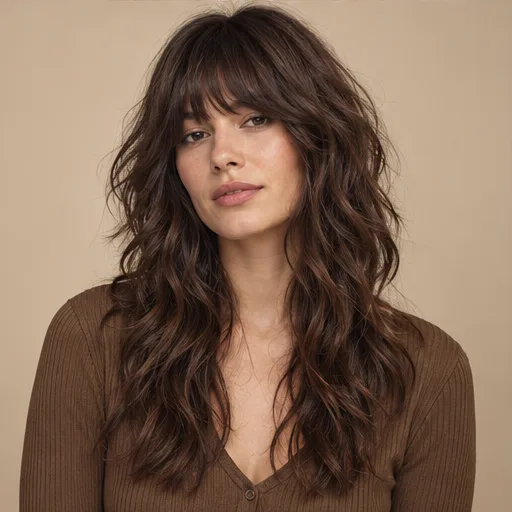
Concept references for shape and placement. Use the differences you like in your consultation; these are not step-by-step results or predictions for your hair.
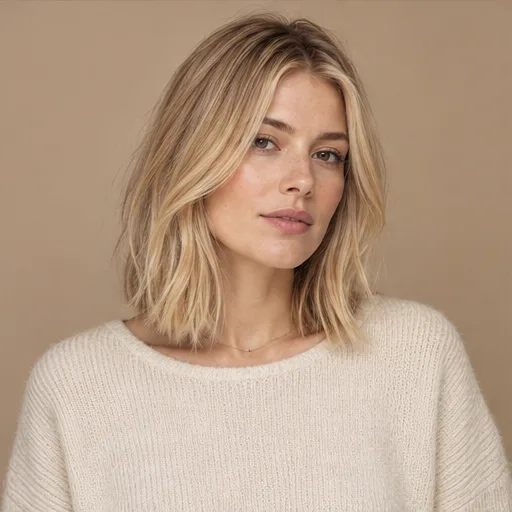
Compare your options
Wavy lob with a substantial edge
A clear outline gives loose texture a defined boundary. Choose this when you want movement without many short layers. Discuss what happens where the hair meets your shoulders and whether that outward bend is welcome.
Ask about: Keep a coherent perimeter at this dry landmark and avoid more layering than the shape needs.
Long, softly layered waves
Retain length while allowing some movement through the body. Longer layers can preserve tying options, but the shortest front pieces still need to be agreed separately.
Ask about: Keep the lower edge full enough for my preference and show which pieces will not reach my ponytail.
Soft wavy shag
More visible layers and often fringe create a deliberately separated shape. Choose it if you enjoy texture in the outline, including days when the waves are less uniform.
Ask about: I want this amount of layering in my ordinary wave pattern, with a manageable dry fringe.
Short wavy crop or bixie
A shorter outline can make the natural bends part of the shape. Growth direction around the ears, crown and fringe becomes especially relevant; do not assume the shortest finish will be the easiest.
Ask about: Show how the sides and front will settle without forcing my waves into a different pattern.
Show the variation instead of hiding it
Take a photograph after your usual wash and dry routine, including the back if possible. Tell the stylist which areas become straighter, which wave strongly and where the hair separates. A photo of an unusually elaborate finish can conceal the information needed to plan an everyday cut.
Explain how you want to wear the texture. You might prefer loose bends with a little variation, a more defined wave pattern or a smooth finish some days. These are different targets. If you frequently brush the hair after drying, mention that; a reference built from defined wave groups may not describe your normal appearance.
Balance perimeter and layers
A more substantial perimeter can create a clear lob or long outline. Soft layers add movement while preserving much of that edge. A stronger shag makes separate lengths and a less uniform silhouette part of the look. Compare these options in wavy references rather than assuming that the word layered tells you enough.
The amount of hair matters. With lower density, ask how much will remain through the ends after layering. With dense waves, discuss where the width or weight should sit. Shortening a section may change how it bends, but that is not a guarantee that every part will form a stronger or identical wave. Leave room for a dry check and individual adjustment.
Treat fringe and front pieces separately
The front can have a different pattern from the back. A short fringe may bend upward, open in the middle or travel sideways according to its own growth direction. Decide whether you want to wear that behaviour, reset the fringe or keep it long enough to move away.
A long face frame offers movement while retaining more tying options. Curtain fringe gives a stronger front shape but can require direction after washing. Tell the stylist whether the front is the one section you are happy to style, or whether the whole haircut needs to work with very little intervention.
Agree on a baseline routine
Use your regular wash-day approach as the baseline, then ask for one small change at a time. After detangling in the way appropriate to your hair, establish the part and encourage the pattern with the styling method demonstrated. Let it set before deciding which areas need adjustment. Repeatedly handling partly dried waves can make it harder to judge what the cut is actually doing.
If you use a diffuser, ask for a technique suited to your dryer and preferred finish. If you air-dry, discuss the full drying period separately from hands-on effort. A routine with few active steps may still take a while to dry. Do not choose an appointment finish that only works with tools or time you do not want to supply.
For general care, the American Academy of Dermatology advises gentle handling, conditioning and avoiding aggressive towel rubbing. Its guidance supports a gentler routine, not a promise that one product or technique will create uniform waves. aad.org source
Use the follow-up to refine behaviour
If the cut feels uneven after several normal styling attempts, document the dry result and explain which area is troublesome. The issue could be the chosen shape, the way the section bends or the finish you expected. Ask about the specific section before shortening the whole cut.
During grow-out, preserve the pieces you want to catch up and decide whether the next destination is a longer lob, long layers or a softer version of the existing shape. The hair does not need to be perfectly symmetrical in individual waves for the overall silhouette to feel balanced.
Take this to your appointment
A starting point for your brief
My waves are strongest at ___ and looser at ___. I usually ___ after washing and want a dry outline that ___. Keep the shortest layer at ___ and the front long enough to ___. Please demonstrate an ordinary finish and explain how to refine any uneven areas after I try it at home.
Use this in my briefAdapt the wording to your own hair, preferences and history.
Common questions
Will layers make every part of my hair wavier?
Not necessarily. A cut changes shape and weight distribution, but your pattern can still vary around the head. Ask for a dry outline that works with that variation rather than a guarantee of matching waves.
Is an air-dried cut always low effort?
Hands-on effort and drying time are different. You may have only a few styling steps but still need time for the hair to settle. Discuss both when choosing the routine.
Sources & further reading
Sources accessed 3 October 2026. These publishers have not reviewed this guide. Our editorial standards explain our method.