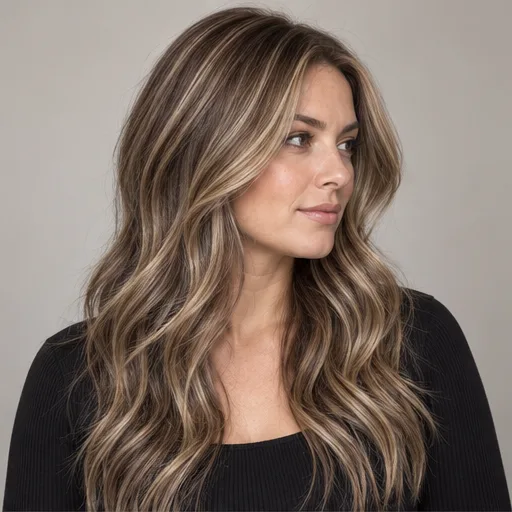
Hair color
Root shadow, balayage and ombré: compare the transition
Choose where depth becomes brightness, from a darker root with blonde lengths to soft painted ribbons or a stronger ombré transition.
Upkeep: A softer root boundary can change how regrowth appears, but tone, treated lengths and the chosen contrast still need a maintenance plan. No label guarantees fewer appointments.
Effort is a planning estimate. The specific option and your routine change the commitment.
The starting point
A root shadow focuses on the darker area near the scalp. Balayage describes a painting approach that can create varied placements. Ombré describes a more overall dark-to-light gradient. A colorist may combine these ideas; your useful decision is where the lightness begins and how continuous or contrasting that boundary should look.
Compare the visual directions
Concept references for shape and placement. Save the specific look you like and open its details. These are starting points for a consultation.
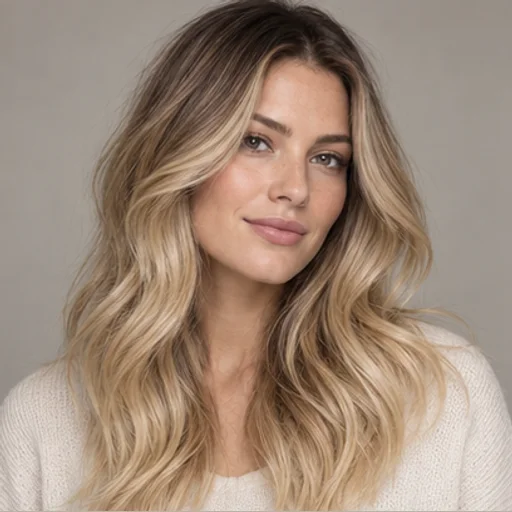
Darker root with blonde lengths
A darker upper zone connects into noticeably lighter lengths.
Styling effort varies · Long lengthDetails & styling for Darker root with blonde lengths
Choose it for: Blonde contrast with an intentionally deeper scalp area.
Think about: A root shadow and your untouched natural color are not necessarily the same thing. Ask what work is proposed at the root.
A routine to discuss
- Agree on the depth and length of the darker zone.
- Discuss the appearance if you extend the time before the next appointment.
Upkeep: Root-transition work and blonde-tone refresh may be different services.
Your salon request: I want the root to stay visibly deeper for about ___ of the upper shape, then connect into this brightness.
Use this look in my brief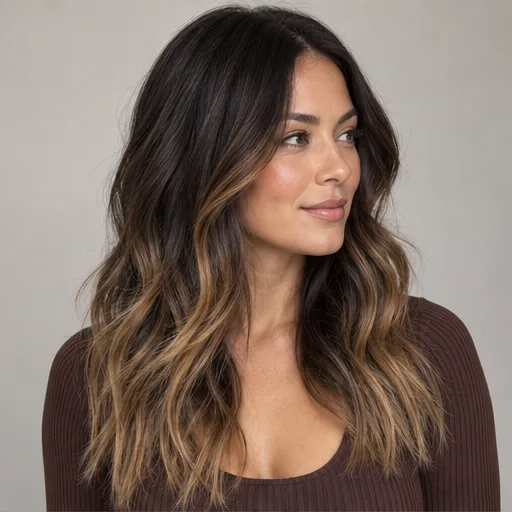
Soft brightness through the lengths
Lighter areas become more visible through the mids and ends while the upper hair retains depth.
Styling effort varies · Long lengthDetails & styling for Soft brightness through the lengths
Choose it for: A gradual dimensional direction rather than equal brightness from scalp to ends.
Think about: Balayage names a method; this pictured placement still needs its own map. It does not automatically mean minimal upkeep.
A routine to discuss
- Identify the first point where you want obvious lightness.
- Check the front, back and tied-up placement before agreeing to the service.
Upkeep: Ask what supports the root transition and what refreshes the lengths.
Your salon request: Keep depth above ___ and build soft brightness below, with the front ___.
Use this look in my brief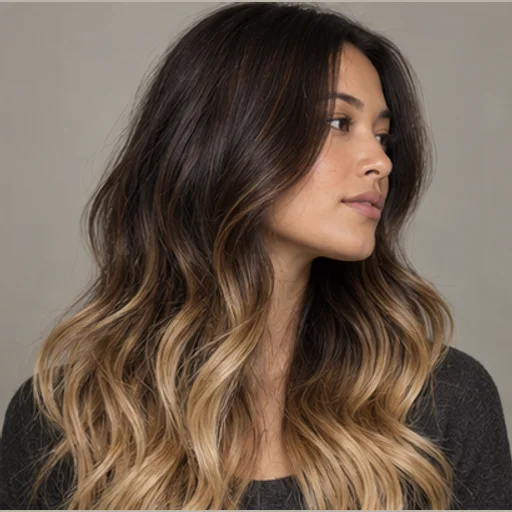
Dark-to-golden ombré
The upper half stays predominantly dark while the lower lengths become broadly lighter.
Styling effort varies · Long lengthDetails & styling for Dark-to-golden ombré
Choose it for: A more continuous dark-to-light progression than separate narrow ribbons.
Think about: The transition point changes with a haircut. Shortening the lighter ends can alter the whole balance.
A routine to discuss
- Point to the exact landmark where the transition should begin.
- Coordinate the color map with any planned cut or layers.
Upkeep: Discuss the preferred transition as it grows and the tone of the light ends.
Your salon request: Keep the upper area dark, with the main change beginning at ___ and the lower lengths this bright.
Use this look in my brief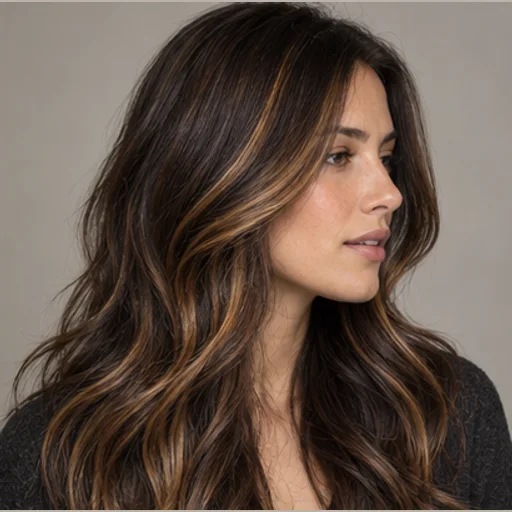
Caramel ribbons on a dark brunette base
Selected warm lighter ribbons remain separated by substantial dark hair.
Styling effort varies · Long lengthDetails & styling for Caramel ribbons on a dark brunette base
Choose it for: Brunette dimension that keeps the darker background visible.
Think about: Curl grouping and parting change which ribbons show. A full-head lighter result would be a different placement choice.
A routine to discuss
- Show the colorist your usual part and tie-back.
- Map the ribbon width and where each first bright section starts.
Upkeep: Maintain the desired contrast as well as the tone of the lighter pieces.
Your salon request: Keep most of my depth and place warm ribbons at ___, with this width rather than an overall blonde result.
Use this look in my briefCompare your options
Shadowed root with brighter lengths
The darker root area connects into lighter hair below. Choose it when you want visible blonde without an equally bright scalp boundary.
Ask about: How deep and how long should the darker root zone be?
Soft ribbons through the mids and ends
Brightness is broken into selected areas rather than one horizontal change. Natural or existing depth remains between them.
Ask about: Where does each ribbon begin, and what happens underneath?
More defined ombré
The upper section reads mostly darker and the lower lengths mostly lighter. The change can be soft or deliberately noticeable.
Ask about: Where should the transition begin relative to my jaw, shoulders and shortest layers?
Reverse direction
A lighter upper area moves toward darker ends or panels. It can create strong contrast, but the long-term color-change plan matters.
Ask about: How reversible is the proposed darker length, given what I may want next?
Describe the transition in ordinary words
Use a reference to point out the darkest area, the first clear brightness and the lightest ends. Then say whether you like a continuous gradient or separate ribbons. “Lived in” or “melted” may mean different things to different people.
A short bob has less distance over which to show a transition than long hair. Shortening the haircut later can remove much of the lighter area, changing the balance even when the color service is untouched. Coordinate the cut and color plan.
Check the pattern in your everyday finish
Long polished waves display light and dark in broad bands. Straight hair may make a boundary look clearer; curls group the placement differently. Show your air-dried or usual styled hair during the consultation rather than judging only a salon-wave photo.
A face frame can begin higher than the brightness through the back. Decide whether you want that front emphasis. If the hair is normally tied up, check the underside so the reveal is intentional.
Plan grow-out and refresh separately
Ask which future service maintains the root transition and which changes the tone through already colored lengths. These may be different appointments. Also ask what the result looks like if you leave it alone for longer.
For someone moving away from frequent root work, an agreed natural-growth boundary may matter more than reaching a very pale blonde immediately. A strong ombré can leave a visible design line as it grows; some readers like that contrast and others prefer dispersed brightness.
Use the consultation to establish limits
List existing lightening, dark dyes, color deposits and chemical services as accurately as you can. If you do not know a product or date, say so rather than guessing. A colorist may need a staged plan or a different target.
This is an appearance comparison, not a home formula. Follow product directions and discuss reactions or scalp irritation before coloring; FDA guidance is linked below. A darker-looking root in an image does not prove that no chemical work was done there.
Take this to your appointment
A starting point for your brief
I want the dark area to reach ___ and the clearest brightness to start at ___. I prefer separate ribbons / a continuous gradient. Please compare the result with my usual texture, part and future haircut.
Use this in my briefAdapt the wording to your own hair, preferences and history.
Common questions
Can balayage and a root shadow be used together?
Yes, the terms describe different parts of the plan. Ask the colorist what is being done at the roots and what is being done through the lengths.
Will this eliminate regrowth appointments?
No technique guarantees that. The visible contrast with your natural growth, the tone you want to maintain and your tolerance for change determine the plan.
Sources & further reading
Sources accessed 3 October 2026. These publishers have not reviewed this guide. Our editorial standards explain our method.