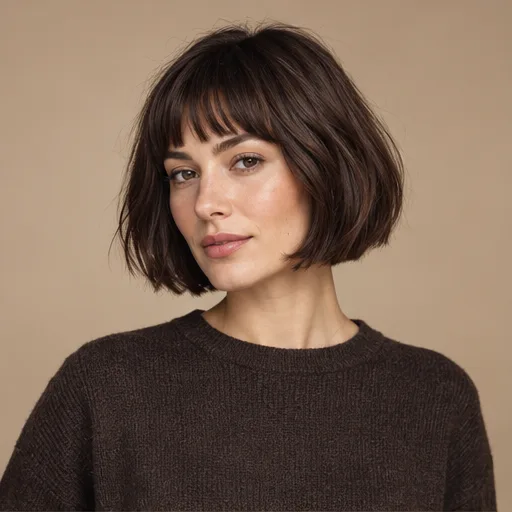
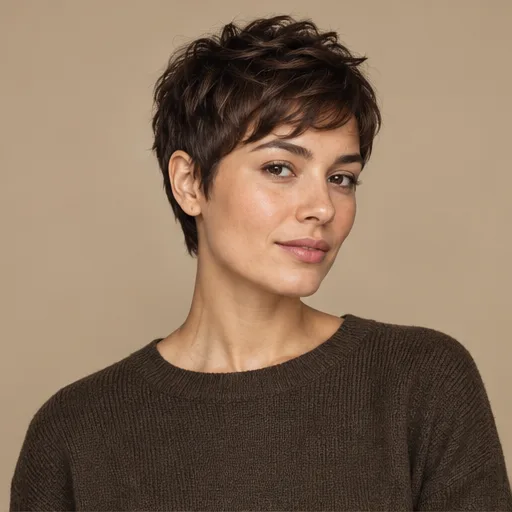
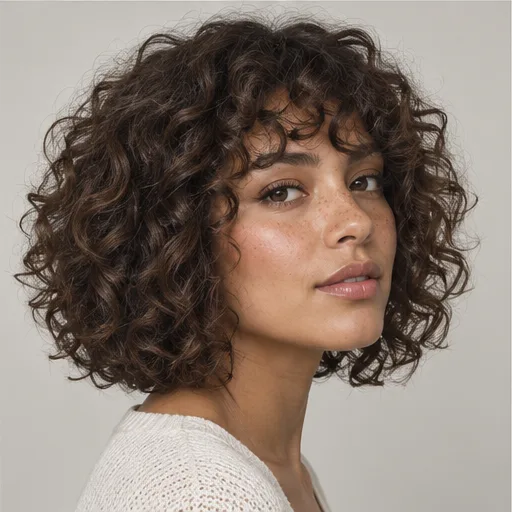
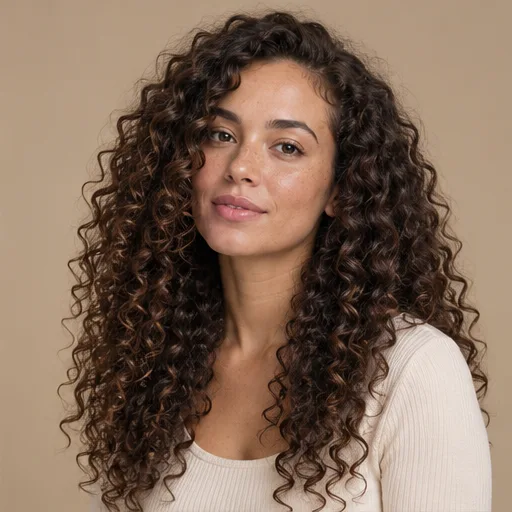
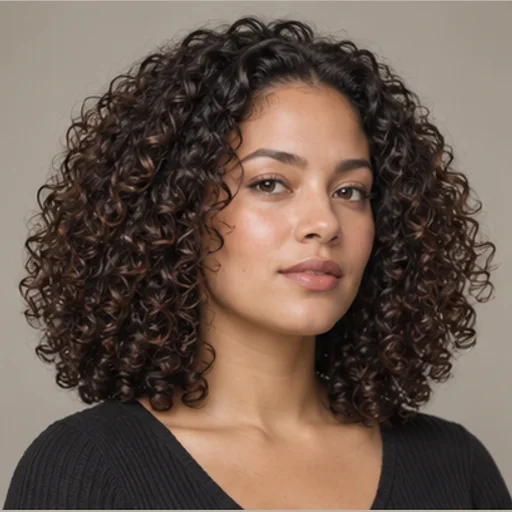
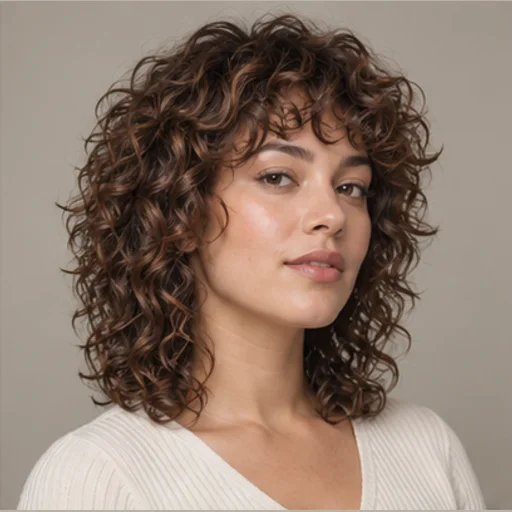
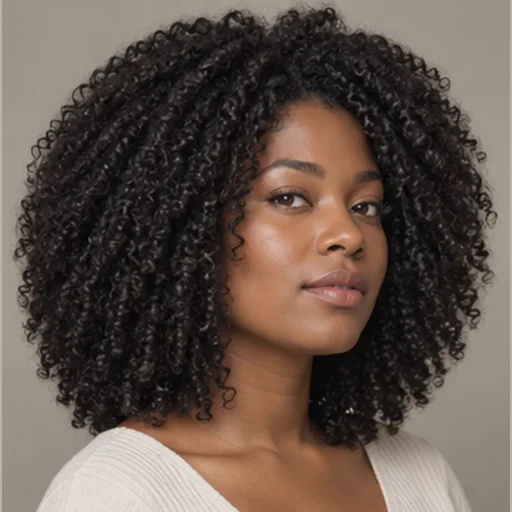
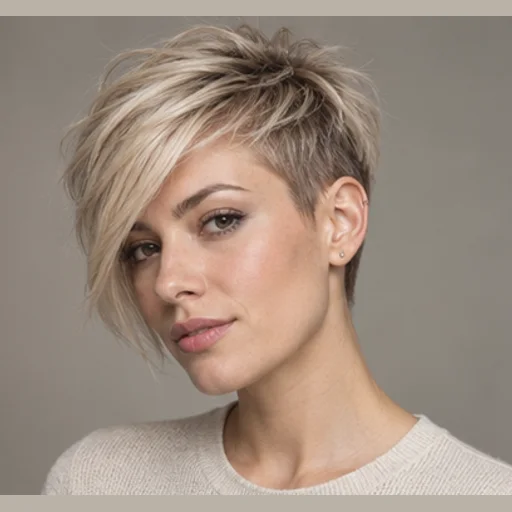
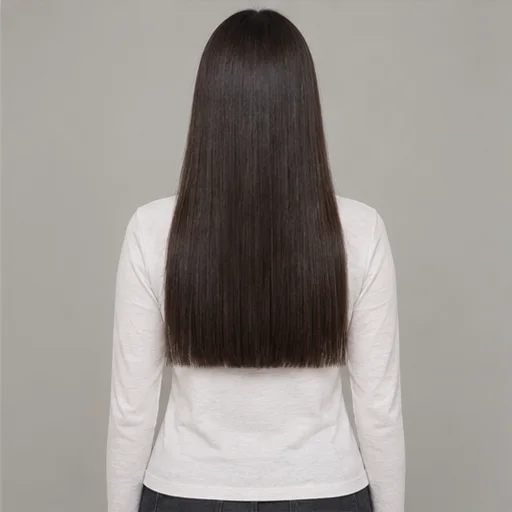
Hairstyle concepts, with individual planning estimates. Color does not determine styling effort. Filter by the texture shown; a stylist can discuss adaptations for yours.
Haircuts Save idea
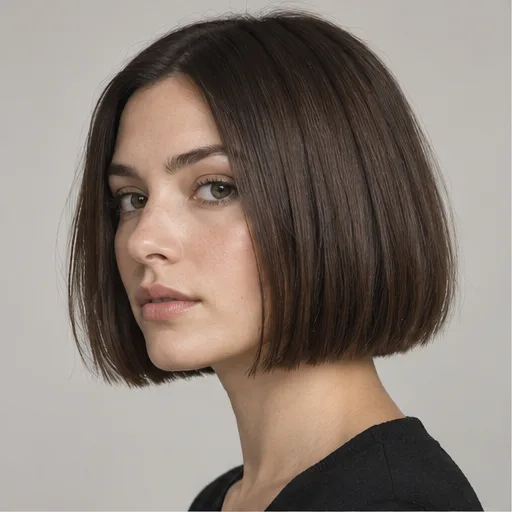
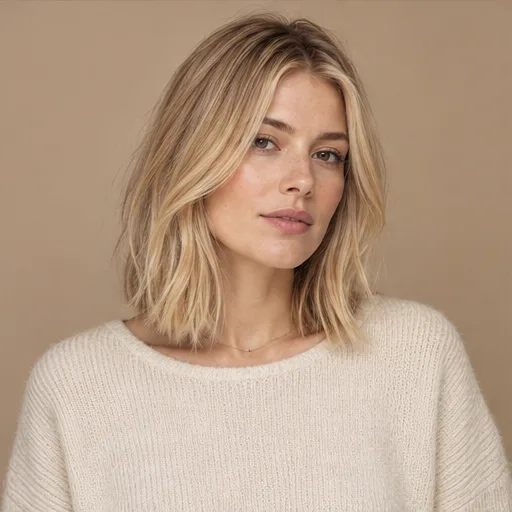
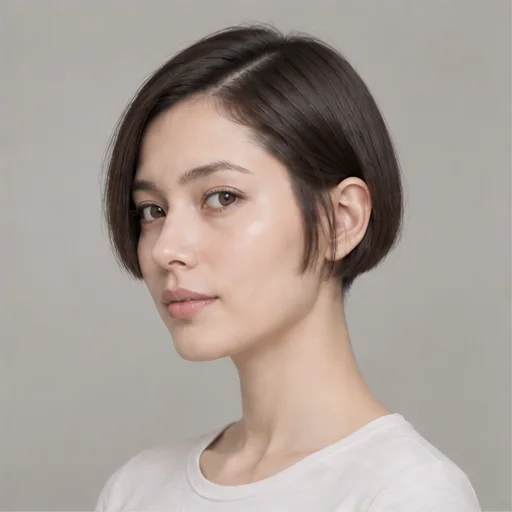
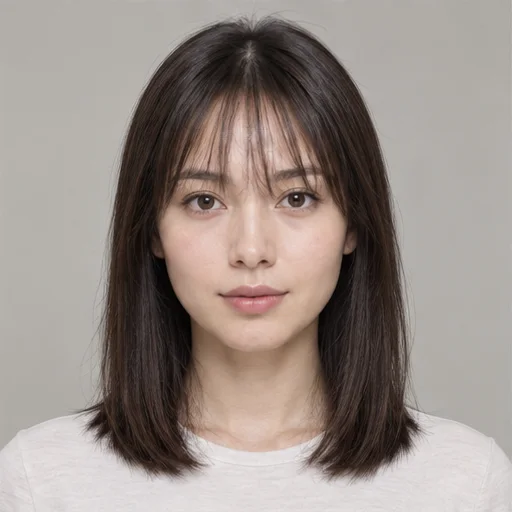
The edge stays level from front to back, making the perimeter the strongest feature. It gives a different outline from a stacked or forward-sloping bob.
Moderate styling effort · Short length Details & styling for A level jaw-length bob Choose it for: A clear edge you can wear straight or with your natural bend.
Think about: A tucked side changes the visible length. Ask to see both tucked and untucked before choosing the final landmark.
A routine to discuss Choose the part before drying so the edge settles in the direction you wear it. Dry the roots first, then guide the ends down with a brush or your fingers rather than repeatedly turning them under. Upkeep: Refresh when the line loses the edge you wanted; do not confuse a tidy perimeter with adding layers.
Your salon request: Keep a level dry edge at my ___. Preserve ___ density at the ends and show how it sits tucked behind my ears.
Use this look in my brief Haircuts Save idea
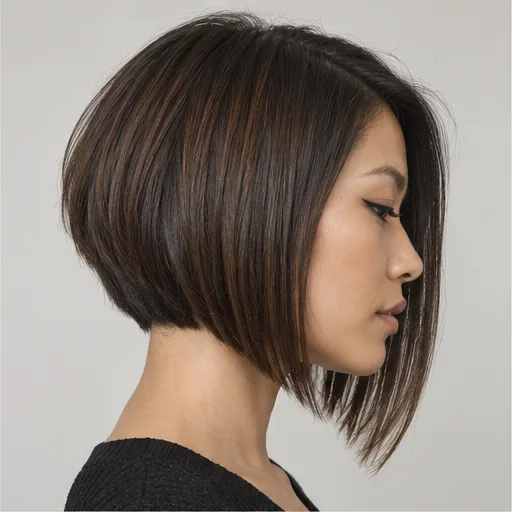
A shorter back slopes toward longer front pieces. The diagonal outline comes from the length difference, while stacking at the back is a separate choice.
Moderate styling effort · Short length Details & styling for Longer-front angled bob Choose it for: Keeping a face-framing front while opening the nape.
Think about: The longest front pieces may still fall out of a ponytail. Check the shortest back section, not just the front, for tying up.
A routine to discuss Set your usual part and dry the nape in its growth direction. Guide front pieces forward or tuck one side; compare both finishes before using extra heat. Upkeep: Ask whether the next cut will restore the slope or move toward a level lob.
Your salon request: I want a visible front-to-back slope, with the front at ___ and back at ___. Please discuss graduation separately.
Use this look in my brief Haircuts Save idea
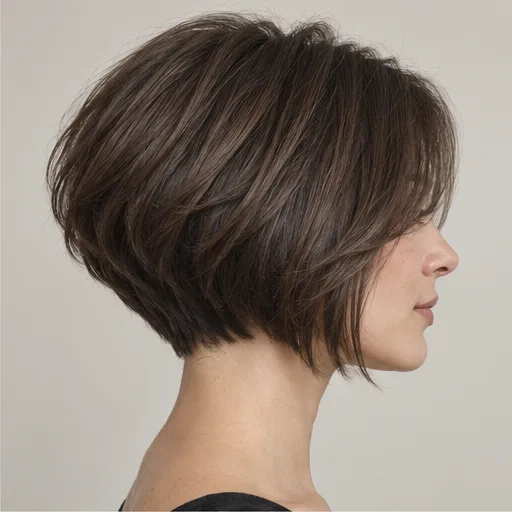
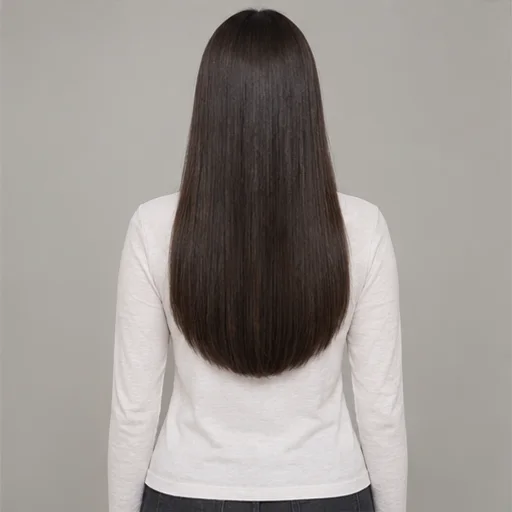
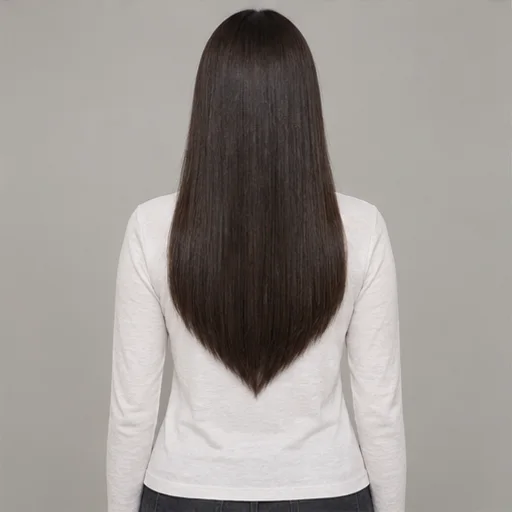
Shorter stacked layers support a rounded shape above the nape. This back view is the useful reference: a front photograph alone cannot show the weight placement.
Moderate styling effort · Short length Details & styling for Rounded graduated back Choose it for: Fullness concentrated behind the head rather than a heavy level edge.
Think about: Strong nape growth patterns can change how the shortest layers sit. Discuss the back in an ordinary dry finish.
A routine to discuss Dry the roots at the back with controlled direction. Use a small brush only where you want curvature; leave the ends soft rather than making every section into a curl. Upkeep: The rounded back can need reshaping before the front feels long. Agree what should grow and what should stay defined.
Your salon request: Place the fullest part of the back at ___. Keep the nape ___ and tell me how much styling that curve needs.
Use this look in my brief Haircuts Save idea
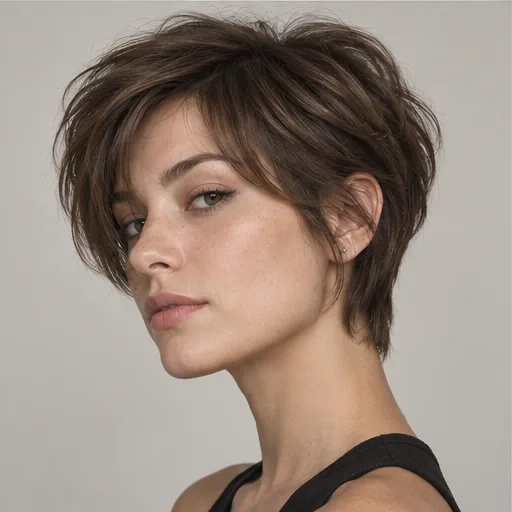
Longer pixie sections overlap around the ears and nape, creating a softer outline than a close crop. The fringe can remain separate from the side length.
Moderate styling effort · Short length Details & styling for Soft ear-length bixie Choose it for: Short hair with some pieces to tuck and move.
Think about: Hair that kicks outward around the ears may need a deliberate finish. Extra length does not automatically make the cut easier.
A routine to discuss Choose whether the front falls across or away from the face. Work a small amount of styling product through the ends with fingertips, keeping the root area light. Upkeep: Review the outline at the ears and nape as it grows toward a bob.
Your salon request: Leave enough length at the ears to ___, keep the nape ___ and make the fringe finish at ___.
Use this look in my brief Haircuts Save idea
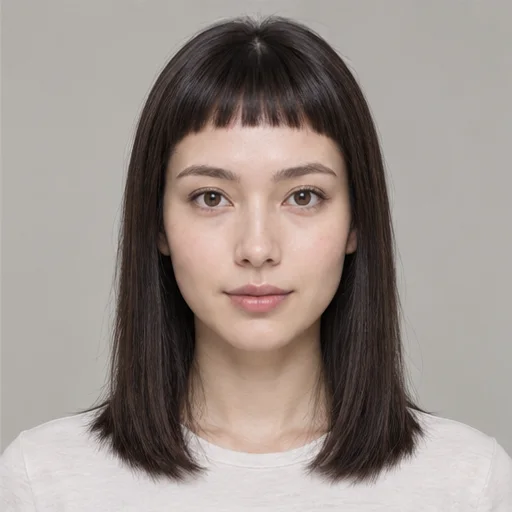
A compact bob and a substantial straight-across fringe create two visible lines. The fringe commitment is separate from the choice of bob length.
Moderate styling effort · Short length Details & styling for Chin bob with a full fringe Choose it for: An intentionally framed face with a compact perimeter.
Think about: A full fringe concentrates hair at the forehead. Ask about density, growth direction and what happens after sleeping or exercising.
A routine to discuss Set the fringe roots in the direction they need while damp. Let the sides settle without overworking them; finish the fringe separately from the bob edge. Upkeep: The fringe can need attention before the bob perimeter needs another cut.
Your salon request: Keep the bob edge at ___ and the fringe at ___ when dry. Explain the simplest way to reset my fringe roots.
Use this look in my brief Haircuts Save idea
A cropped perimeter leaves the upper sections long enough for separated texture. You can change the direction of the front without changing the whole haircut.
Low styling effort · Short length Details & styling for Textured crop with a soft front Choose it for: A compact silhouette with a flexible top.
Think about: A reference with lifted texture can look flatter without styling. Agree the length using your usual finish.
A routine to discuss Dry the roots in the chosen direction. Warm a small amount of product between fingers and separate only the ends that need definition. Upkeep: The outline can lose definition even when daily styling remains short.
Your salon request: Keep the top long enough to wear ___, expose or cover the ears by ___ and finish the nape ___.
Use this look in my brief Texture & density Save idea
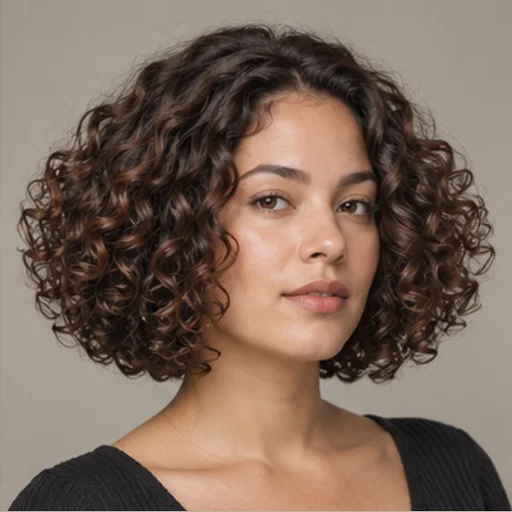
The dry outline rounds around the cheeks and jaw, with curls forming the fringe. The shortest front curls and the lowest perimeter need separate agreements.
Moderate styling effort · Short length Details & styling for Rounded curly bob with fringe Choose it for: A contained curly shape with visible framing at the forehead.
Think about: Different curl patterns can spring to different heights. A wet length or stretched curl is not the finished landmark.
A routine to discuss Apply your usual styling method in manageable sections. Arrange the front curls in their intended direction, allow them to dry fully, then separate only where the shape needs it. Upkeep: Review the shape in the curl finish you actually wear, including the fringe on a second day.
Your salon request: Keep the lowest dry curl at ___ and the shortest fringe curl at ___. Concentrate fullness around ___ and preserve ___.
Use this look in my brief Texture & density Save idea
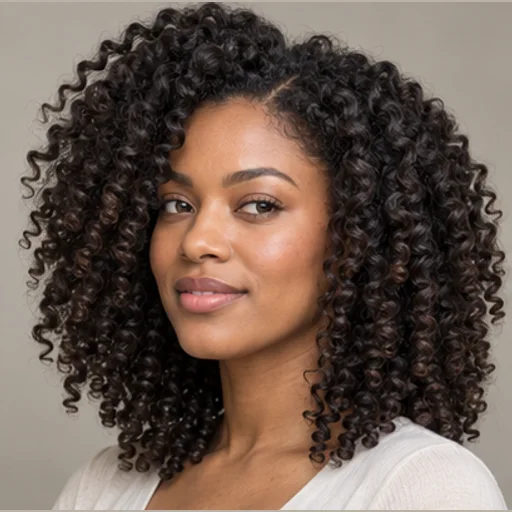
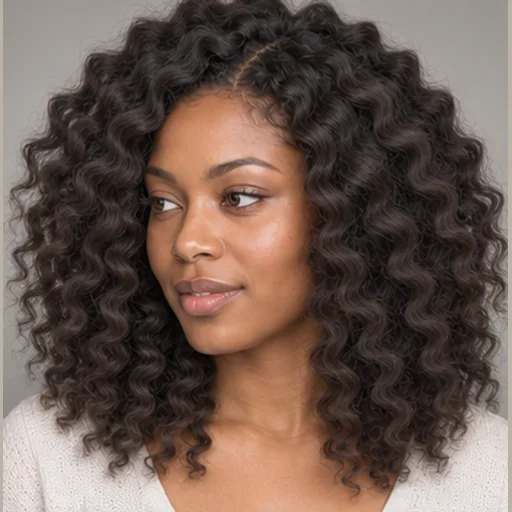
Length remains the dominant feature while selective layers allow curls to sit at different heights. The result depends on where the shortest layers begin.
Moderate styling effort · Long length Details & styling for Long curls with a retained perimeter Choose it for: Keeping long hair while making room for movement.
Think about: Aggressive layering can make the ends look sparser. Explain which lower sections must keep their weight.
A routine to discuss Detangle gently with a method suited to your curl pattern. Style in sections so the underneath receives attention, then let the hair dry before deciding where more separation is needed. Upkeep: Check the balance between the lower perimeter and crown; a trim and a major layer change are different requests.
Your salon request: Keep the bottom at ___ when dry. Begin the shortest useful layers at ___ and retain fullness through ___.
Use this look in my brief Texture & density Save idea
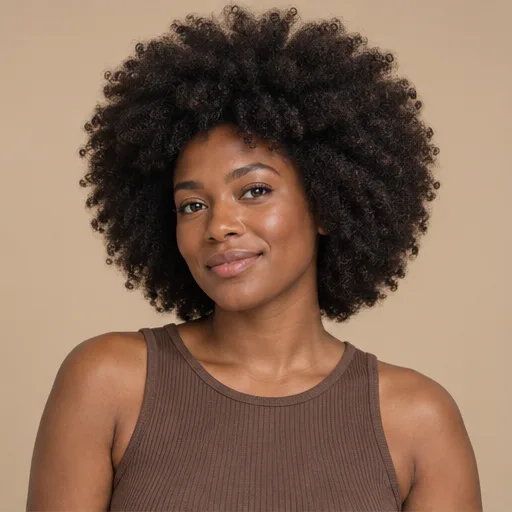
The interest is the rounded outer silhouette rather than a defined part or a tapered side. Its dimensions change with shrinkage and the finish you choose.
Moderate styling effort · Medium length Details & styling for Rounded natural coily outline Choose it for: An even, sculpted shape that keeps fullness around the head.
Think about: A picked-out reference and a defined-coil finish do not have the same outline. Bring a photograph of the finish you wear most.
A routine to discuss Prepare and detangle using your normal conditioned routine. Shape gently from the roots where needed, leaving the ends alone when they are already sitting well. Upkeep: Review the cut in a consistent dry finish so uneven shrinkage is not mistaken for a cutting error.
Your salon request: Assess the shape in my usual ___ finish. Keep fullness at ___ and avoid taking the dry outline shorter than ___.
Use this look in my brief Texture & density Save idea
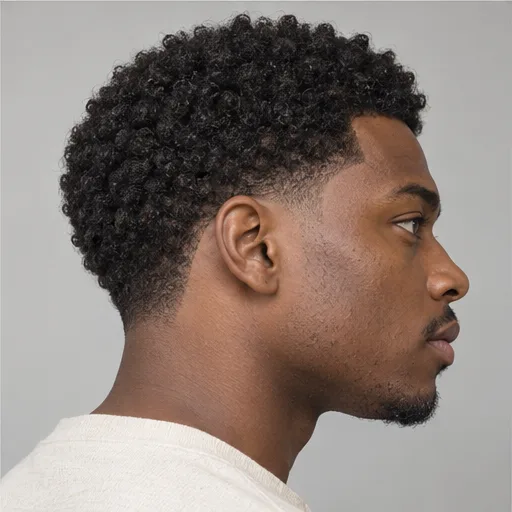
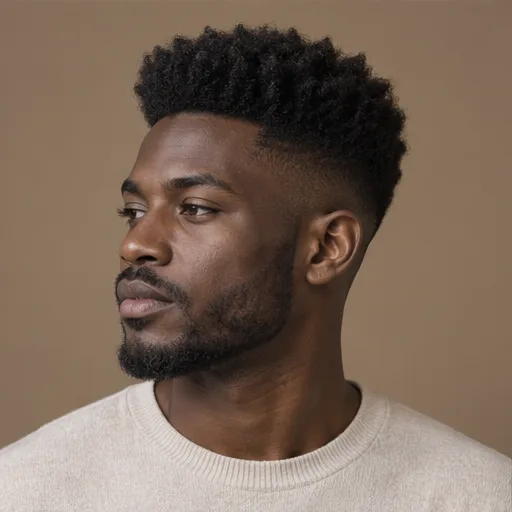
Most fullness stays on top while shorter temple and nape sections define the edge. The taper is localized rather than a broad fade up the sides.
Moderate styling effort · Short length Details & styling for Full coils with a localized taper Choose it for: A natural top with a clearly outlined perimeter.
Think about: The edge may need attention before the top needs shortening. Ask for those services separately.
A routine to discuss Arrange or define the top using your usual routine. Check the side profile after drying; avoid pulling the edges tight to imitate a shorter haircut. Upkeep: Agree whether the next visit is an edge tidy, a shape adjustment or both.
Your salon request: Preserve ___ length on top. Keep the taper confined to ___ and leave the shortest finish at ___.
Use this look in my brief Haircuts Save idea
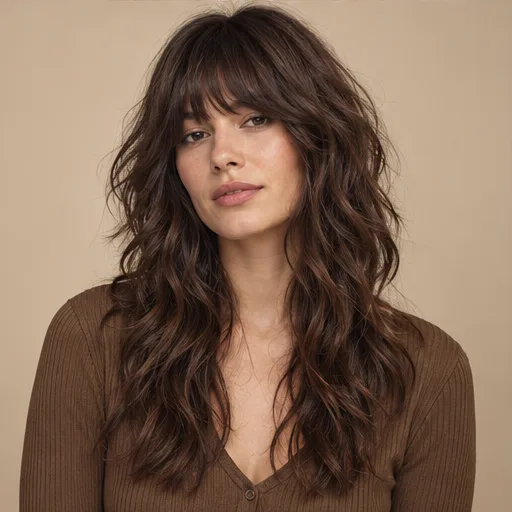
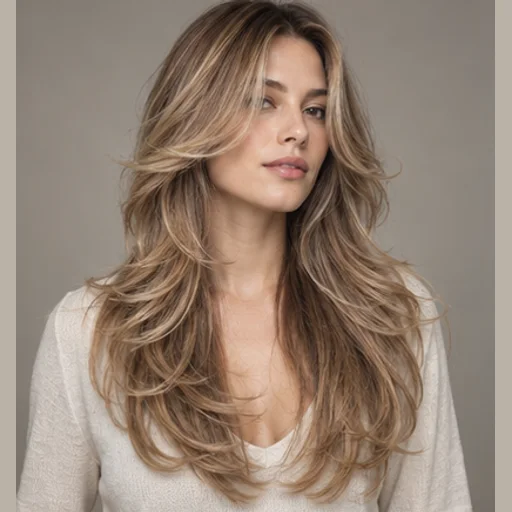
Face-framing layers and a fuller fringe sit above a long perimeter. The outline can be soft even when the front has substantial layering.
Moderate styling effort · Long length Details & styling for Long shag with a full fringe Choose it for: Movement around the face while keeping the back long.
Think about: The shortest crown and front pieces may escape a ponytail. Decide where that is acceptable before cutting.
A routine to discuss Dry the fringe roots first if they change direction easily. Let the lengths bend in sections, then separate the ends rather than brushing every section into the same smooth curve. Upkeep: Plan how the fringe and shortest layers will grow; an overall trim alone does not change their relationship.
Your salon request: Keep my long perimeter at ___. Set the shortest crown layer at ___ and leave these pieces long enough to tie back: ___.
Use this look in my brief Haircuts Save idea
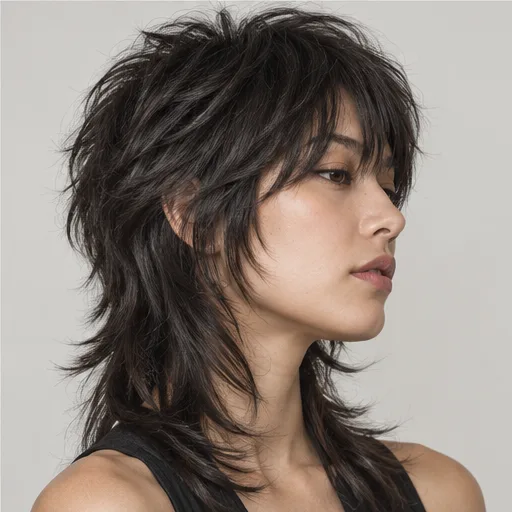
The shorter, more pronounced crown and longer nape give this profile its contrast. It is a stronger structural change than simply adding a face frame.
Moderate styling effort · Long length Details & styling for Short crown, longer wolf silhouette Choose it for: Visible separation between volume above and length below.
Think about: A dramatic short crown can take time to reconnect with the lower length. Discuss a softer version if that grow-out is unwelcome.
A routine to discuss Direct the crown roots toward the fullness you want. Keep the lower length looser and flatter so the two zones stay distinguishable. Upkeep: Review the crown and nape as separate growth zones.
Your salon request: I want ___ contrast between the crown and nape. Show the shortest layer and explain how we would grow it into a softer shape.
Use this look in my brief Occasion hair Save idea
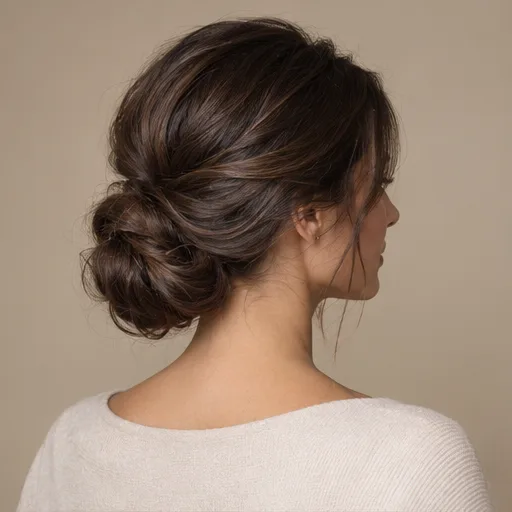
The hair is gathered low into a compact bun, leaving the crown relatively quiet. Placement matters when a collar, veil or headrest will touch the style.
Moderate styling effort · Medium length Details & styling for Low chignon at the nape Choose it for: A contained shape with an open neckline.
Think about: A tight-looking surface does not require painful tension. Choose a softer finish if smoothness would require pulling.
A routine to discuss Make a comfortable low ponytail and check the position against the outfit. Wrap the length into a bun and secure the base; hide pins only after the shape feels stable. Turn your head and lean back before adding accessories. Upkeep: Remove accessories and pins carefully at the end of the event; do not sleep in a heavy arrangement.
Your salon request: Place the chignon at ___. Keep the surface ___ and leave these face-framing pieces free: ___.
Use this look in my brief Occasion hair Save idea
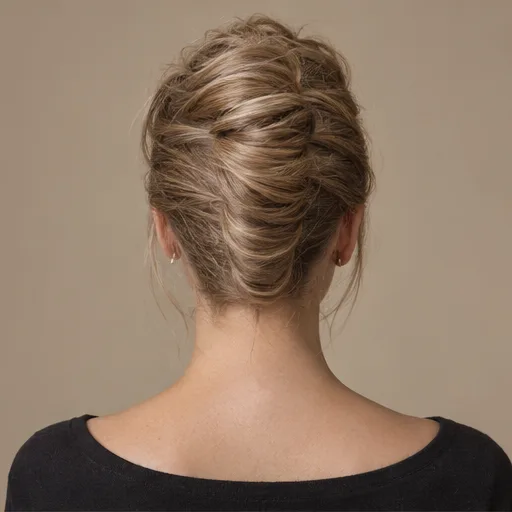
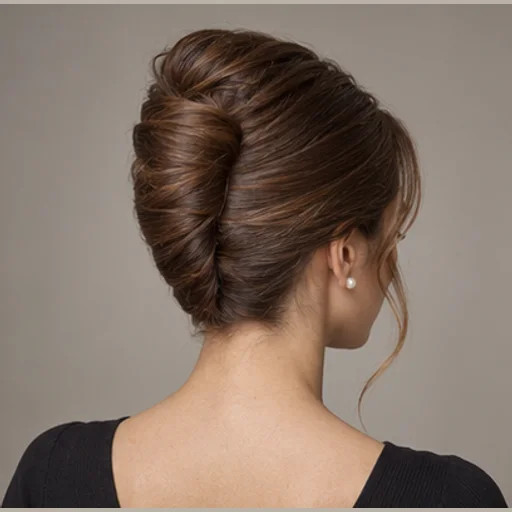
The length is folded into a vertical roll at the back, creating height and a narrow side profile. Loose surface texture makes a different finish from a smooth formal roll.
High styling effort · Medium length Details & styling for Vertical textured twist Choose it for: An updo that opens the neck without a round bun.
Think about: Very short layers can fall out of the roll. A stylist can adapt the construction rather than forcing every strand into it.
A routine to discuss Practice on detangled hair with enough grip for pins. Gather at the back, fold the length into a vertical roll, and secure the seam in small comfortable sections. Test the hold before hiding ends or placing a comb. Upkeep: Treat this as an event arrangement; the construction should be fully taken down afterwards.
Your salon request: I like the vertical shape and ___ amount of texture. Please keep the neck ___ and fit the accessory at ___.
Use this look in my brief Occasion hair Save idea
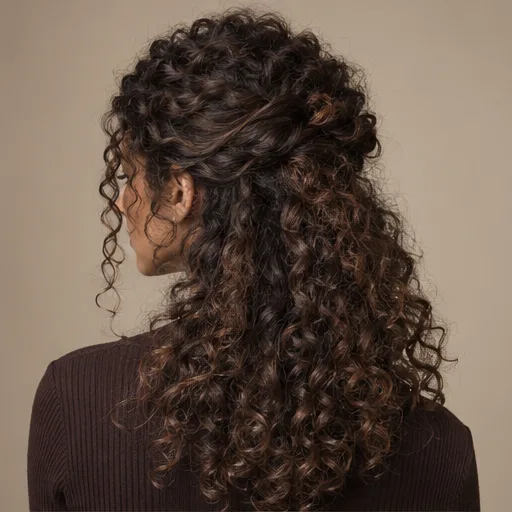
Only the upper or side sections are gathered, leaving a substantial curly perimeter free. The amount collected changes both the front framing and the remaining fullness.
Moderate styling effort · Long length Details & styling for Curly half-up with loose length Choose it for: Keeping curl movement while clearing some hair from the face.
Think about: Taking too much into the top can leave the loose lengths sparse. Begin with less and check the back before adding more.
A routine to discuss Finish and fully dry the curls before arranging the upper section. Gather small side sections loosely at the back and secure without dragging the roots. Check the remaining lower shape from behind. Upkeep: If the upper section feels tight, release and reposition it; extra pins should support the fastener rather than increase pull.
Your salon request: Gather only ___ of the hair. Keep the loose curls full through ___ and leave the front pieces ___.
Use this look in my brief Occasion hair Save idea
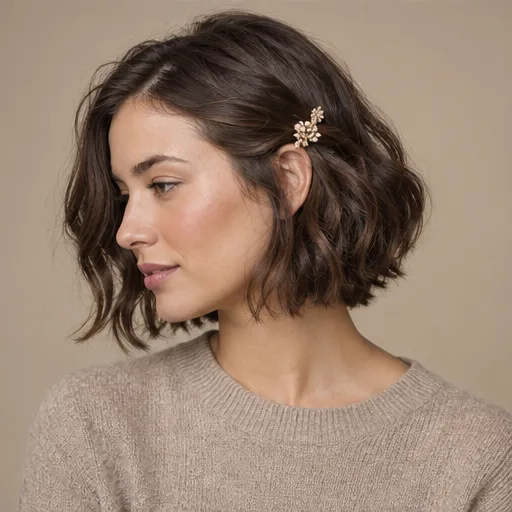
A small accessory holds or decorates one side of a short wavy bob. Most of the hairstyle stays down, so the part and visible edge remain important.
Moderate styling effort · Short length Details & styling for Short waves with a side accessory Choose it for: An occasion finish without adding extension length or a full updo.
Think about: Heavy combs can slip or change the side shape. Test the actual accessory on your own hair before the event.
A routine to discuss Create the part and finish the wave or natural bend first. Anchor the accessory in a small section with enough grip, keeping sharp ends away from the scalp. Turn and bend to check that the clip stays comfortable. Upkeep: Carry a simpler backup clip if the main accessory moves.
Your salon request: Keep the bob down with ___ side tucked. Place my accessory at ___ and show a secure, comfortable backup.
Use this look in my brief Occasion hair Save idea
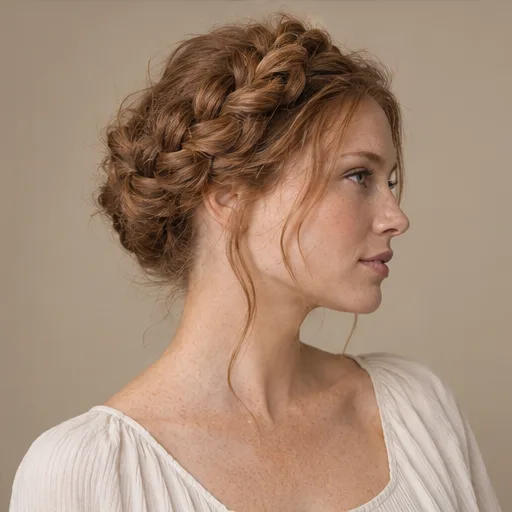
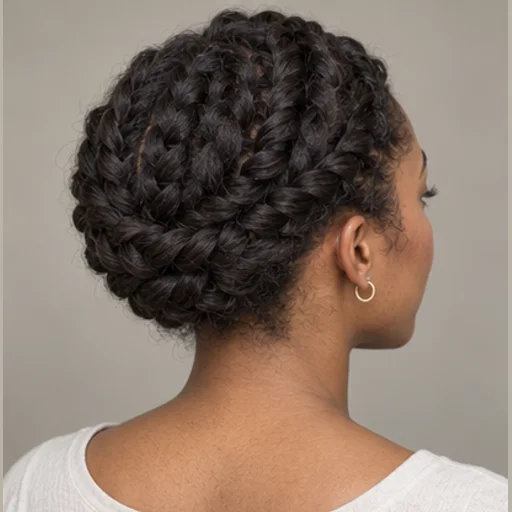
The braid wraps around the head, redistributing the length rather than leaving a long tail. A looser outer shape changes the result more than adding decoration.
High styling effort · Long length Details & styling for A loose braid around the crown Choose it for: A contained braided outline with a visible woven detail.
Think about: The pictured looseness needs sufficient length and support. A short version may require a different construction or professional help.
A routine to discuss Practise a loose side braid before attempting the wrapped arrangement. Place the braid around the head without stretching the roots, then secure the ends at stable points. Check the weight and comfort around the hairline. Upkeep: Unpin and unwrap the braid fully before combing; start removing tangles at the ends.
Your salon request: I like the braid placement around ___. Keep the front ___ and tell me whether my length can support this arrangement.
Use this look in my brief Occasion hair Save idea
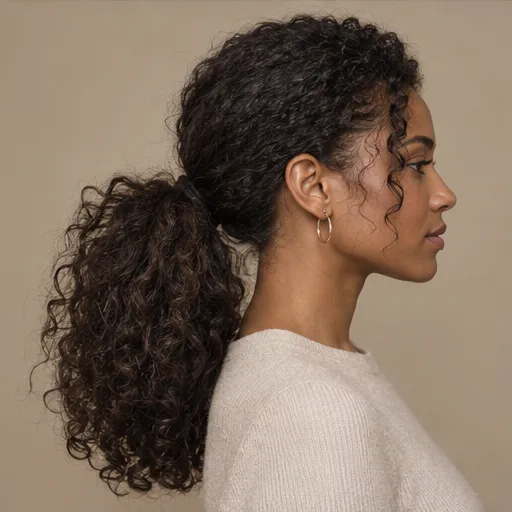
The roots gather low while the curly tail keeps its volume and texture. The shape can look formal without smoothing every curl from the front.
Low styling effort · Long length Details & styling for A low curly ponytail Choose it for: Keeping most curls intact in a simple gathered style.
Think about: A small or tight fastener can compress the tail and pull at the edges. Choose a comfortable position with room for the curl volume.
A routine to discuss Arrange the dry curls before gathering them loosely at the nape. Use a suitable covered fastener and keep the final pass comfortable. Separate only a few tail curls if the outline needs adjusting. Upkeep: Change or release the position if it feels tight; preserve the curls rather than repeatedly brushing and resetting the tail.
Your salon request: Keep the tail low at ___ with ___ amount of root texture. Leave these curls around my face: ___.
Use this look in my brief Texture & density Save idea
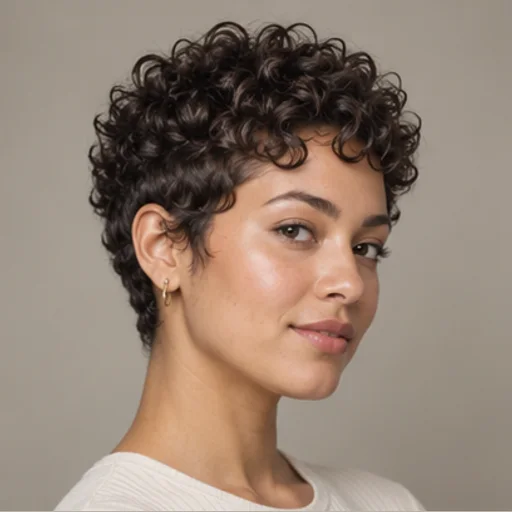
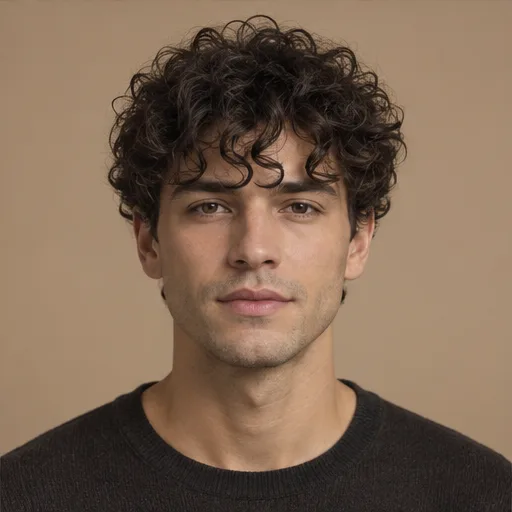
Visible curls remain above an exposed ear and short nape. The compact side profile differs from a rounded bob.
Moderate styling effort · Short length Details & styling for Ear-length curly pixie Choose it for: A short neck and ear area while keeping curl movement on top.
Think about: The top needs enough dry length for the curl groups you want; a very short fringe has fewer pin-back options.
A routine to discuss Arrange the top in its usual direction while damp. Reset only flattened curl groups once the overall shape is established. Check the dry nape and ear outline separately from the top. Upkeep: The nape may need attention before the curls on top do.
Your salon request: Keep enough dry length for these top curls, expose the ear like this and show me the nape boundary before cutting.
Use this look in my brief Texture & density Save idea
Jaw-area curls form a full lower outline while longer front pieces leave the forehead open.
Moderate styling effort · Short length Details & styling for Curly bob with an open forehead Choose it for: A curly bob without a separate short fringe.
Think about: The front can still fall forward even without bangs. Specify whether it must tuck or clip away.
A routine to discuss Set your usual part before drying. Let the front curls dry without stretching them into a false length. Separate only the groups you want softer once dry. Upkeep: Keep the front and lower outline coordinated rather than shortening every curl to one level.
Your salon request: I like the open forehead and lower fullness. Keep the front long enough to ___ and the perimeter at ___ when dry.
Use this look in my brief Texture & density Save idea
Layers connect a rounded crown and sides to a full shoulder-area outline.
Moderate styling effort · Medium length Details & styling for Rounded shoulder-length curls Choose it for: Visible curl volume without a strongly separated shag crown.
Think about: The shoulder can redirect the lowest curls. Check the shape with your head moving and in your usual dry finish.
A routine to discuss Define in manageable sections using your familiar routine. Allow the sides to retain the width you like while drying. Check which lower curls contact the shoulder before deciding the cut needs adjusting. Upkeep: Discuss the widest point and how much fullness should stay near the ends.
Your salon request: Keep this connected rounded shape, with the widest point at ___ and enough length to ___.
Use this look in my brief Texture & density Save idea
Shorter crown pieces and a textured fringe sit above narrower shoulder-length ends.
Moderate styling effort · Medium length Details & styling for Loose curly shag with fringe Choose it for: A more broken-up silhouette and emphasis around the crown and eyes.
Think about: The reference has loose curls and waves. Tighter curls need a separate dry-length plan, and short crown layers take time to grow.
A routine to discuss Set the fringe opening first. Give the short crown its own drying direction instead of pulling every section downward. Soften only selected pieces after the hair is dry. Upkeep: Reshape the fringe separately if the overall length still works.
Your salon request: I want this crown-to-end contrast but the shortest dry layer must still reach ___.
Use this look in my brief Texture & density Save idea
Dense coils form a broad rounded silhouette with retained length near the shoulders.
Moderate styling effort · Medium length Details & styling for Full shoulder-length coily outline Choose it for: Fullness through the sides and lower shape in a loose natural finish.
Think about: The shown definition and grouping are part of the finish. Your shrinkage and density determine the dry outline.
A routine to discuss Work through manageable sections in your normal conditioning and definition routine. Arrange the part and desired side volume before drying. Lift or separate selectively once dry, stopping at the fullness you prefer. Upkeep: Agree whether the shape is assessed in defined, stretched or softer loose texture.
Your salon request: Keep fullness at the sides and a dry endpoint at ___. I usually wear my coils ___.
Use this look in my brief Haircuts Save idea
A long diagonal fringe crosses a much shorter ear area, creating a clear side-to-side contrast.
Moderate styling effort · Short length Details & styling for Pixie with a long swept fringe Choose it for: A strong front direction with a compact nape and sides.
Think about: The long front can cover an eye or require a clip. Ask how it falls without the polished styling.
A routine to discuss Direct the roots toward the sweep while drying. Use a small amount of finish through the longer front if wanted. Keep a simple pin-back option for days when the fringe is in the way. Upkeep: Short edges and the long fringe need different maintenance decisions.
Your salon request: I want this long diagonal front with ___ ear exposure. Show the loose, unstyled shape too.
Use this look in my brief Haircuts Save idea
Shorter face-framing pieces sweep away from the face while the back remains long.
Moderate styling effort · Long length Details & styling for Long layers with a sweeping front Choose it for: Front movement and a styled sweep without losing the whole long outline.
Think about: The photo shows a directional finish. Air-dried layers may not make the same outward curve.
A routine to discuss Set the part and separate the front pieces. Guide the front away from the face with your chosen blowout or heatless set. Allow the shape to dry or cool before blending it into the longer sides. Upkeep: Protect the shortest front pieces if you want them to regain tie-back length.
Your salon request: Keep the long back and give the front a sweep starting at ___. I need the shortest piece to ___.
Use this look in my brief Haircuts Save idea
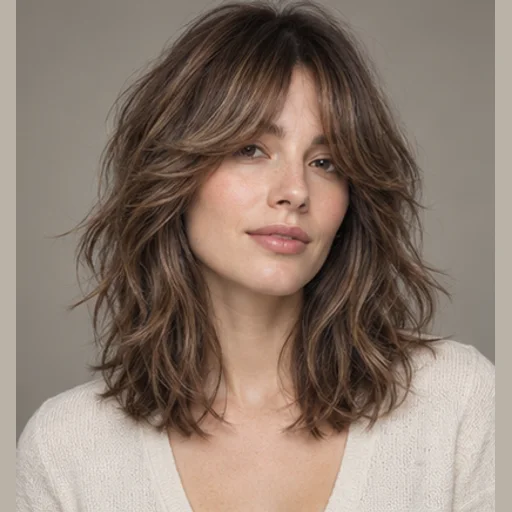
A parted fringe joins a layered wavy shape that stays around the shoulders.
Moderate styling effort · Medium length Details & styling for Wavy shoulder shag with curtain fringe Choose it for: Movement near the face with a softer contrast than a strongly extended wolf-cut nape.
Think about: The front needs its own length agreement; waves at the sides may bend differently after sleep or headwear.
A routine to discuss Arrange the curtain opening while damp. Let the waves settle without repeatedly brushing them apart. Reset the front separately when the rest of the shape still works. Upkeep: Maintain the front connection without automatically shortening the crown.
Your salon request: I like the parted fringe and shoulder outline. Keep ___ fullness at the bottom and ___ length at the front.
Use this look in my brief Haircuts Save idea
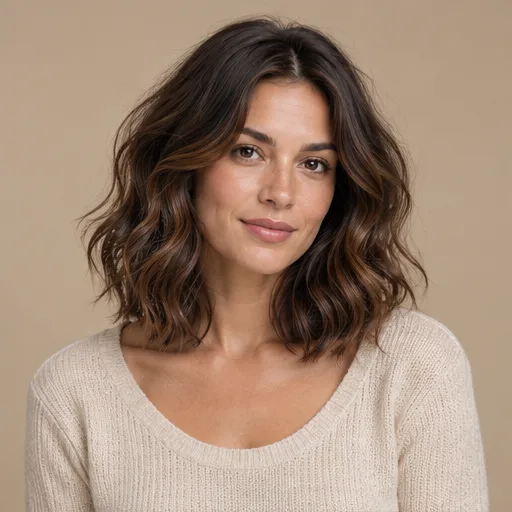
A longer bob reaches the collarbone with loose bends through the lengths.
Moderate styling effort · Medium length Details & styling for Collarbone lob with loose waves Choose it for: A bob-like outline with more retained length for a low gather.
Think about: The shoulder may turn the ends outward. Check that the front actually reaches your preferred tie-back.
A routine to discuss Arrange the part before drying. Use natural waves or a gentle set to establish the bends you want. Keep a low half-up or gather as a second finish. Upkeep: The front length and shoulder contact point matter more than a fixed trim interval.
Your salon request: Keep a collarbone outline and enough front length for ___. I like loose movement rather than a rigid turned-under edge.
Use this look in my brief Texture & density Save idea
Loose waves and an open forehead create a connected medium-length shape.
Low styling effort · Medium length Details & styling for Soft shoulder waves without a fringe Choose it for: An outline that keeps natural bends visible and avoids a separate bang routine.
Think about: Your waves may vary across the head. A photo of one finished day cannot predict every air-dried result.
A routine to discuss Set your usual part. Let the waves form with minimal unnecessary handling while drying. Refresh only the sections that have flattened or changed direction. Upkeep: Discuss the dry outline and shoulder-level bends at the next cut.
Your salon request: Keep this open front and shoulder movement, with enough perimeter fullness for my density.
Use this look in my brief Texture & density Save idea
Long straight lengths keep a strong, relatively continuous lower silhouette.
Low styling effort · Long length Details & styling for Long straight hair with a full edge Choose it for: Length, a clear edge and simple gathering options.
Think about: Long hair still takes detangling and drying time. Fine-looking ends may change how full the perimeter appears.
A routine to discuss Detangle gently in manageable sections. Let the normal part and natural fall guide the finish. Gather loosely when wanted, leaving short front pieces outside if needed. Upkeep: Ask which ends need attention while preserving the side and back length you value.
Your salon request: Keep this long full perimeter and only add front shaping at ___. I need the hair to reach ___.
Use this look in my brief Haircuts Save idea
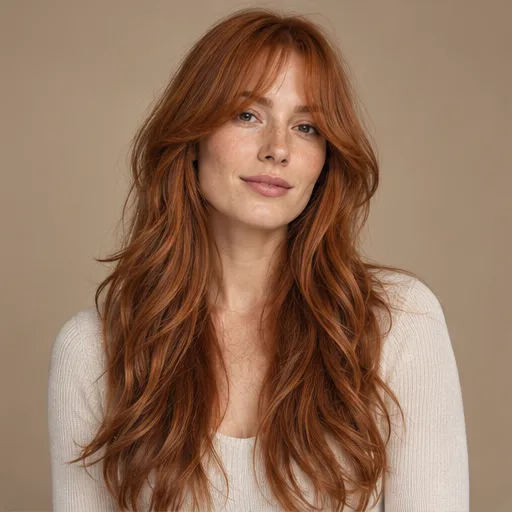
A parted front frames the face while long layers retain movement below the shoulders.
Moderate styling effort · Long length Details & styling for Long copper layers with curtain fringe Choose it for: A visible face-framing change while keeping a long back.
Think about: The fringe and the copper shade are separate decisions. You can choose the shape without choosing the color.
A routine to discuss Arrange the front opening before it dries. Guide the sides into the direction you want to repeat. Use a clip or tuck when the shortest front pieces are long enough. Upkeep: Plan fringe upkeep separately from the long perimeter and any color service.
Your salon request: I like this curtain shape and long back. My shortest front piece should finish at ___, in my own color.
Use this look in my brief Haircuts Save idea
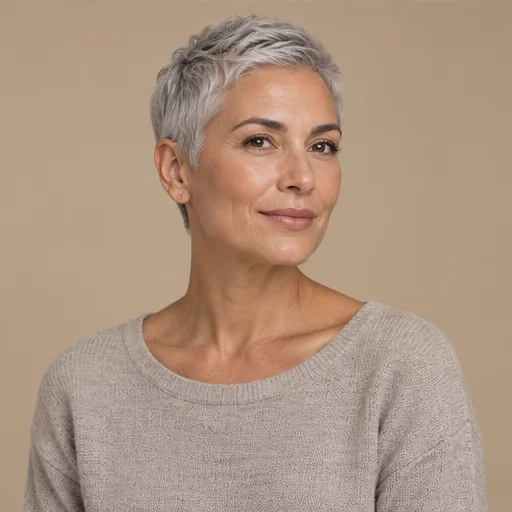
A short softly textured top and compact sides leave the face and neck open.
Low styling effort · Short length Details & styling for Soft short silver crop Choose it for: A small, simple silhouette with a little directional texture on top.
Think about: The silver shade does not determine the haircut or guarantee the same density. Choose the outline independently.
A routine to discuss Guide the top into its natural direction. Use a light touch of finish only if more separation is wanted. Check the nape and ear area when deciding what needs reshaping. Upkeep: A soft outline can grow differently from a clippered edge; agree on your preferred grown-in shape.
Your salon request: I want this soft compact shape with enough top length to ___. Keep the ear and nape outline ___.
Use this look in my brief Hair color Save idea
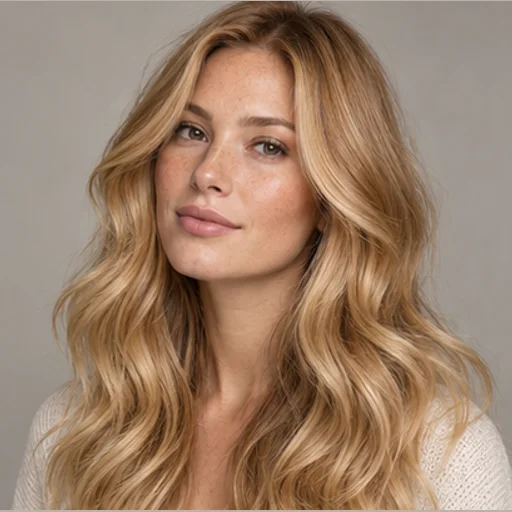
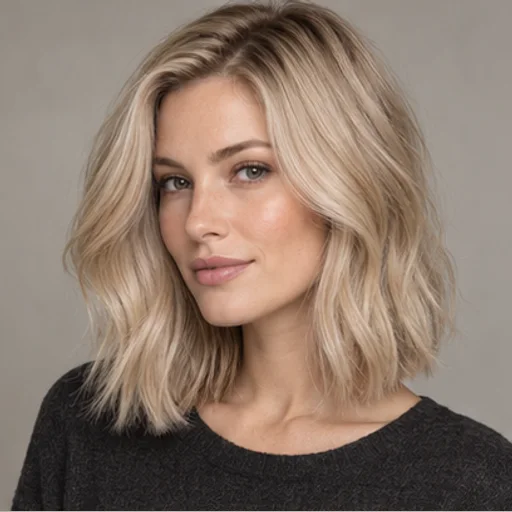
Golden lightness runs through long waves, with warmth still visible rather than an icy finish.
Styling effort varies · Long length Details & styling for Honey-golden blonde Choose it for: A visibly warm blonde direction.
Think about: Brightness and warmth are separate. A darker starting base may need a different route from hair that is already light.
A routine to discuss Compare the desired warmth in ordinary light with the colorist. Agree on which areas stay deeper and how the tone will be maintained. Upkeep: Discuss root contrast and tone refresh separately.
Your salon request: I want this golden warmth at ___ brightness, with ___ depth near the root.
Use this look in my brief Hair color Save idea
A muted blonde on a collarbone-area bob balances brightness with a quieter beige impression.
Styling effort varies · Medium length Details & styling for Soft beige blonde lob Choose it for: A less overtly golden blonde reference.
Think about: Shade names are not formulas. The reference’s light and existing canvas affect how beige appears.
A routine to discuss Compare a warm and a cooler sample rather than choosing by name alone. Ask what a future tone refresh changes and what it does not. Upkeep: The lob outline, roots and lengths have separate maintenance needs.
Your salon request: I like this muted blonde rather than a very golden result. Please compare it with my starting color.
Use this look in my brief Hair color Save idea
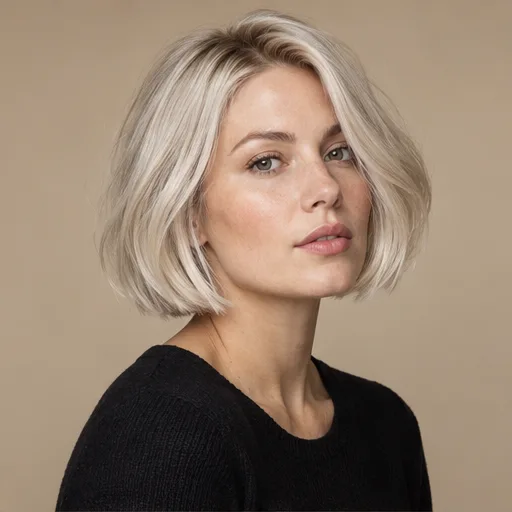
A bright pale blonde reads strongly against a short bob outline.
Styling effort varies · Short length Details & styling for Very light platinum bob Choose it for: A high-impact light shade paired with a compact shape.
Think about: A photo cannot establish whether this level of lightness is suitable or achievable in one service.
A routine to discuss Bring the full color and chemical-service history to the consultation. Agree on a feasible brightness, an alternate target and the future service plan. Upkeep: Discuss visible root contrast and the demands of maintaining very light lengths.
Your salon request: I like the brightness, but want you to assess what is realistic for my history and condition.
Use this look in my brief Hair color Save idea
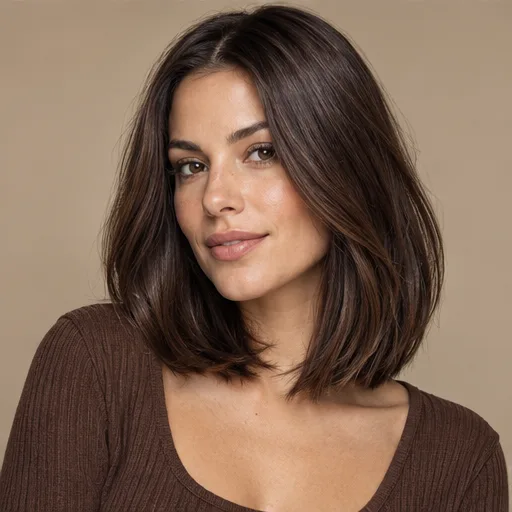
A rich brown surface keeps the medium-length outline relatively continuous.
Styling effort varies · Medium length Details & styling for Deep chocolate lob Choose it for: Overall brunette depth without a strong light ribbon pattern.
Think about: Going darker over previously lightened hair is a separate assessment from coloring an untreated base.
A routine to discuss Compare the depth against your current color in ordinary light. Discuss how the change affects any future wish to become lighter. Upkeep: Agree whether future appointments concern roots, tone or both.
Your salon request: I want this depth with ___ warmth and only ___ visible contrast through the lengths.
Use this look in my brief Hair color Save idea
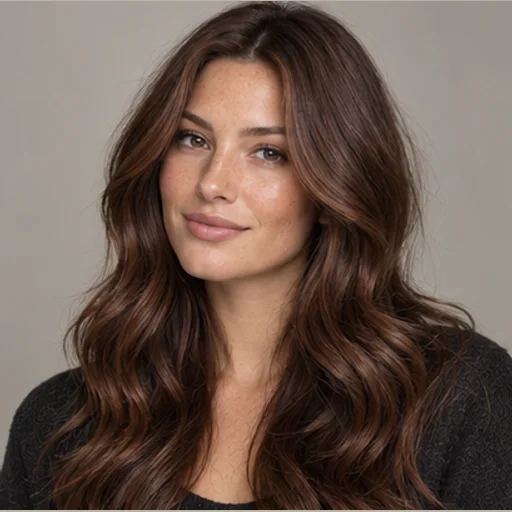
Warm brown movement stays within a brunette impression instead of becoming broadly blonde.
Styling effort varies · Long length Details & styling for Warm chestnut brunette Choose it for: Visible warmth while retaining overall depth.
Think about: The same warmth looks different on a darker base or in cooler light. Use the photo as a direction rather than a shade code.
A routine to discuss Point out which warm areas you like in the reference. Ask how much of the effect comes from placement versus the overall tone. Upkeep: Plan how the warm tone and root boundary will change between appointments.
Your salon request: Keep the result brunette, with this amount of warmth and ___ contrast.
Use this look in my brief Hair color Save idea
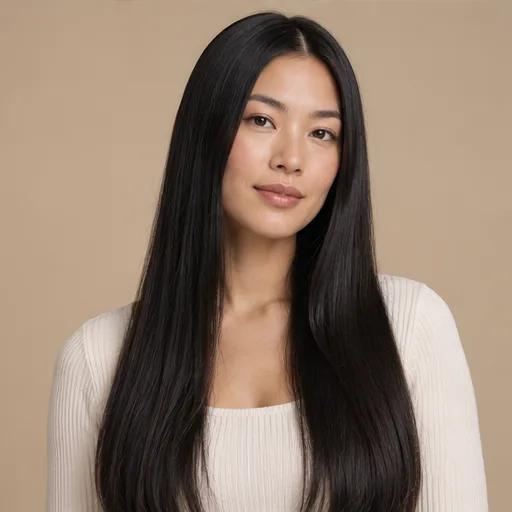
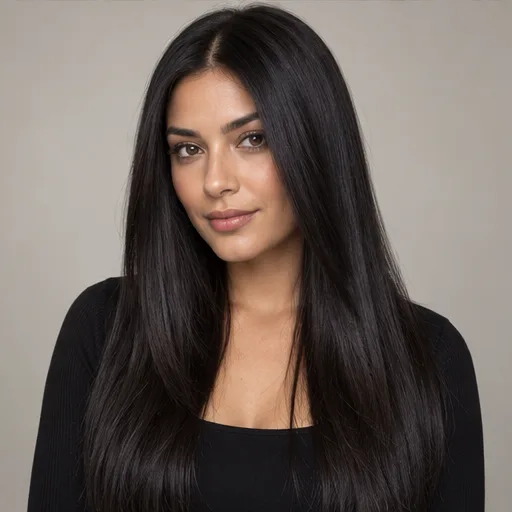
A very dark continuous surface emphasises the straight outline and reflected light.
Styling effort varies · Long length Details & styling for Deep black with a smooth finish Choose it for: A strong deep shade and minimal visible highlight contrast.
Think about: The reflective finish also comes from styling and lighting. The color alone does not guarantee the same shine.
A routine to discuss Separate the desired shade from the smooth styling in the reference. Discuss future color changes before committing to a very dark result. Upkeep: Ask how roots and treated lengths will be maintained without unnecessary repeat work.
Your salon request: I want this depth, but please explain the route back to a lighter shade if I change my mind.
Use this look in my brief Hair color Save idea
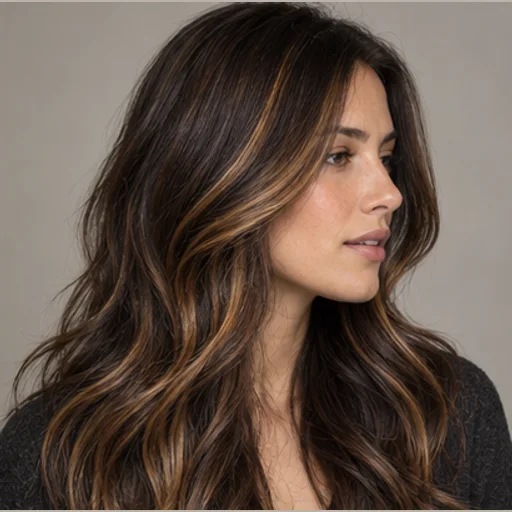
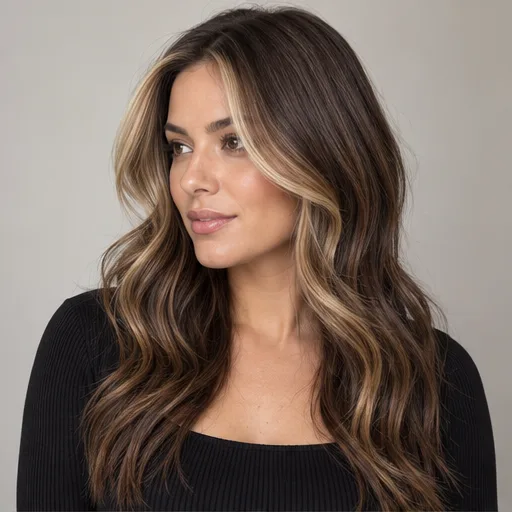
Selected warm lighter ribbons remain separated by substantial dark hair.
Styling effort varies · Long length Details & styling for Caramel ribbons on a dark brunette base Choose it for: Brunette dimension that keeps the darker background visible.
Think about: Curl grouping and parting change which ribbons show. A full-head lighter result would be a different placement choice.
A routine to discuss Show the colorist your usual part and tie-back. Map the ribbon width and where each first bright section starts. Upkeep: Maintain the desired contrast as well as the tone of the lighter pieces.
Your salon request: Keep most of my depth and place warm ribbons at ___, with this width rather than an overall blonde result.
Use this look in my brief Hair color Save idea
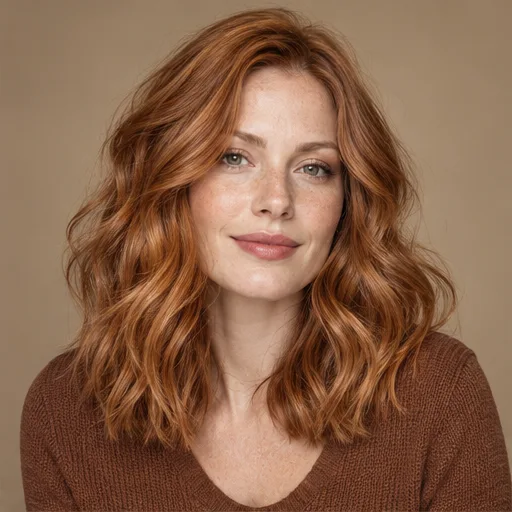
A clear orange-gold copper direction runs through loose waves.
Styling effort varies · Medium length Details & styling for Golden copper waves Choose it for: A warm copper emphasis distinct from deeper red or auburn.
Think about: Your base and previous color determine the feasible brightness; the waved styling is a separate choice.
A routine to discuss Compare a brighter copper with a deeper auburn before choosing. Agree on what amount of fading or tonal change you are comfortable seeing. Upkeep: Ask which parts of the shade need refresh and how the root boundary will look.
Your salon request: I prefer this copper-gold direction over a deeper red. What version is realistic on my base?
Use this look in my brief Hair color Save idea
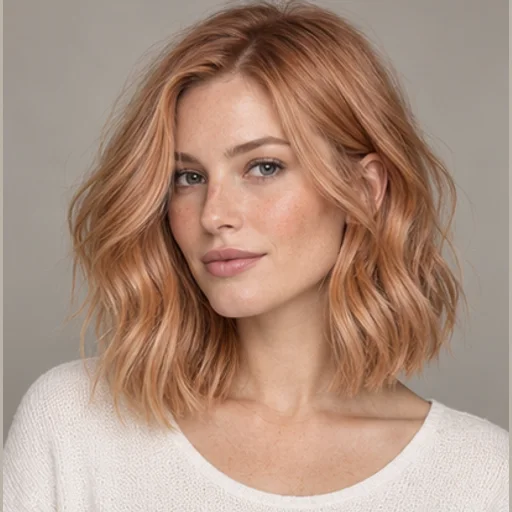
A light peach-copper impression sits between a golden blonde and a stronger copper.
Styling effort varies · Medium length Details & styling for Light strawberry blonde Choose it for: A light warm reference with a softer red emphasis.
Think about: Strawberry is a broad descriptive name. A swatch and your starting base matter more than the label.
A routine to discuss Point out the balance of lightness and red you want. Ask how the tone may change and which maintenance option suits your preference. Upkeep: Discuss lightness and red-toned refresh as separate parts of the service.
Your salon request: I like this light peach-copper balance, not a saturated orange result. Please compare it with my starting shade.
Use this look in my brief Hair color Save idea
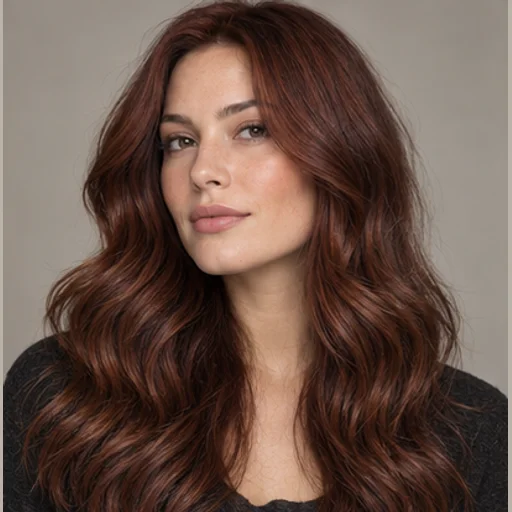
Brown depth and red warmth stay visible together through the lengths.
Styling effort varies · Long length Details & styling for Rich auburn waves Choose it for: A deeper red direction that retains a brunette impression.
Think about: An all-over auburn and selected red ribbons create different boundaries. Choose the placement too.
A routine to discuss Compare overall color with selected warmer areas. Discuss what the next color change would require if you later want less red. Upkeep: Agree on the preferred fade and how roots will be handled.
Your salon request: Keep brown depth with this red warmth, especially at ___, rather than making the whole result very bright.
Use this look in my brief Hair color Save idea
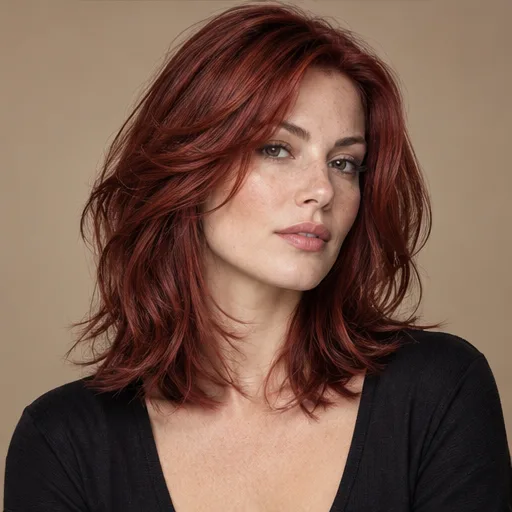
A more saturated red direction gives the layered silhouette a pronounced color focus.
Styling effort varies · Long length Details & styling for Cherry-red layered hair Choose it for: A visible red statement with more intensity than a subtle auburn.
Think about: The base, products and lighting affect saturation; the reference is not a promised result or a home formula.
A routine to discuss Agree on the desired intensity in ordinary light. Discuss transfer, fading and the next-color plan with the colorist before the service. Upkeep: Ask which refresh work is needed to retain this level of intensity.
Your salon request: I want this saturated red impression and need a realistic maintenance and exit plan for my current color.
Use this look in my brief Hair color Save idea
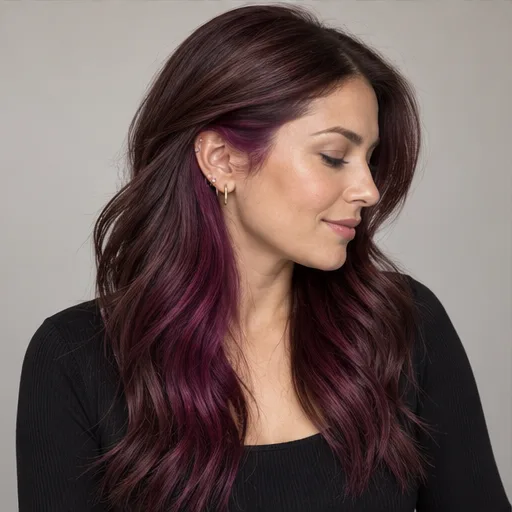
A purple-toned section creates a local contrast while much of the darker base remains.
Styling effort varies · Medium length Details & styling for Plum panel within darker hair Choose it for: A defined area of vivid color rather than an all-over change.
Think about: The panel’s visibility changes when the hair is parted, tucked or tied. Pre-lightening requirements need individual assessment.
A routine to discuss Test the panel location in your normal down and gathered styles. Agree on the amount of contrast and the fade you would enjoy. Upkeep: A small area still needs a tone and grow-out plan.
Your salon request: Put the plum emphasis at ___ and show what will be visible with my hair down and up.
Use this look in my brief Hair color Save idea
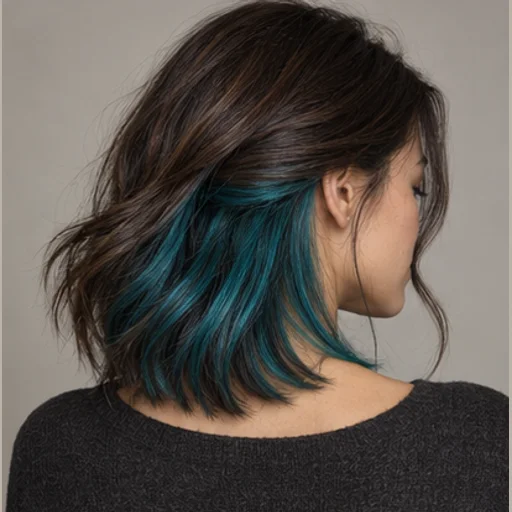
Blue-green color is visible beneath a darker upper section in a side view.
Styling effort varies · Medium length Details & styling for Teal underside reveal Choose it for: A hidden-or-revealed contrast controlled partly by how the hair is worn.
Think about: The upper hair must cover the panel in the way you expect. A shorter cut or different part can reveal more than planned.
A routine to discuss Map the panel while the hair is down, tucked and gathered. Discuss the likely maintenance and what happens when you want the vivid section changed. Upkeep: Plan both the vivid tone and the boundary with the dark hair.
Your salon request: I want this teal reveal under the top layer, visible mainly when I ___.
Use this look in my brief Hair color Save idea
The most obvious lighter pieces sit beside the face rather than being equally distributed everywhere.
Styling effort varies · Long length Details & styling for Brightness concentrated around the face Choose it for: A front-focused change with a clear point of emphasis.
Think about: A broad money-piece effect differs from fine blended front highlights. Specify width and root proximity.
A routine to discuss Show your everyday part, fringe and ear tuck. Compare a narrow blend with a stronger border before approving the section. Upkeep: The front root boundary can remain conspicuous even if little hair is colored.
Your salon request: I want the brightness at the front to be ___ wide and begin at ___, with more depth kept behind it.
Use this look in my brief Hair color Save idea
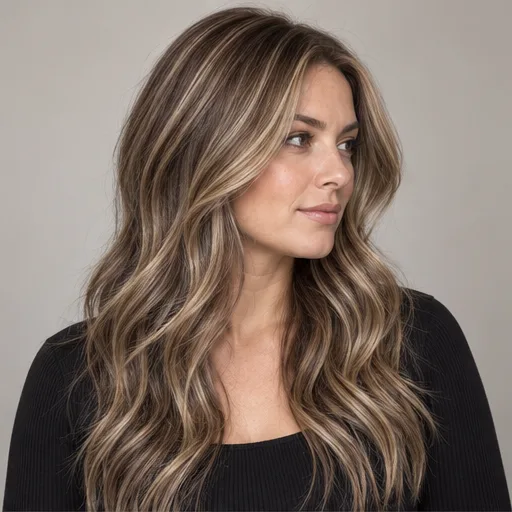
Narrow lighter pieces are distributed through the surface with brightness beginning high.
Styling effort varies · Long length Details & styling for Fine highlights near the root Choose it for: More dispersed lightness rather than a single broad panel or low gradient.
Think about: Fine sections can blend into an overall lighter impression. The photograph cannot prove which application method a stylist used.
A routine to discuss Map the service areas, including the underside. Ask how much natural or existing depth remains between the pieces. Upkeep: Discuss visible new growth separately from tone changes in the lightened lengths.
Your salon request: I like fine distributed pieces beginning high, with ___ base depth still visible.
Use this look in my brief Hair color Save idea
Lighter areas become more visible through the mids and ends while the upper hair retains depth.
Styling effort varies · Long length Details & styling for Soft brightness through the lengths Choose it for: A gradual dimensional direction rather than equal brightness from scalp to ends.
Think about: Balayage names a method; this pictured placement still needs its own map. It does not automatically mean minimal upkeep.
A routine to discuss Identify the first point where you want obvious lightness. Check the front, back and tied-up placement before agreeing to the service. Upkeep: Ask what supports the root transition and what refreshes the lengths.
Your salon request: Keep depth above ___ and build soft brightness below, with the front ___.
Use this look in my brief Hair color Save idea
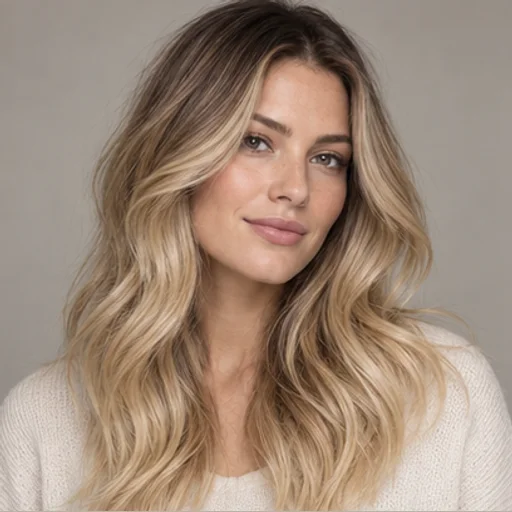
A darker upper zone connects into noticeably lighter lengths.
Styling effort varies · Long length Details & styling for Darker root with blonde lengths Choose it for: Blonde contrast with an intentionally deeper scalp area.
Think about: A root shadow and your untouched natural color are not necessarily the same thing. Ask what work is proposed at the root.
A routine to discuss Agree on the depth and length of the darker zone. Discuss the appearance if you extend the time before the next appointment. Upkeep: Root-transition work and blonde-tone refresh may be different services.
Your salon request: I want the root to stay visibly deeper for about ___ of the upper shape, then connect into this brightness.
Use this look in my brief Hair color Save idea
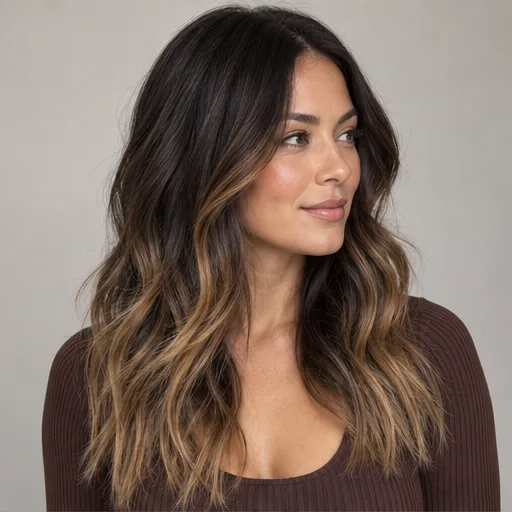
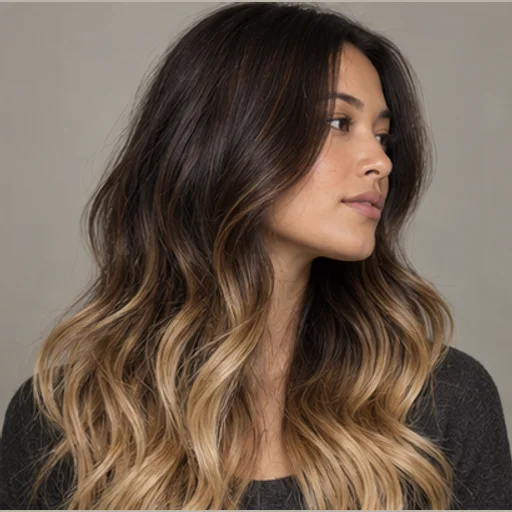
The upper half stays predominantly dark while the lower lengths become broadly lighter.
Styling effort varies · Long length Details & styling for Dark-to-golden ombré Choose it for: A more continuous dark-to-light progression than separate narrow ribbons.
Think about: The transition point changes with a haircut. Shortening the lighter ends can alter the whole balance.
A routine to discuss Point to the exact landmark where the transition should begin. Coordinate the color map with any planned cut or layers. Upkeep: Discuss the preferred transition as it grows and the tone of the light ends.
Your salon request: Keep the upper area dark, with the main change beginning at ___ and the lower lengths this bright.
Use this look in my brief Hair color Save idea
Lighter gray-looking areas and darker pieces remain visible together in a medium-length shape.
Styling effort varies · Medium length Details & styling for Gray and brunette dimension Choose it for: A mixed light-and-dark impression rather than opaque uniform coverage.
Think about: A picture cannot tell which areas are natural or colored. Your own gray distribution and color history determine the route.
A routine to discuss State whether the destination is natural gray or an ongoing mixed-color design. Ask how each proposed service supports that destination. Upkeep: Blending and full coverage create different future boundaries.
Your salon request: I like the mixture of light and depth. My destination is ___, and I want to understand each transition step.
Use this look in my brief Hair color Save idea
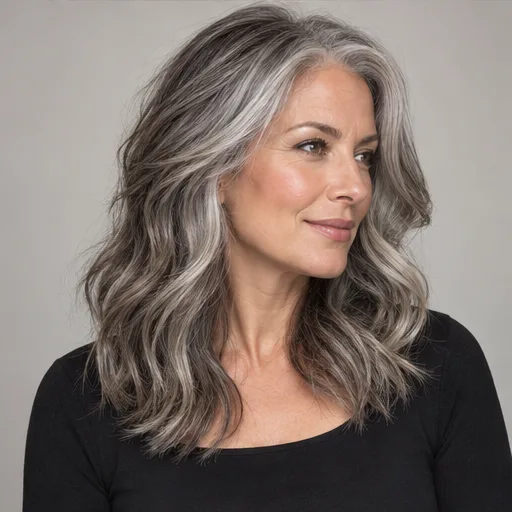
Visible light and dark strands form a varied medium-length surface with soft movement.
Styling effort varies · Medium length Details & styling for Salt-and-pepper waves Choose it for: A reference that keeps mixed natural-looking tones visible.
Think about: Your own gray pattern will differ. The cut and wavy finish can be chosen independently of an exact shade match.
A routine to discuss Compare the silhouette in your normal texture. Discuss whether you want to keep natural growth or make any deliberate color adjustment. Upkeep: Keep the haircut plan separate from the decision to color or grow out.
Your salon request: I like the visible mixture and soft outline. Help me plan that shape around my own color distribution.
Use this look in my brief Men’s hair Save idea
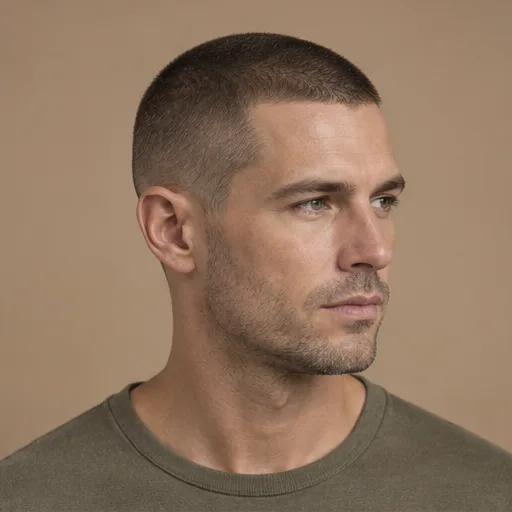
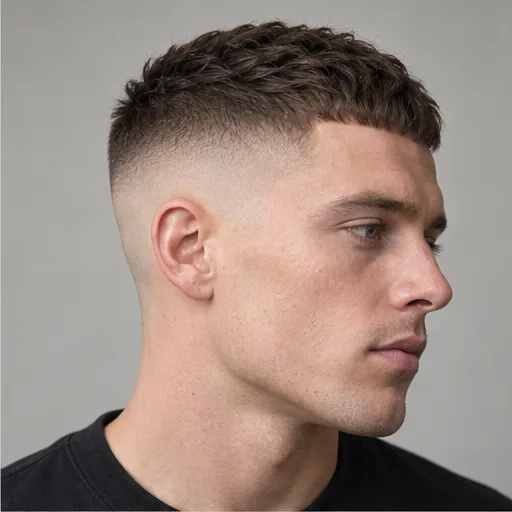
A very short even-looking top follows the head closely with little directional styling.
Low styling effort · Short length Details & styling for Even short buzz Choose it for: A compact surface and minimal morning shape-setting.
Think about: The hairline and head outline remain visible. Choose retained length with the barber rather than copying a number alone.
A routine to discuss Check the dry outline without adding styling steps you do not need. Discuss any side or neckline tidying separately from the top. Upkeep: The outline can grow softer even when daily styling stays simple.
Your salon request: I want an even compact top at ___ retained length, with a ___ neckline and side transition.
Use this look in my brief Men’s hair Save idea
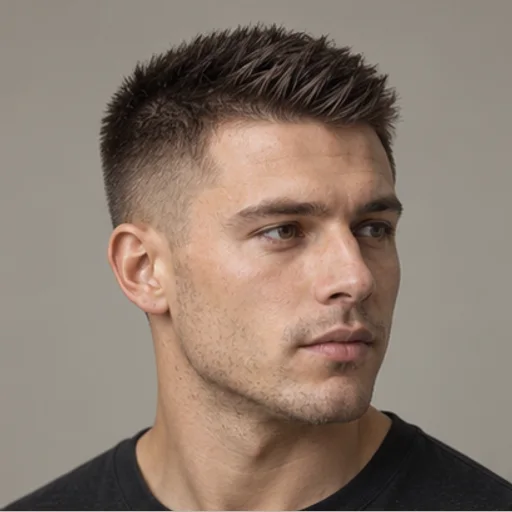
The short top retains more upright height near the front than at the crown.
Low styling effort · Short length Details & styling for Textured crew cut Choose it for: A little front lift without the longer curve of a pompadour.
Think about: Growth direction determines whether the front stands naturally or needs a small reset.
A routine to discuss Direct the front upward or forward after a small damp reset if needed. Use a little familiar finish only where extra separation is wanted. Upkeep: Maintain the top profile independently of the shorter side edges.
Your salon request: Keep this graduated top with ___ height at the front and a softer / closer side.
Use this look in my brief Men’s hair Save idea
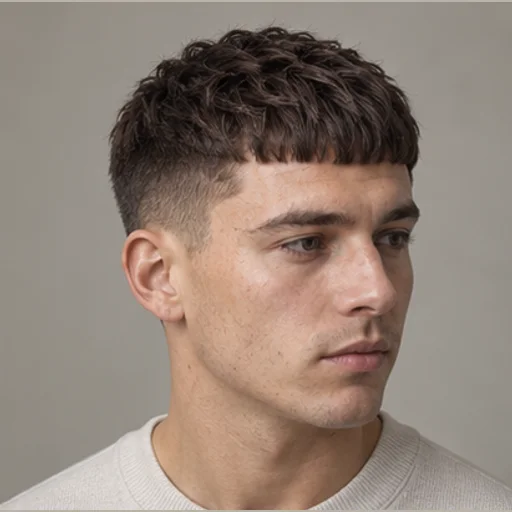
A short front line crosses the forehead beneath a textured top.
Low styling effort · Short length Details & styling for Short crop with a defined forward fringe Choose it for: A forward direction and deliberate fringe boundary.
Think about: A strong front cowlick may fight this direction. Choose how continuous or broken the fringe edge should appear.
A routine to discuss Set the front forward before it dries into another direction. Separate the top lightly while keeping the intended fringe line. Upkeep: The fringe boundary may matter before the rest of the top needs cutting.
Your salon request: I want the front forward with a ___ edge and enough texture above it to ___.
Use this look in my brief Men’s hair Save idea
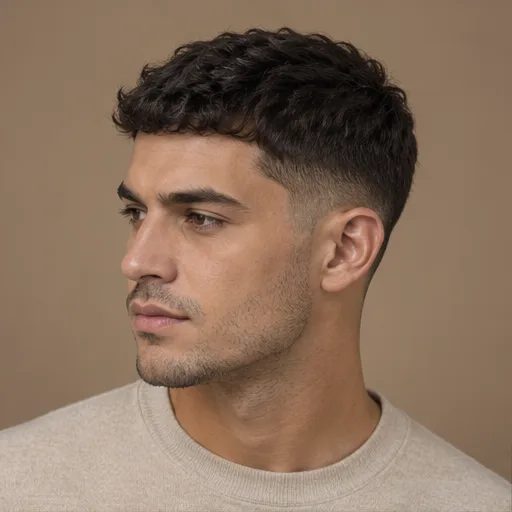
Short pieces through the top meet a low side transition and a softer forward finish.
Low styling effort · Short length Details & styling for Soft textured crop with low taper Choose it for: A less graphic front than a continuous Caesar line.
Think about: Cut texture and product texture are different. Ask what the top looks like without the finishing product.
A routine to discuss Guide the front in its agreed direction. Work a small amount of finish through selected pieces, then stop before it feels coated. Upkeep: Keep the low boundary low if fuller sides are part of what you like.
Your salon request: I like this broken texture and low transition. Please keep the top usable with little product.
Use this look in my brief Men’s hair Save idea
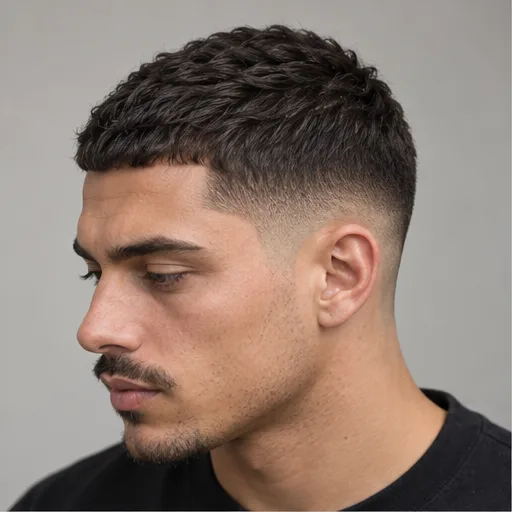
The shortest transition stays near the lower sides while the top remains textured.
Low styling effort · Short length Details & styling for Low fade with retained side fullness Choose it for: A compact edge with more visible hair above the fade.
Think about: The fade describes the side treatment, not the top. Choose the top shape separately.
A routine to discuss Style the top in its usual direction. Use side photos to track the fade height you prefer at the next appointment. Upkeep: Small edge changes can be visible before the top loses its shape.
Your salon request: Keep the fade low at ___, retain fullness above it and leave the top ___.
Use this look in my brief Men’s hair Save idea
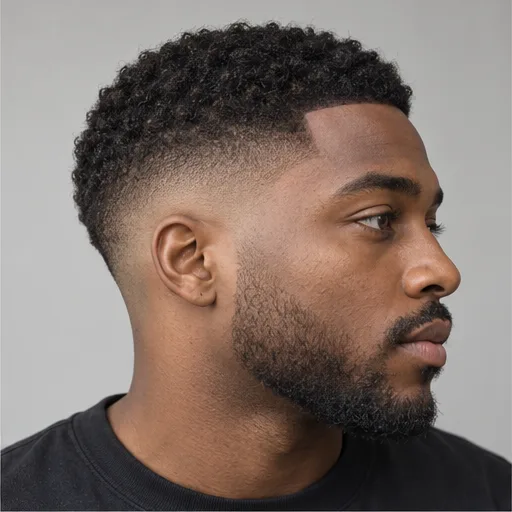
A middle-height transition meets a compact textured top.
Low styling effort · Short length Details & styling for Mid fade with a short coily top Choose it for: More side contrast than a low fade while retaining a clearly coily surface.
Think about: The top must retain enough dry length for the texture you want. A fade height is not a universal measurement.
A routine to discuss Arrange the top without forcing the coils into a smooth surface. Check the temple and side transition in profile before approving future cuts. Upkeep: Agree whether visits maintain only the side transition or also reduce the top.
Your salon request: Keep this coily top and place the transition around ___, with ___ fullness above it.
Use this look in my brief Men’s hair Save idea
A higher short-side area creates a pronounced contrast below the top.
Low styling effort · Short length Details & styling for High fade with textured top Choose it for: An exposed side profile and concentrated fullness higher on the head.
Think about: A high fade removes side fullness that takes time to return if you later want flow or curtains.
A routine to discuss Direct the top into the chosen shape. Reassess the side height at each appointment instead of raising it automatically. Upkeep: Plan the grown-in edge and the destination if you want fuller sides later.
Your salon request: I like the contrast but want the highest short point to stop at ___.
Use this look in my brief Men’s hair Save idea
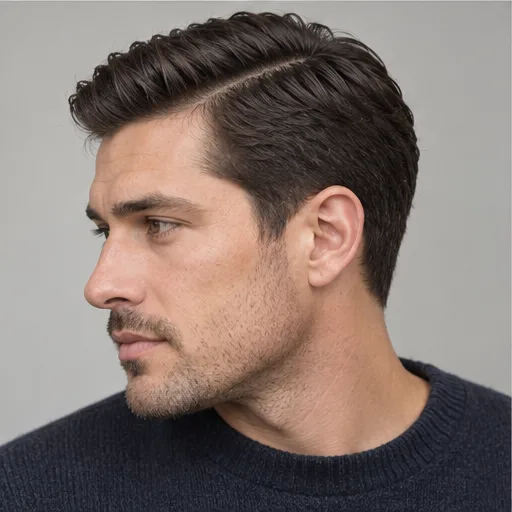
The sides retain a connected fuller outline around a softly parted top.
Moderate styling effort · Short length Details & styling for Side part with a fuller scissor taper Choose it for: A softer transition than closely faded sides.
Think about: The retained side length still needs shaping around the ear and crown. Decide whether the part is soft or sharply marked.
A routine to discuss Arrange the part with your natural growth direction. Dry or set the top across the head without pressing every section flat. Upkeep: Tidy ear and nape edges while preserving the side fullness you chose.
Your salon request: Keep this connected side fullness, a ___ part and enough top length to sweep ___.
Use this look in my brief Men’s hair Save idea
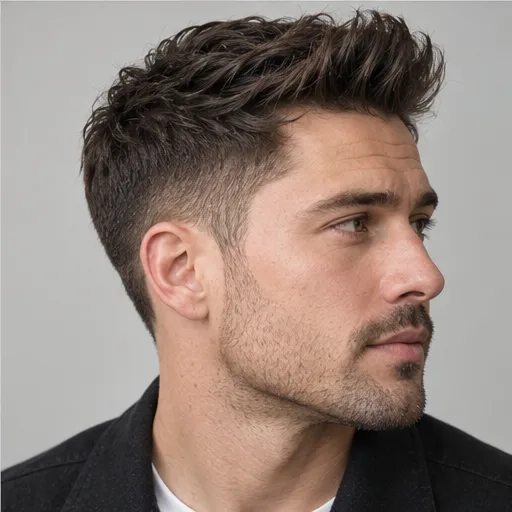
The strongest lift sits at the front while the rest of the short top stays more textured.
Moderate styling effort · Short length Details & styling for Short front-lifted quiff Choose it for: A focal point at the front without a tall continuous pompadour.
Think about: The lifted finish may need drying direction, not simply more hold. Plan an easier flatter version too.
A routine to discuss Lift and direct the front while drying on a suitable lower setting. Let it cool, then add a small amount of finish if wanted. Upkeep: Keep enough front length for the lift while deciding side upkeep separately.
Your salon request: I want this modest front lift and an alternate softer finish I can wear without a full restyle.
Use this look in my brief Men’s hair Save idea
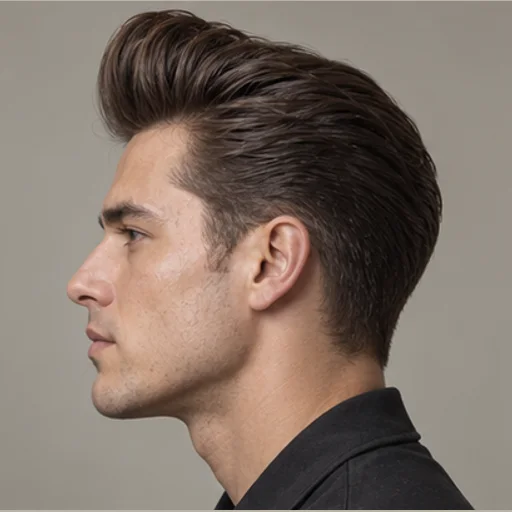
A tall front curve travels backward into the top, most clearly visible in profile.
Moderate styling effort · Medium length Details & styling for Curved-back pompadour Choose it for: A pronounced raised silhouette with a backward direction.
Think about: It asks for sufficient length and deliberate setting. The photograph does not prove that your front will hold the same height.
A routine to discuss Lift the front at the roots while guiding the length backward. Allow the shape to cool before applying finishing product gradually. Upkeep: Discuss top shaping and side maintenance as separate needs.
Your salon request: I want this curve at ___ height and can spend ___ on drying. Show a realistic version for my growth direction.
Use this look in my brief Men’s hair Save idea
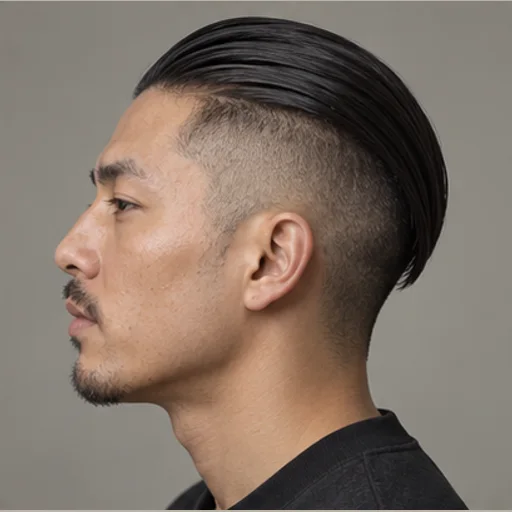
A longer backward-swept top sits above a clearly shorter disconnected side.
Moderate styling effort · Medium length Details & styling for Slick-back over a disconnected undercut Choose it for: Strong contrast with a relatively flat backward top.
Think about: The loose top and the grow-out can look very different. Ask to see where the disconnection begins.
A routine to discuss Direct the top backward while drying without excessive front lift. Use the chosen finish gradually and check the side profile. Upkeep: The lower area needs time to reconnect if you later grow toward fuller sides.
Your salon request: Keep the top swept back and show the disconnection at ___. I also want to know how it falls loose.
Use this look in my brief Men’s hair Save idea
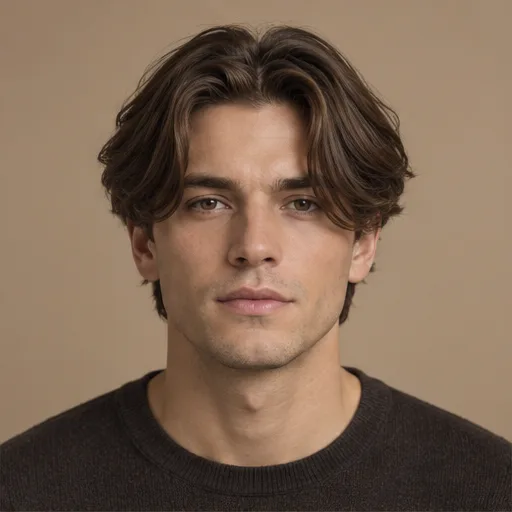
A centre opening lets the longer front travel toward either side of the face.
Moderate styling effort · Medium length Details & styling for Medium curtains with an open centre Choose it for: A visible part and retained front movement.
Think about: A cowlick may shift the opening. The shortest front needs enough length to sit around the face rather than sticking outward.
A routine to discuss Arrange the opening while damp. Guide the front to either side and let the normal bends remain. Upkeep: The front and ear area may need shaping before the longer back does.
Your salon request: I want this open front with the shortest piece at ___ and enough ear length to ___.
Use this look in my brief Men’s hair Save idea
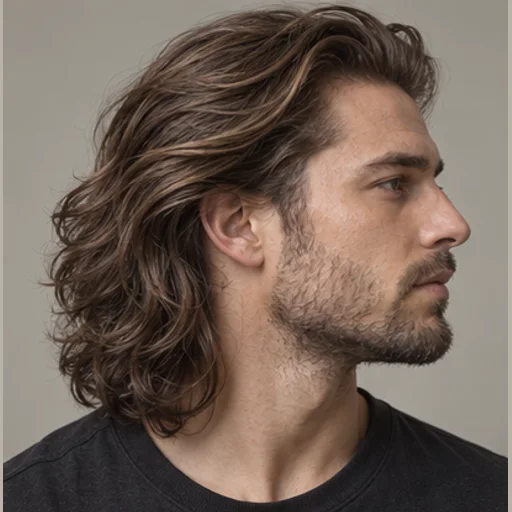
Connected waves sweep around the ears into a longer nape without a sharp side break.
Low styling effort · Medium length Details & styling for Layered flow around the ears and neck Choose it for: Length and movement through the sides as well as the back.
Think about: This finish depends on retained side length. Repeatedly restoring a close fade works against it.
A routine to discuss Direct the sides around the ears while they dry. Let the waves settle and only reset the front if needed. Upkeep: Ask for shaping that keeps the side sections growing toward the connected outline.
Your salon request: Keep the ear and nape movement connected, with layers releasing at ___ rather than a short undercut.
Use this look in my brief Men’s hair Save idea
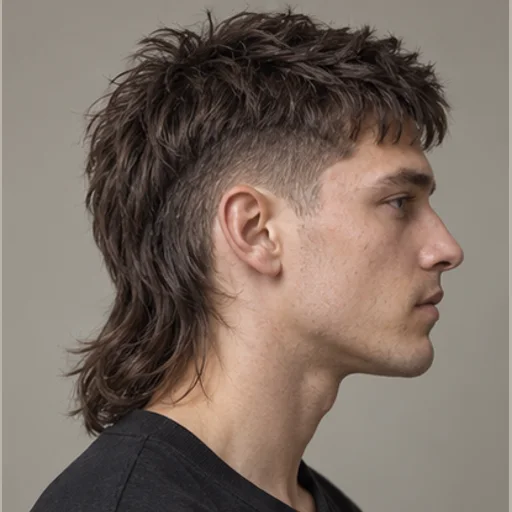
Shorter side and crown texture contrasts with an extended nape.
Moderate styling effort · Medium length Details & styling for Textured mullet with a longer nape Choose it for: A visible front-to-back difference and movement at the neck.
Think about: The tail is a deliberate part of the cut. Check the full profile instead of choosing from a front photograph alone.
A routine to discuss Arrange the fringe and crown without flattening all their texture. Let the nape move separately and check how it rests against a collar. Upkeep: Growing away from the contrast requires a plan for the short sides and crown.
Your salon request: Keep this longer nape at ___, with ___ contrast at the sides and enough crown length to ___.
Use this look in my brief Men’s hair Save idea
Fullness is concentrated upward while the side outline is tapered.
Moderate styling effort · Short length Details & styling for Coily high-top with a defined outline Choose it for: A deliberate upright shape and a clear boundary.
Think about: Your density, shrinkage and usual finish determine the feasible height. Decide whether the outline is defined or softer.
A routine to discuss Arrange the top in its usual dry texture. Lift or define selected areas gently rather than forcing every coil into the same position. Upkeep: Maintain the top outline and side edge without treating them as one uniform length.
Your salon request: I want fullness at the top with this side boundary. My usual finish is ___, so assess the outline that way.
Use this look in my brief Men’s hair Save idea
Longer front curls fall forward while the surrounding shape stays shorter.
Moderate styling effort · Medium length Details & styling for Medium curly fringe Choose it for: Visible curls at the forehead and a softer front edge.
Think about: The dry fringe may sit higher than a stretched measurement suggests. Check eye and glasses clearance.
A routine to discuss Arrange the front curls without stretching them down. Let them dry, then move or separate only the pieces that need it. Upkeep: The fringe can need attention independently of the side transition.
Your salon request: Keep the front curls at ___ when dry and make the side transition ___.
Use this look in my brief Men’s hair Save idea
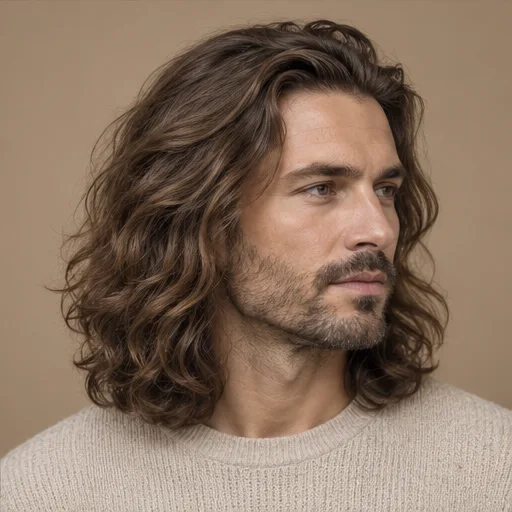
Long waves keep the side and back length visible with an open front.
Low styling effort · Long length Details & styling for Long loose waves Choose it for: Loose movement and the possibility of a low tie-back when the front reaches.
Think about: Low directional styling does not mean no detangling or drying time. The shortest front pieces determine gathering options.
A routine to discuss Detangle gently and arrange the part. Let the natural waves settle, then gather loosely only when useful. Upkeep: Preserve the sections needed for the chosen tie-back while tidying the overall shape.
Your salon request: Keep this long wave pattern and enough front length for ___. Add layers only where they help ___.
Use this look in my brief Occasion hair Save idea
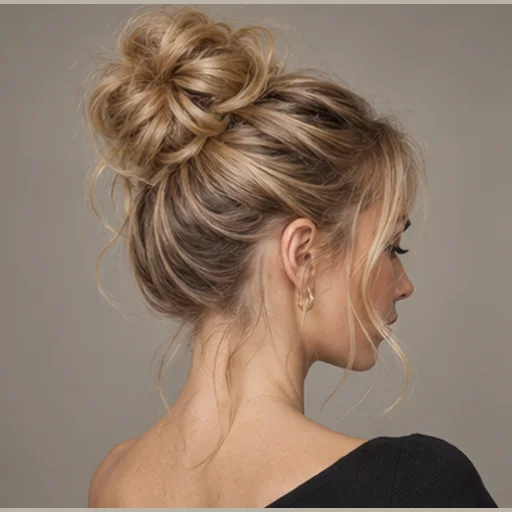
The main volume sits high, with loose surface texture and face-framing pieces.
Moderate styling effort · Long length Details & styling for High textured occasion bun Choose it for: An elevated silhouette and an open neck.
Think about: The apparent softness can hide substantial fastening. Test the finished weight and leave short pieces outside rather than pulling them in.
A routine to discuss Arrange the base texture before gathering. Build a comfortable high grouping and secure it with appropriate fasteners. Check the profile, head movement and removal sequence. Upkeep: Rehearse the fastening and a lower-gather fallback.
Your salon request: I like the high volume and soft surface. Keep ___ loose and test it with my accessory.
Use this look in my brief Occasion hair Save idea
A polished vertical roll holds the length against the back of the head.
Moderate styling effort · Medium length Details & styling for Smooth vertical French twist Choose it for: A continuous upright rear shape instead of a round bun at one point.
Think about: Length and density determine how much fits in the roll. A polished version may need professional construction.
A routine to discuss Arrange the front and gather the back comfortably. Roll upward, manage the excess ends and secure the fold deliberately. Test support and locate the fasteners for removal. Upkeep: Practise before the event; a slipping base needs better support rather than a tighter hairline.
Your salon request: I want this vertical smooth roll with ___ front shape, and need to know how to take it down.
Use this look in my brief Occasion hair Save idea
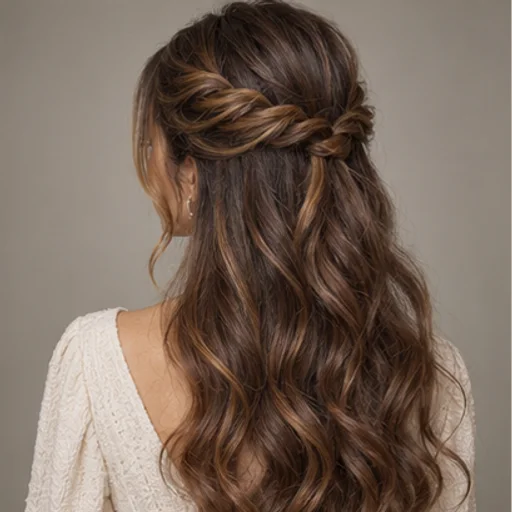
Two twisted side sections meet at the back above the remaining loose lengths.
Moderate styling effort · Long length Details & styling for Two side twists over loose waves Choose it for: A visible rear detail while keeping most hair down.
Think about: Short front layers may not reach the joining point. The pictured loose waves are a separate preparation step.
A routine to discuss Prepare the loose finish you want first. Twist the two reaching side sections gently and join them with a suitable fastening. Leave shorter front pieces out intentionally and test head movement. Upkeep: Carry the same type of spare fastener used in the trial.
Your salon request: I want the side twists to meet at ___ while most of the length stays down. Keep the front ___.
Use this look in my brief Occasion hair Save idea
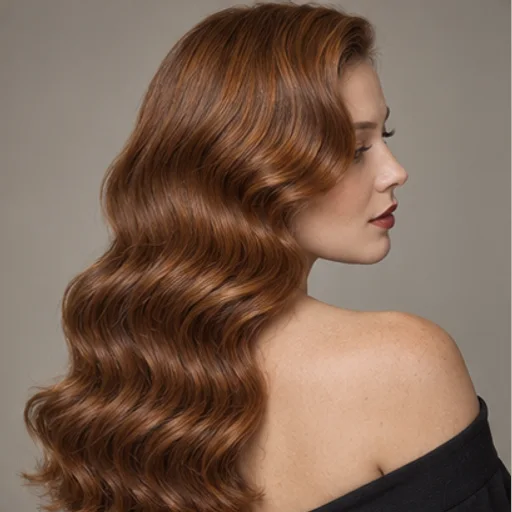
Large coordinated S-shaped bends form a continuous polished surface through the lengths.
High styling effort · Long length Details & styling for Polished S-shaped occasion waves Choose it for: A strongly arranged wave pattern with the hair worn down.
Think about: This finish asks for preparation and setting; naturally loose waves may not form the same coordinated pattern without work.
A routine to discuss Agree on a suitable set and preparation method before the event. Allow the set to finish before shaping the waves into a connected pattern. Test how the result behaves during movement and plan a softer fallback. Upkeep: A trial helps establish the time, support and touch-up the finish needs.
Your salon request: I like these connected S-waves, with the part at ___ and the hair worn ___. Show what the trial requires for my texture.
Use this look in my brief Occasion hair Save idea
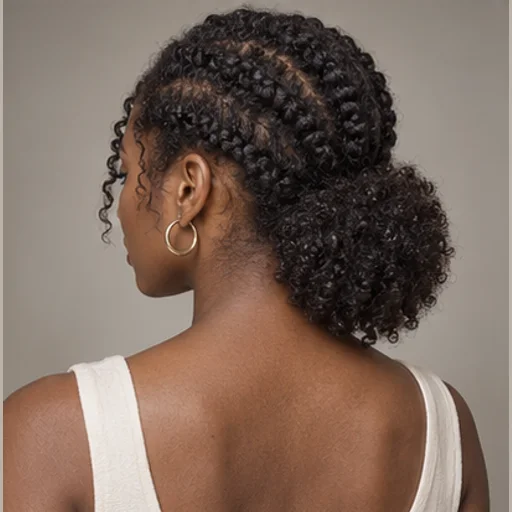
Several directed front and side twists lead toward a low textured puff.
Moderate styling effort · Medium length Details & styling for Flat twists into a low natural puff Choose it for: A controlled route beside visible loose coils.
Think about: The puff and twists need their own comfort check. Neatness should not rely on pulling the hairline tight.
A routine to discuss Choose the part pattern and low gathering point. Create comfortable twists into the planned base or have a stylist demonstrate. Arrange the puff without over-tightening the front. Upkeep: Rehearse the final weight and remove the arrangement if it pulls.
Your salon request: I want these directed twists with a full low puff, leaving ___ texture visible around the front.
Use this look in my brief Occasion hair Save idea
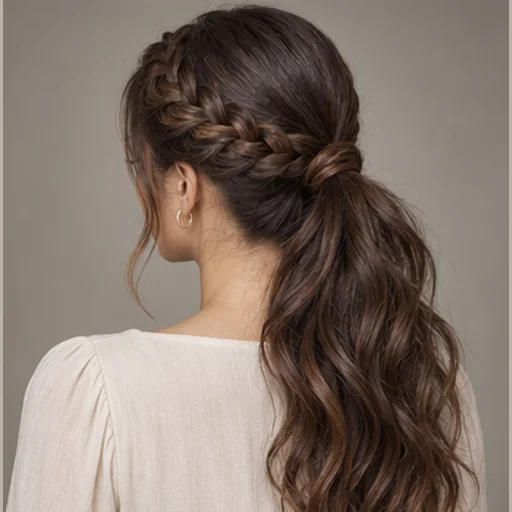
A side braid travels into a low gathered tail, adding a clear detail above the loose lengths.
Moderate styling effort · Long length Details & styling for Side braid joining a low ponytail Choose it for: A ponytail with a more deliberate side feature.
Think about: A smooth crown, braid and wavy tail are three separate styling choices. Short pieces can stay loose.
A routine to discuss Set the part and tail texture first. Braid the selected side section into the planned low gathering point. Secure comfortably and check that the braid is supported without pulling. Upkeep: Keep a spare suitable tie and a plain low-ponytail fallback.
Your salon request: I want the braid on this side and the gathering point at ___. Keep the tail ___ and the front comfortable.
Use this look in my brief Texture & density Save idea
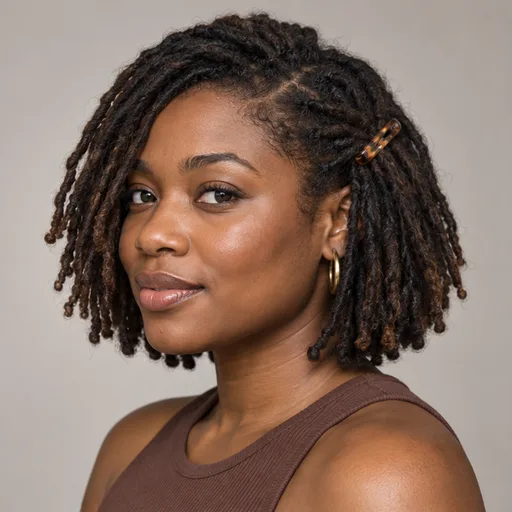
Established-looking loc lengths form a compact bob-like outline.
Low styling effort · Medium length Details & styling for Shoulder-area loc bob Choose it for: A clear lower shape with the loc texture kept visible.
Think about: Your loc number, thickness, maturity and existing length affect the silhouette. A photo does not establish a suitable cutting or installation method.
A routine to discuss Arrange the part in a way that does not pull the roots. Check the outline with the locs lying as you normally wear them. Upkeep: Discuss shape and loc maintenance as related but separate services.
Your salon request: I like this lower outline. Please assess it with my own loc size, length and usual part.
Use this look in my brief Occasion hair Save idea
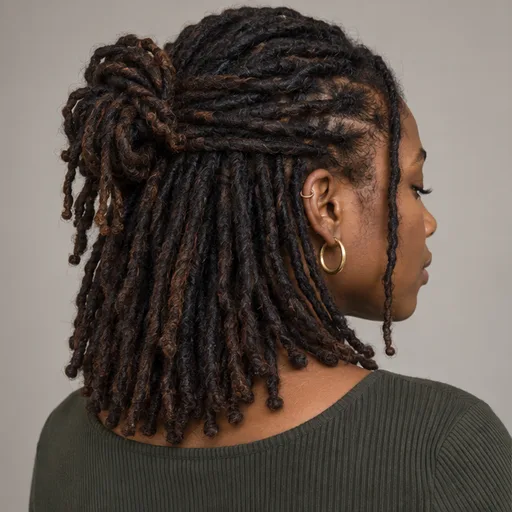
A portion of the locs gathers above the remaining loose lengths.
Low styling effort · Medium length Details & styling for Loc half-up with length left down Choose it for: A front-opening change without lifting the weight of every loc.
Think about: Only gather locs that reach comfortably; the fastening and weight need individual assessment.
A routine to discuss Select the upper sections that naturally reach. Gather loosely using a suitable fastening. Check the hairline and turn your head before adding an accessory. Upkeep: Release the gather if it pulls and know how to remove the fastening.
Your salon request: Use a partial loc gather at ___ and leave the lower length visible. Keep any short front locs outside.
Use this look in my brief Occasion hair Save idea
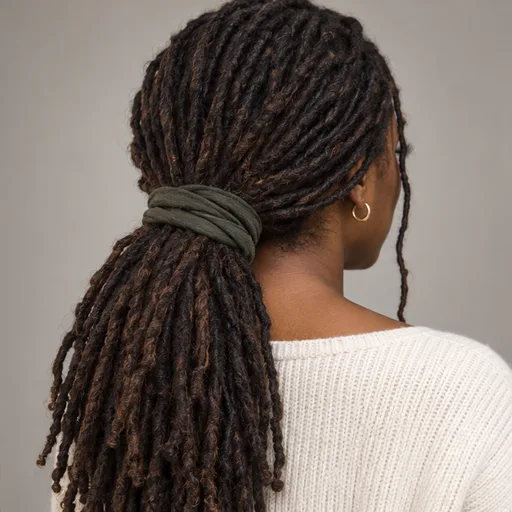
Locs meet near the nape in a compact low arrangement.
Moderate styling effort · Medium length Details & styling for Low gathered loc arrangement Choose it for: A lower point of emphasis and an open upper outline.
Think about: The gather can press against a headrest. Do not force short locs into the fastening.
A routine to discuss Test a loose nape gathering point. Fold or arrange the reaching length with a suitable fastening. Check weight, headrest contact and removal. Upkeep: Rehearse the full arrangement with the outfit and accessories.
Your salon request: I want a low loc arrangement that stays comfortable when seated, with ___ pieces left loose.
Use this look in my brief Texture & density Save idea
Individual rope-like twists retain a clearly separated arrangement through the medium length.
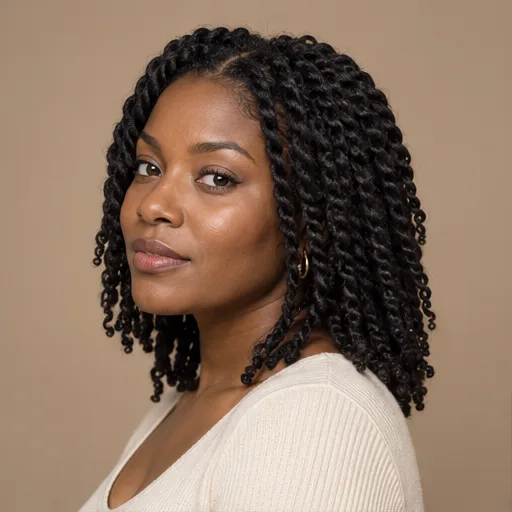
Moderate styling effort · Medium length Details & styling for Medium two-strand twists Choose it for: An organised twist pattern that can be the finished style.
Think about: Added hair and attachment cannot be assumed from a photograph. Ask what construction suits your starting point.
A routine to discuss Divide manageable sections without pulling the roots. Wrap the two strands consistently and arrange the ends gently. Plan washing, drying and take-down before committing to the routine. Upkeep: Setting and removal time count alongside daily handling.
Your salon request: I like this twist size and length. Please explain the construction, weight and care plan for my hair.
Use this look in my brief Styling how-tos Save idea
Rounder grouped definition builds a loose medium-length silhouette.
Moderate styling effort · Medium length Details & styling for Defined loose twist-out direction Choose it for: A released-set look with definition and volume held in balance.
Think about: The photo is an outcome reference. Your texture, section size and starting state affect the actual twist-out.
A routine to discuss Make a comfortable two-strand twist set in manageable sections. Let the full set dry before unraveling. Separate gradually until the balance of definition and fullness suits you. Upkeep: Change one setting variable at a time when refining the routine.
Your salon request: I like these grouped curls with ___ fullness. Show a section size and release method I can repeat.
Use this look in my brief Styling how-tos Save idea
Repeated bends give a stretched, looser-looking surface while retaining volume.
Moderate styling effort · Medium length Details & styling for Released set with repeated S-shaped bends Choose it for: A braid-out direction with softer repeated waves.
Think about: This image does not prove a setting method or predict your exact pattern. Your own braid size and texture change the result.
A routine to discuss Make ordinary three-strand plaits in manageable sections. Allow each section to dry fully before release. Unravel from the ends and separate only as much as needed. Upkeep: Include setting, drying and release in the time plan.
Your salon request: I like this repeated bend and ___ amount of volume. Help me choose the section size for a braid set.
Use this look in my brief Styling how-tos Save idea
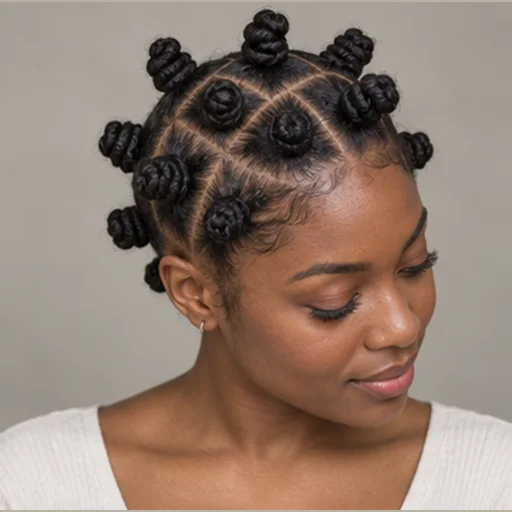
Small raised coils form a deliberate arrangement across clearly separated sections.
Moderate styling effort · Short length Details & styling for Bantu knots with a visible part pattern Choose it for: The knots themselves as a finished style or a temporary set.
Think about: Compact coils can remain damp inside. Placement must feel comfortable against headwear and a pillow.
A routine to discuss Separate manageable sections and twist each length gently. Guide each section around its base without tightening the scalp. Secure lightly and check pressure before continuing. Upkeep: Plan full drying for a knot-out and a methodical take-down.
Your salon request: I want this knot scale with a comfortable part pattern. Show me one secure knot and how to release it.
Use this look in my brief Texture & density Save idea
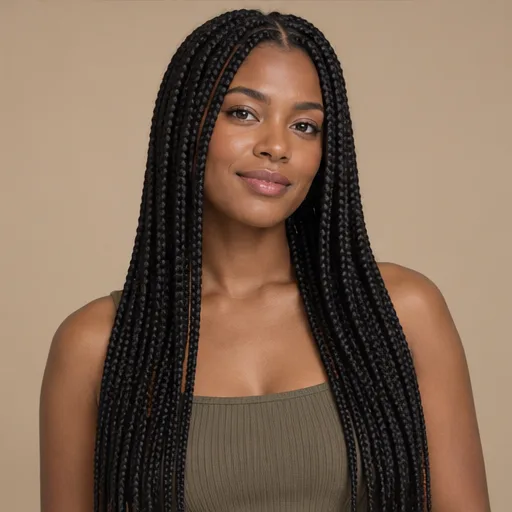
Individual plaits fall from separated sections into a long hanging arrangement.
Styling effort varies · Long length Details & styling for Long individual box braids Choose it for: Freely hanging braids that can be rearranged within comfort limits.
Think about: The photograph cannot establish knotless construction. Length, added weight and root technique must be agreed directly.
A routine to discuss Confirm section size and any added hair with the braider. Check the first completed sections for comfort. Agree on washing, drying and removal before leaving. Upkeep: Include installation and take-down time; do not judge only the daily styling.
Your salon request: I like this individual braid size and length. Please explain the root technique and a manageable weight and removal plan.
Use this look in my brief Texture & density Save idea
Defined routes travel backward along the scalp instead of hanging from separate square sections.
Styling effort varies · Medium length Details & styling for Straight-back cornrow pattern Choose it for: A visible continuous braid pattern.
Think about: The design is less freely rearranged than individual braids. Parting precision should not require painful tension.
A routine to discuss Agree on each route and the gathering or tail finish. Check the first completed row for comfort. Plan scalp access and a gentle removal process. Upkeep: Construction, cleaning and removal belong in the service plan.
Your salon request: I want these routes with ___ row size and a ___ finish at the back, kept comfortable at the front.
Use this look in my brief Occasion hair Save idea
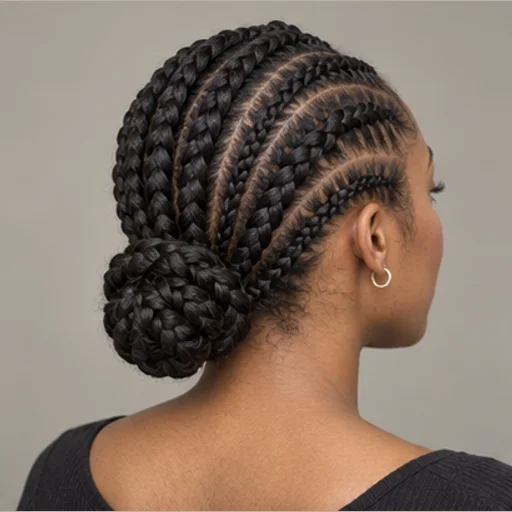
Attached braid routes meet in a low bun with a textured surface.
Moderate styling effort · Long length Details & styling for Cornrows into a low braided bun Choose it for: A clearly patterned upper head and a low rear focal point.
Think about: Gathering the braids changes where their weight rests. Assess the finished bun as well as the individual rows.
A routine to discuss Plan the routes around the intended gathering point. Check row comfort before forming the bun. Secure the low arrangement and test seated headrest contact. Upkeep: Know whether the bun can be released while the underlying braids remain.
Your salon request: I like this low finish, but need comfortable routes, manageable weight and an easy way to release the bun.
Use this look in my brief Occasion hair Save idea
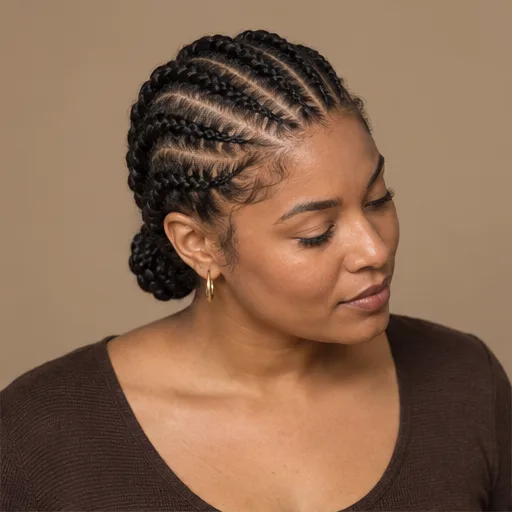
Raised braided and twisted-looking sections create a wrapped crown with a low gathered back.
Moderate styling effort · Medium length Details & styling for Textured wrapped crown updo Choose it for: A structured surface that keeps visible texture.
Think about: The photograph is not a step-by-step construction map. Agree on the actual technique and fastening with a stylist.
A routine to discuss Choose which texture remains visible and where the volume sits. Build and test the supporting arrangement before adding an accessory. Record the fasteners and removal sequence. Upkeep: Use a trial to check weight, pressure and any difficult-to-reach fastening.
Your salon request: I like the wrapped crown and texture, with ___ volume. Please show a comfortable construction for my length.
Use this look in my brief Styling how-tos Save idea
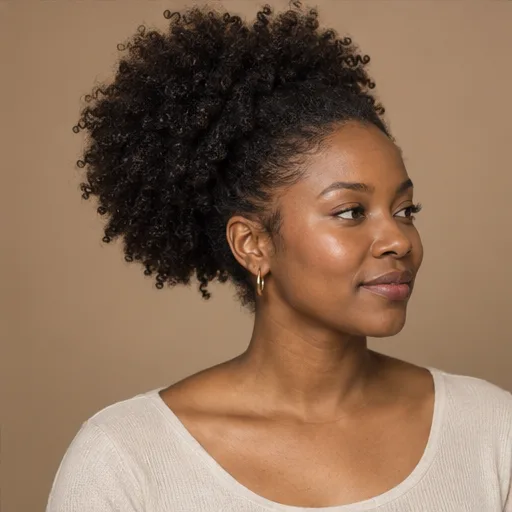
Loose coils gather upward while retaining a full textured puff.
Low styling effort · Medium length Details & styling for Loose high natural puff Choose it for: An open face with natural texture concentrated above.
Think about: The hairline should not be pulled tight to create height. Shorter front pieces may remain outside.
A routine to discuss Choose a comfortable gathering point. Use a suitable loose fastening and arrange the puff with a light touch. Release or reposition if the front or scalp feels pulled. Upkeep: Change the arrangement when comfort or scalp access requires it.
Your salon request: I want this textured puff at a comfortable height, with ___ front pieces left outside.
Use this look in my brief Styling how-tos Save idea
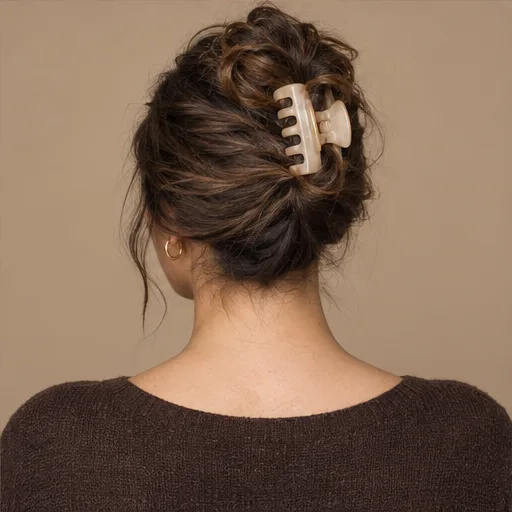
A loose folded twist sits vertically beneath a visible clip.
Low styling effort · Medium length Details & styling for Twist held with a claw clip Choose it for: A quick gathered style that can be released without many pins.
Think about: Clip capacity and grip must suit the actual hair. A clip that presses or snaps shut on too much bulk needs a different size or arrangement.
A routine to discuss Gather the reaching hair loosely. Fold or twist it into a shape the clip can hold without forcing. Check for pressure and release promptly if uncomfortable. Upkeep: A temporary daily arrangement, not a rigid fastening to sleep in.
Your salon request: I need a simple clip arrangement that suits my density and can be put in and removed easily.
Use this look in my brief Styling how-tos Save idea
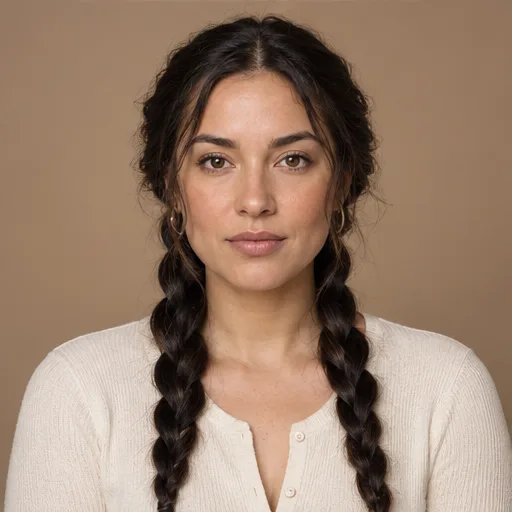
Two separate low plaits keep the length organised on either side.
Low styling effort · Long length Details & styling for Two loose three-strand braids Choose it for: A simple route with fewer hand changes than an attached braid.
Think about: Short front layers may remain outside. The pictured placement does not require collecting every strand tightly.
A routine to discuss Part into two manageable sections. Cross each outside strand over the middle alternately down the length. Secure softly and check that the roots remain comfortable. Upkeep: Remove and reset as needed; the arrangement should not depend on continuous tension.
Your salon request: I want two loose plaits with the front ___ and enough comfort for ___.
Use this look in my brief Styling how-tos Save idea
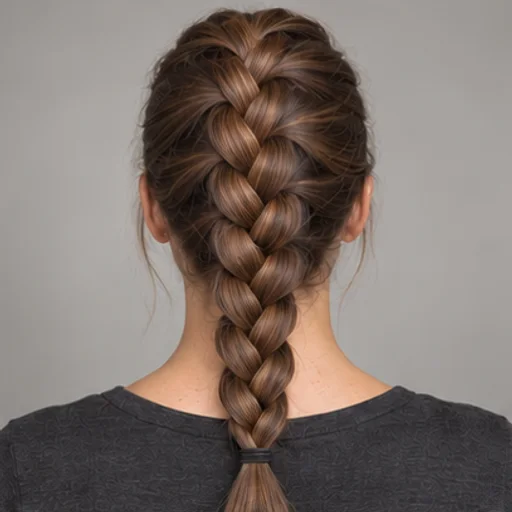
A prominent central braid travels down the back and into a three-strand tail.
Moderate styling effort · Long length Details & styling for Single raised Dutch braid Choose it for: A raised route that gathers the sides as it travels.
Think about: The photo shows the outline, not every hand movement. Under-crossing and added sections create the structure.
A routine to discuss Begin with three sections and cross the outside strands under the middle. Add loose hair to each outside section before its next under-crossing. Continue down the route, then braid the tail without adding hair. Upkeep: Keep comfortable tension and undo the style if it pulls.
Your salon request: I like the raised centre route. Please show the under-crossing and a section size I can manage.
Use this look in my brief Styling how-tos Save idea
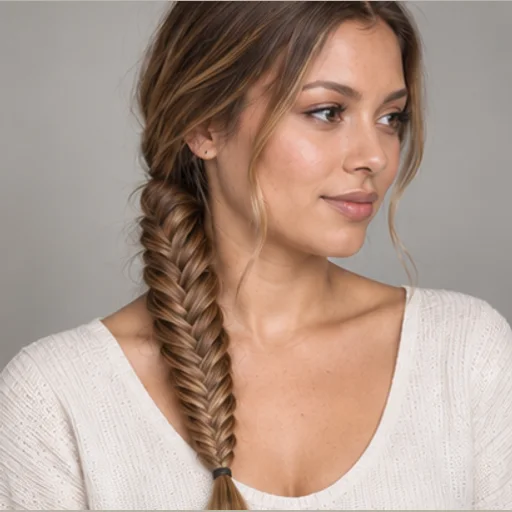
Fine alternating crossings form a narrow herringbone-like braid over one shoulder.
Moderate styling effort · Long length Details & styling for Side fishtail with a fine woven pattern Choose it for: A visible side detail that is easier to watch while learning.
Think about: The opposite-side pieces must reach comfortably. Smaller transfers make a finer pattern but take more repetitions.
A routine to discuss Divide the gathered hair into two large sections. Transfer a small outside piece across to the inside of the opposite section, alternating sides. Secure the tail and soften only as much as you want. Upkeep: Allow time for repeated small transfers and stop to rest your hands when needed.
Your salon request: I like this fine side pattern and want the base comfortable, with ___ front pieces left loose.
Use this look in my brief Occasion hair Save idea
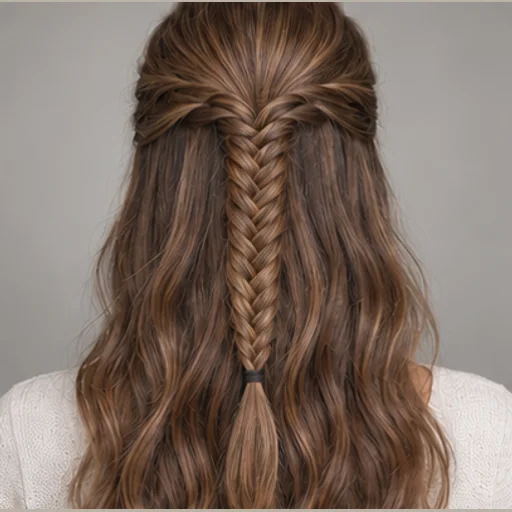
A narrow woven upper section sits above loose waves down the back.
Moderate styling effort · Long length Details & styling for Half-up fishtail detail Choose it for: A distinct rear braid detail while preserving most of the loose length.
Think about: The waves and braid are separate steps. Keep the lower hair out of the weave to avoid unintentionally gathering more.
A routine to discuss Prepare the loose base finish. Gather the upper sections that reach comfortably and use the two-section fishtail transfer. Stop at the chosen detail length and secure. Upkeep: Carry a spare matching fastener and a plain half-up fallback.
Your salon request: I want a narrow fishtail detail at ___ with the lower hair left loose and ___.
Use this look in my brief Occasion hair Save idea
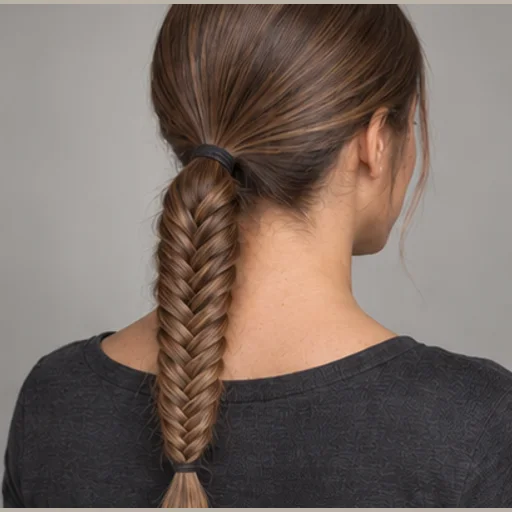
A low tied base leads into a broad fine-patterned fishtail tail.
Moderate styling effort · Long length Details & styling for Low ponytail woven into a fishtail Choose it for: A defined ponytail base with more detail through the length.
Think about: The tie supplies the gathering point; the weave supplies the tail pattern. Do not tighten the root to correct gaps in the weave.
A routine to discuss Make a comfortable low ponytail. Divide the tail into two and alternate small outside-to-opposite transfers. Secure the end and test the base for comfort. Upkeep: The woven tail can be released separately from the low ponytail if needed.
Your salon request: I want this low base and woven tail, with ___ smoothness at the crown and comfortable front tension.
Use this look in my brief Haircuts Save idea
A high compact perimeter exposes the lower jaw and much of the neck.
Moderate styling effort · Short length Details & styling for Above-jaw micro bob Choose it for: A much shorter boundary than a chin-length bob.
Think about: The front may no longer tuck. Growth direction and texture determine whether this high edge sits smoothly.
A routine to discuss Arrange the natural part and dry direction. Check the exposed ear and nape outline without forcing a tuck. Upkeep: The graphic edge may need reshaping before a longer bob would.
Your salon request: I like this high edge, but agree the endpoint at ___ and show how it sits in my natural finish.
Use this look in my brief Haircuts Save idea
Separated strands leave visible spaces through a brow-area fringe.
Moderate styling effort · Medium length Details & styling for Wispy eyebrow-length fringe Choose it for: Light-looking front coverage rather than a continuous full line.
Think about: Section depth and natural grouping matter. The same fringe can separate or clump differently through the day.
A routine to discuss Reset the front direction separately from the longer hair. Use a light touch when separating the strands and avoid repeatedly adding product. Upkeep: Agree on width and section depth as well as the endpoint.
Your salon request: I want this separated front with ___ width and a dry endpoint at ___.
Use this look in my brief Haircuts Save idea
The front edge sits well above the eyebrows, leaving a broad forehead area visible.
Moderate styling effort · Medium length Details & styling for Short straight micro fringe Choose it for: A deliberately short front statement.
Think about: There are fewer pin-back or tucking options until it grows. A cowlick can change the edge more visibly at this length.
A routine to discuss Set the root direction early in the drying routine. Check the actual dry endpoint before deciding the fringe needs shortening. Upkeep: A short boundary and its grow-out require a separate plan from the overall cut.
Your salon request: I want the front clearly above the brows, but not shorter than ___. Please assess my growth direction first.
Use this look in my brief Haircuts Save idea
The rear edge curves broadly, with the centre somewhat longer than the sides.
Moderate styling effort · Long length Details & styling for Long rounded U-shaped perimeter Choose it for: A soft rear outline that retains a substantial lower shape.
Think about: The reference does not specify internal layer height. Ask how much side length is removed to make the curve.
A routine to discuss Let the hair fall naturally down the back when checking the outline. Compare the loose edge with the length available in your usual braid or tie-back. Upkeep: Maintain the rear curve without automatically shortening interior layers.
Your salon request: Keep this rounded rear edge and enough side length for ___. Discuss the internal layers separately.
Use this look in my brief Haircuts Save idea
The side lengths slope toward a distinct longest point in the centre back.
Moderate styling effort · Long length Details & styling for Long pointed V-shaped perimeter Choose it for: A stronger pointed outline when the hair is worn down.
Think about: A deep V leaves shorter sides and a narrower lowest tip. The pictured centre length differs slightly from the U and blunt examples.
A routine to discuss Check the rear edge with the hair falling normally. Try the usual braid or gather to understand how the shorter sides behave. Upkeep: Preserve the intended point while deciding how full the lowest ends should stay.
Your salon request: I like the V direction, but want the side corners no shorter than ___ and the lowest point ___ full.
Use this look in my brief Haircuts Save idea
The rear edge stays relatively level across its full width.
Moderate styling effort · Long length Details & styling for Long full horizontal perimeter Choose it for: A strong lower border with more side length retained than a pronounced V.
Think about: A level edge and no internal layers are not identical instructions. Texture changes how sharply the line appears.
A routine to discuss Let the hair settle in the normal finish before assessing the edge. Compare the outline with any shorter front framing you want to keep. Upkeep: Treat the lower border and front shaping as separate maintenance choices.
Your salon request: Keep a full level rear edge at ___, with only ___ front shaping and enough side length for ___.
Use this look in my brief