Men’s hair
Short men's hair: buzz, crop or a little height
Compare short top shapes, side transitions and neckline finishes, with daily styling, texture adaptations and a clear barber request.
Upkeep: A buzz or precise crop can need outline attention even with little daily styling. Agree whether the next visit resets the whole shape or only tidies the perimeter.
Effort is a planning estimate. The specific option and your routine change the commitment.
The starting point
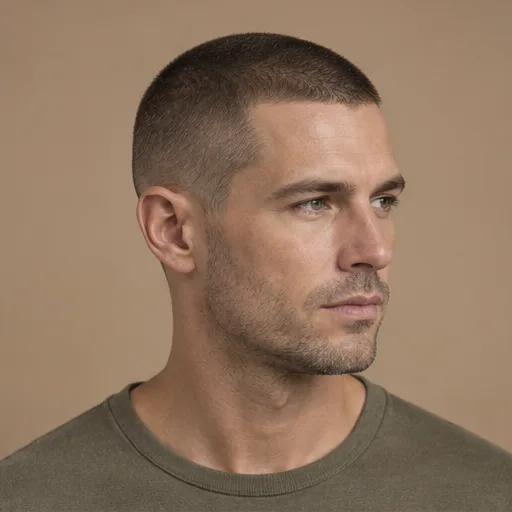
Choose a short haircut by the shape you want above the forehead and across the crown. A buzz keeps the top uniformly close, a crop brings the front forward, and a crew-style or short quiff leaves more height toward the front. The sides and neckline are separate choices, so the same top can look very different with a soft taper or a stronger fade.
Compare the visual directions
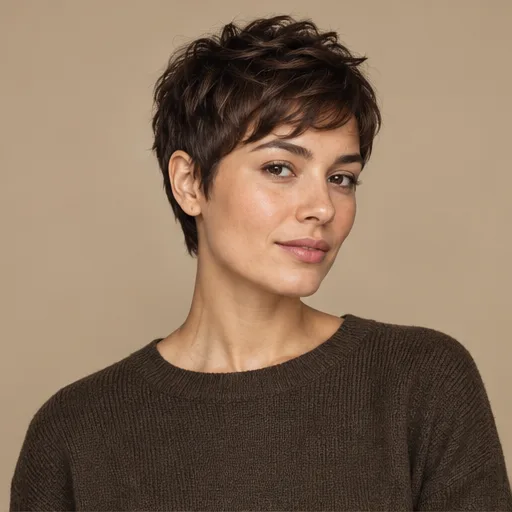
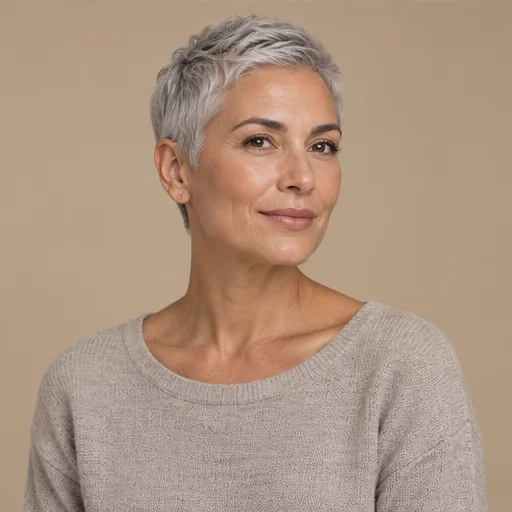
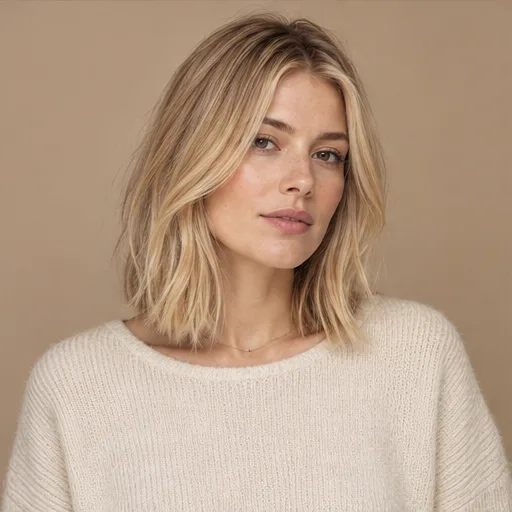
Concept references for shape and placement. Use the differences you like in your consultation; these are not step-by-step results or predictions for your hair.
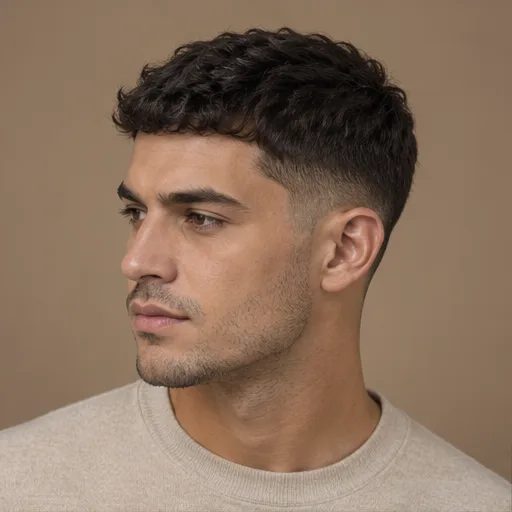
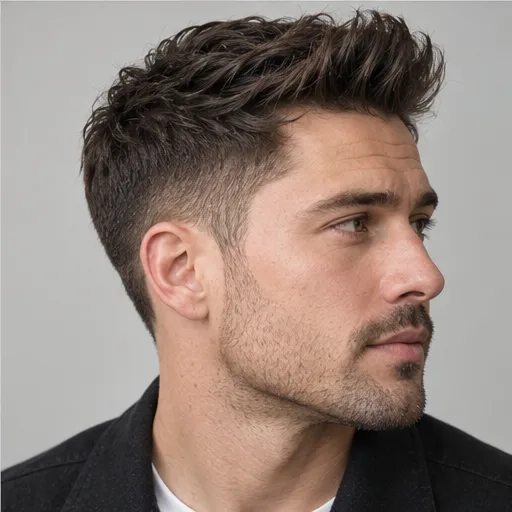
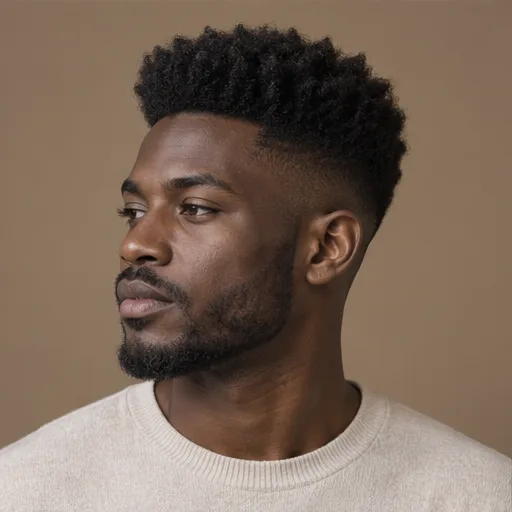
Compare your options
Even buzz
Minimal styling and a clear, close outline. It leaves little length for movement or coverage, and the perimeter becomes a prominent part of the design.
Ask about: What length will show my growth pattern, and can we keep the side and neckline edges soft?
Forward textured crop
Retains a visible front shape and works with a small amount of directional styling. The fringe line and its behavior as it grows need explicit discussion.
Ask about: Should the fringe be blunt or irregular, and how short will it sit when dry?
Crew-style top or short quiff
Keeps more height toward the front. It offers directional variation but requires a root reset more often than an evenly close cut.
Ask about: How much top length is necessary for this lift, and can I achieve it with my usual tools?
Compare what remains, not just what comes off
A buzz cut leaves little length to redirect, which makes its outline direct and its daily styling simple. It also reveals the natural growth pattern and head shape more clearly. A forward crop keeps enough front length to create a short fringe or textured edge. A crew-style top usually has a little more length toward the front, while a short quiff intentionally lifts that area.
Bring a front and side reference and say which part you like. The name alone will not explain whether you want a blunt fringe, an irregular edge, a soft front or a clearly upright section. Ask how the chosen top behaves without a professional finish so you can compare it with your own morning routine.
Specify sides and neckline independently
For a softer outline, retain some side length with a localized taper or scissor blend. For more contrast, choose a fade and identify its height and shortest finish. Confirm whether the top connects gradually into the sides or sits as a distinct shape. Do not let an automatic skin fade become the default if you wanted visible hair throughout.
At the nape, choose a natural or tapered finish for a softer edge, or discuss a more geometric line if that is your preference. Decide what should happen around the ears and sideburns, including any beard connection. These edge details often determine how the haircut feels as it grows, even when the top still looks good.
Work with texture and changing density
Straight hair may show every change in a blunt crop edge, while waves can create a more broken outline. A very short section at a strong cowlick may stand differently from a slightly longer one. Ask the barber to assess that area before selecting the final length rather than assuming shorter always lies flatter.
Curly or coily short hair can retain a small natural top shape with tapered sides, or be clipped uniformly close. The dry curl length matters when defining a fringe. For fine strands or lower density, compare the visible contrast between top and sides and decide whether you prefer a close even finish or some retained texture. A haircut changes appearance; it does not explain new thinning. Persistent thinning deserves assessment, as AAD notes at aad.org source.
A small daily routine
Start with dry or lightly damp hair without heavy buildup. Have a comb or use your fingers, plus a small amount of familiar styling product if the top has enough length to shape. A dryer is optional. Estimate 3–10 minutes of active styling; washing and full drying are separate.
- Observe the top before adding anything. A buzz may need no shaping, while a crop or quiff may need only the front reset.
- Dampen the roots of any section that dried in the wrong direction. For a crop, guide it forward; for a quiff, support the front upward; for curls, arrange the existing groups.
- Let the shape dry or use a moving dryer at a comfortable lower setting. Do not try to force damp hair into its final finish with paste.
- Spread a small amount of product between your hands. Apply through the top lengths first, then define a few pieces with the residue.
- Check the profile and crown. If the sides or nape need constant correction, decide whether it is time for an outline tidy rather than increasing styling effort.
What to change at the next appointment
If the fringe becomes awkward quickly, adjust its starting length or choose a direction that tolerates more growth. If a quiff collapses unless it is heavily coated, discuss whether the top is too long, too short or carrying weight in the wrong place for the result you want. If a buzz feels harsher than expected, a slightly longer even top or softer side edge can change the impression.
Keep a note of the point between cuts when the shape works best. Ask what can be tidied while preserving that top length. A short haircut can take little daily styling while still needing regular professional attention to maintain a precise edge; decide which kind of effort you prefer.
Take this to your appointment
A starting point for your brief
I want a ___ top, with the front worn ___ and the crown left ___. Keep the sides ___ and the neckline ___. I can spend ___ minutes styling and prefer ___ appointment upkeep. Please explain how my growth pattern changes the reference.
Use this in my briefAdapt the wording to your own hair, preferences and history.
Common questions
Is a buzz always the easiest short cut?
It often requires the least shaping, but keeping a very precise length and edge can still mean regular appointments. Decide whether daily effort or appointment frequency matters more.
Can curly hair have a crop?
Yes. Specify the dry fringe length and the curl shape you want retained, then choose the side transition separately.
Sources & further reading
Sources accessed 3 October 2026. These publishers have not reviewed this guide. Our editorial standards explain our method.