Men’s hair
Pompadour, quiff or slick-back: choose the direction on top
Compare a curved pompadour, a front-lifted quiff, a flatter slick-back and a side part. Learn the drying direction before choosing a finishing product.
Upkeep: Longer tops need direction-setting while short sides need their own maintenance. Agree whether the next visit tidies the sides or reshapes the top as well.
Effort is a planning estimate. The specific option and your routine change the commitment.
The starting point
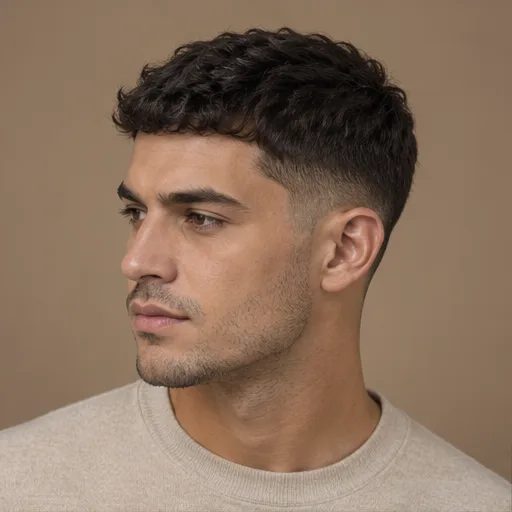
These styles differ mainly in where the top goes. A pompadour builds a curved raised front that travels backward; a quiff concentrates lift at the front; a slick-back follows the head more closely. Choose that shape first, then decide whether the sides taper softly, fade or remain disconnected.
Compare the visual directions
Concept references for shape and placement. Save the specific look you like and open its details. These are starting points for a consultation.
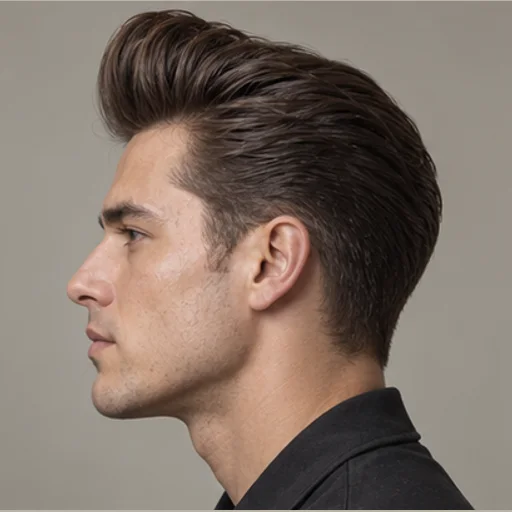
Curved-back pompadour
A tall front curve travels backward into the top, most clearly visible in profile.
Moderate styling effort · Medium lengthDetails & styling for Curved-back pompadour
Choose it for: A pronounced raised silhouette with a backward direction.
Think about: It asks for sufficient length and deliberate setting. The photograph does not prove that your front will hold the same height.
A routine to discuss
- Lift the front at the roots while guiding the length backward.
- Allow the shape to cool before applying finishing product gradually.
Upkeep: Discuss top shaping and side maintenance as separate needs.
Your salon request: I want this curve at ___ height and can spend ___ on drying. Show a realistic version for my growth direction.
Use this look in my brief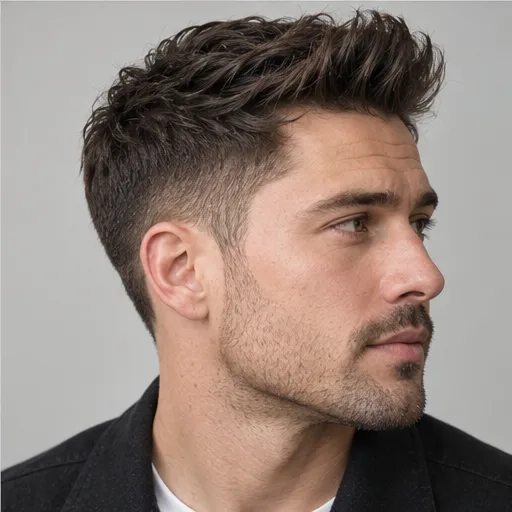
Short front-lifted quiff
The strongest lift sits at the front while the rest of the short top stays more textured.
Moderate styling effort · Short lengthDetails & styling for Short front-lifted quiff
Choose it for: A focal point at the front without a tall continuous pompadour.
Think about: The lifted finish may need drying direction, not simply more hold. Plan an easier flatter version too.
A routine to discuss
- Lift and direct the front while drying on a suitable lower setting.
- Let it cool, then add a small amount of finish if wanted.
Upkeep: Keep enough front length for the lift while deciding side upkeep separately.
Your salon request: I want this modest front lift and an alternate softer finish I can wear without a full restyle.
Use this look in my brief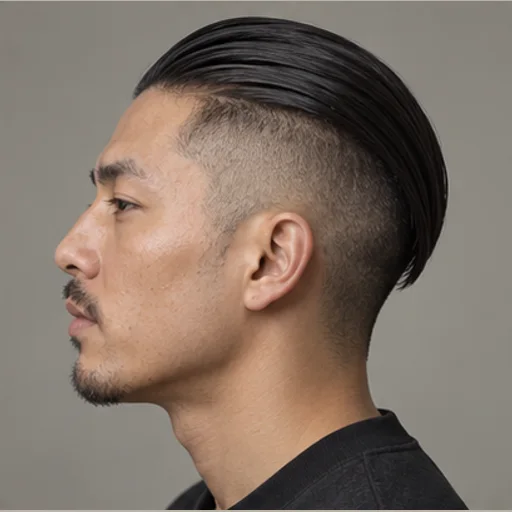
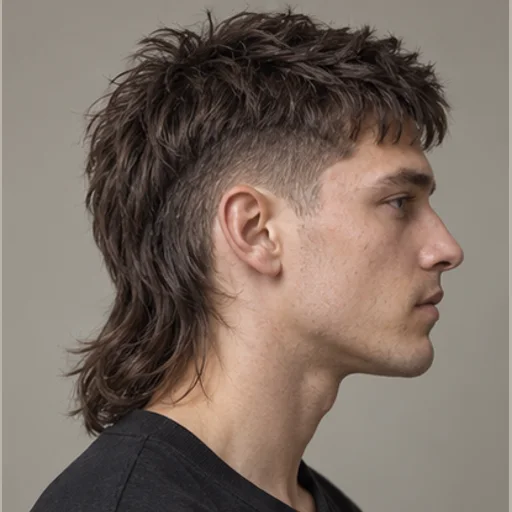
Slick-back over a disconnected undercut
A longer backward-swept top sits above a clearly shorter disconnected side.
Moderate styling effort · Medium lengthDetails & styling for Slick-back over a disconnected undercut
Choose it for: Strong contrast with a relatively flat backward top.
Think about: The loose top and the grow-out can look very different. Ask to see where the disconnection begins.
A routine to discuss
- Direct the top backward while drying without excessive front lift.
- Use the chosen finish gradually and check the side profile.
Upkeep: The lower area needs time to reconnect if you later grow toward fuller sides.
Your salon request: Keep the top swept back and show the disconnection at ___. I also want to know how it falls loose.
Use this look in my brief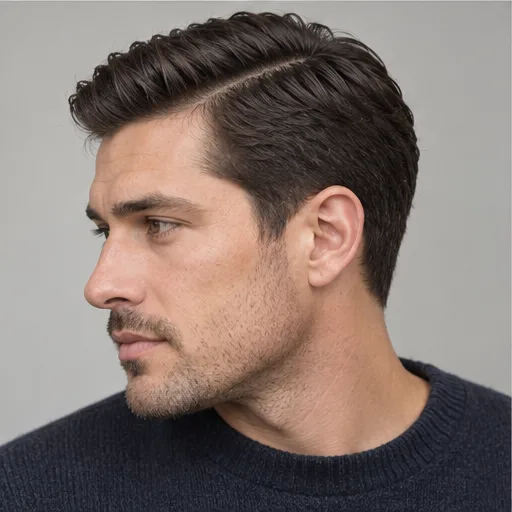
Side part with a fuller scissor taper
The sides retain a connected fuller outline around a softly parted top.
Moderate styling effort · Short lengthDetails & styling for Side part with a fuller scissor taper
Choose it for: A softer transition than closely faded sides.
Think about: The retained side length still needs shaping around the ear and crown. Decide whether the part is soft or sharply marked.
A routine to discuss
- Arrange the part with your natural growth direction.
- Dry or set the top across the head without pressing every section flat.
Upkeep: Tidy ear and nape edges while preserving the side fullness you chose.
Your salon request: Keep this connected side fullness, a ___ part and enough top length to sweep ___.
Use this look in my briefCompare your options
Pompadour
A raised front curves backward into the top. The outline is visible in profile and usually asks for deliberate drying or setting, rather than simply more product.
Ask about: How much front length and daily drying will this height require in my hair?
Quiff
The front lifts and can lean backward or to one side while the rest of the top stays more textured. A small quiff makes a subtler change than a tall continuous pomp.
Ask about: Where should the lift start, and can I wear it flatter on other days?
Slick-back
The top is directed backward with less front height. It can be glossy or relatively matte; slick describes direction more than a requirement to look wet.
Ask about: Will my crown and front growth direction accept this without constant forcing?
Side part with taper
A defined or soft part guides the hair across the head, with more retained side fullness than a close undercut. It can be a practical alternative if a straight-back finish fights the natural direction.
Ask about: Should the part remain soft, and how much hair stays above the ear?
Disconnected slick-back
A long swept top sits over much shorter sides with a deliberate break in connection. That contrast is a separate haircut choice from the backward styling.
Ask about: Where does the disconnection begin, and what does the top look like when it falls loose?
Choose the profile before the product
Look at a side view. Decide how high the front should stand, where that height should settle and whether the back of the top lies flat. A front photo can hide a very tall profile or a disconnected side.
Tell the barber how much time you want to spend drying. If you want a high curve only on occasional days, ask for a cut that also works in a softer everyday direction. Stronger hold cannot replace length that is too short to form the intended shape.
Set a quiff or pompadour direction
Use the full heat-styling guide for handling precautions. Lower settings and less repeated heat are sensible planning choices; the AAD guidance is linked below.
- Start with the top arranged in the intended part or backward direction after your normal wash or small-area reset.
- Use your fingers or brush to lift the front at the roots as you dry, then guide it backward into the curve you want. Avoid pulling hard against the hairline.
- For a quiff, concentrate the lift at the front and let the rest of the top settle more naturally. For a pomp, connect the curve through more of the top.
- Let the shape cool before disturbing it. Check the profile as well as the front.
- Spread a small amount of a familiar finishing product through your hands, then work it through gradually. Add only where the shape needs support.
Make a flatter backward finish
Direct the hair backward while drying rather than lifting the whole front upward. Keep the surface controlled with fingers or a suitable brush, following the natural growth where possible. Once dry, add the desired finish in small amounts.
If the hair keeps falling across a hard part or standing at the crown, discuss that growth pattern with the barber. A slight side direction or more retained length may be more workable than increasing product until the hair feels coated.
Adjust for density, texture and the day
Fine-looking ends may separate under too much heavy product. Dense hair may need careful internal shaping to settle, but indiscriminate thinning can change the surface. Wavy hair can keep visible movement instead of being forced into a perfectly smooth surface.
On a low-effort day, use a softer sweep if the cut permits it. Photograph both the ambitious finish and the ordinary one. The next haircut can then support the version you actually wear most often.
Take this to your appointment
A starting point for your brief
I want ___ height at the front and a ___ direction through the top. Keep the sides connected / disconnected at ___. I can spend ___ on drying, and want an easier alternate finish of ___.
Use this in my briefAdapt the wording to your own hair, preferences and history.
Common questions
Can I make a pompadour with product alone?
The cut and direction-setting matter. Product can support a shape, but it cannot create the same curve when the length or growth direction does not allow it.
Does a slick-back require a skin fade?
No. A scissor taper, fuller sides or an undercut can accompany the backward direction. Choose the side treatment separately.
Sources & further reading
Sources accessed 3 October 2026. These publishers have not reviewed this guide. Our editorial standards explain our method.