Texture & density
Box, knotless or cornrow braids: plan the installation and removal
Compare individual box braids, knotless starts and cornrow patterns. Plan added weight, scalp access, appointment time and a manageable take-down.
Upkeep: Installation, washing, drying and removal all count as upkeep. Agree on a plan with the braider and respond to comfort and scalp condition instead of a universal wear-time promise.
Effort is a planning estimate. The specific option and your routine change the commitment.
The starting point
Box describes a sectioning pattern; knotless describes one way added hair is introduced; cornrows describe braids that follow a route attached along the scalp. These terms answer different questions and can overlap. Choose the layout, size, length and added weight together rather than treating a fashionable name as a complete specification.
Compare the visual directions
Concept references for shape and placement. Save the specific look you like and open its details. These are starting points for a consultation.
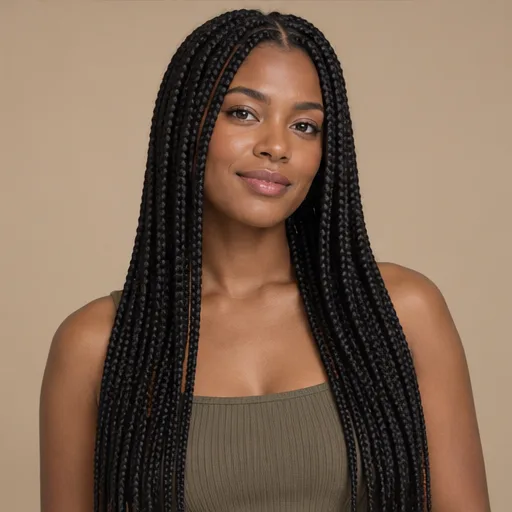
Long individual box braids
Individual plaits fall from separated sections into a long hanging arrangement.
Styling effort varies · Long lengthDetails & styling for Long individual box braids
Choose it for: Freely hanging braids that can be rearranged within comfort limits.
Think about: The photograph cannot establish knotless construction. Length, added weight and root technique must be agreed directly.
A routine to discuss
- Confirm section size and any added hair with the braider.
- Check the first completed sections for comfort.
- Agree on washing, drying and removal before leaving.
Upkeep: Include installation and take-down time; do not judge only the daily styling.
Your salon request: I like this individual braid size and length. Please explain the root technique and a manageable weight and removal plan.
Use this look in my brief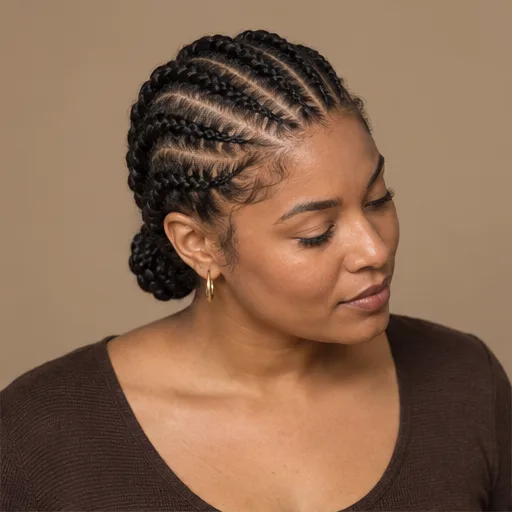
Straight-back cornrow pattern
Defined routes travel backward along the scalp instead of hanging from separate square sections.
Styling effort varies · Medium lengthDetails & styling for Straight-back cornrow pattern
Choose it for: A visible continuous braid pattern.
Think about: The design is less freely rearranged than individual braids. Parting precision should not require painful tension.
A routine to discuss
- Agree on each route and the gathering or tail finish.
- Check the first completed row for comfort.
- Plan scalp access and a gentle removal process.
Upkeep: Construction, cleaning and removal belong in the service plan.
Your salon request: I want these routes with ___ row size and a ___ finish at the back, kept comfortable at the front.
Use this look in my brief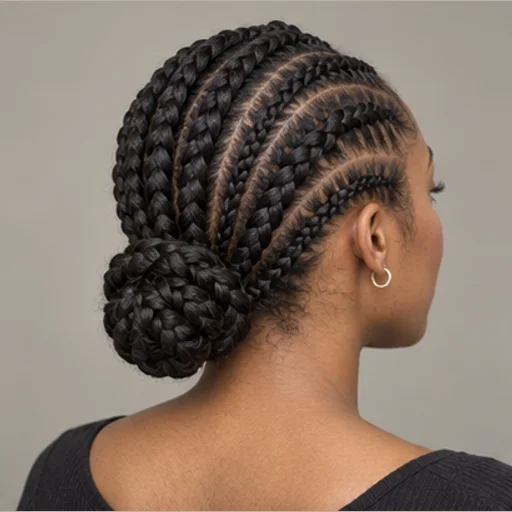
Cornrows into a low braided bun
Attached braid routes meet in a low bun with a textured surface.
Moderate styling effort · Long lengthDetails & styling for Cornrows into a low braided bun
Choose it for: A clearly patterned upper head and a low rear focal point.
Think about: Gathering the braids changes where their weight rests. Assess the finished bun as well as the individual rows.
A routine to discuss
- Plan the routes around the intended gathering point.
- Check row comfort before forming the bun.
- Secure the low arrangement and test seated headrest contact.
Upkeep: Know whether the bun can be released while the underlying braids remain.
Your salon request: I like this low finish, but need comfortable routes, manageable weight and an easy way to release the bun.
Use this look in my brief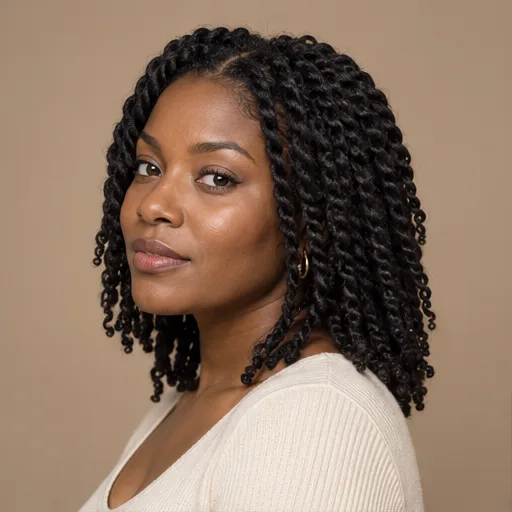
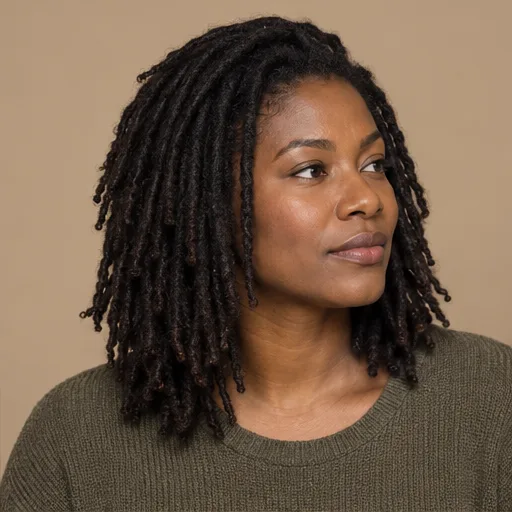
Medium two-strand twists
Individual rope-like twists retain a clearly separated arrangement through the medium length.
Moderate styling effort · Medium lengthDetails & styling for Medium two-strand twists
Choose it for: An organised twist pattern that can be the finished style.
Think about: Added hair and attachment cannot be assumed from a photograph. Ask what construction suits your starting point.
A routine to discuss
- Divide manageable sections without pulling the roots.
- Wrap the two strands consistently and arrange the ends gently.
- Plan washing, drying and take-down before committing to the routine.
Upkeep: Setting and removal time count alongside daily handling.
Your salon request: I like this twist size and length. Please explain the construction, weight and care plan for my hair.
Use this look in my briefCompare your options
Individual box braids
Separate plaits fall from individually divided sections. Size and length determine how they gather and how much work removal takes. The section shape does not tell you how extensions were attached.
Ask about: What section size, length and added weight are proposed?
Knotless-start individual braids
Added hair is introduced along the braid rather than as a larger initial attachment at the root. This describes construction, not a guarantee of a tension-free service.
Ask about: Can you show the root technique and discuss weight and comfort for my hair?
Straight-back cornrows
Braids follow continuous routes toward the back, with hair added along each route. The visible pattern is part of the design and is less freely rearranged than hanging individual braids.
Ask about: Where will the rows start, how large will they be and where will the ends gather?
Cornrows into a bun or ponytail
The route is designed around a gathering point. A bun adds weight and pressure at that location, so the finished arrangement must be assessed as well as the rows.
Ask about: Will the final gathering point stay comfortable against a headrest or during sleep?
Twists as an alternative
Two-strand twists give a different surface and removal sequence. Added hair, size and length still need an explicit plan.
Ask about: What changes in care, drying and take-down compared with the braid option?
Book the whole service, not just a photo
Explain your current length, density, scalp comfort and recent services. Ask whether the appointment includes washing, detangling or a prepared starting state. Confirm what hair, if any, is added and the full expected cost before the service.
Photographs help with layout and length, but cannot establish whether an attachment method is suitable for you. Avoid assuming an image proves knotless construction unless the root process or view actually shows it. Ask the braider directly.
Use the first sections as a check-in
Before the whole head is finished, check the first completed rows or braids. Move your head and say if the roots feel pulled. Smaller sections, less added weight or a different route may be a better plan than continuing an uncomfortable start.
The label protective does not make a painful arrangement harmless. Repeated tension can contribute to hair loss; see the AAD guidance at aad.org source. Loosen or remove a style that pulls or hurts, and seek assessment for new thinning rather than waiting for the style to settle.
Plan access for washing and drying
Ask how to reach the scalp gently, rinse thoroughly and dry the added and natural hair. The appropriate routine depends on the installation, products and your needs. Do not accept a plan that simply ignores scalp discomfort or makes cleaning impossible.
If the braids are long, practise how to gather them loosely for your daily activities. A high heavy bun may introduce tension that was not present with the braids hanging down. The care plan should cover the way you will actually wear them.
Make removal an agreed step
Know where your natural length ends before any cutting of added material. If that boundary is uncertain, get help; guessing can cut your own hair. Undo the plaits deliberately from the ends upward and separate shed hair gently before washing.
Leave enough time and rest breaks for removal. A large number of small sections can be a demanding project even when the daily style felt simple. Agree on professional removal if the installation or your dexterity makes the process difficult.
Take this to your appointment
A starting point for your brief
I want ___ sectioning with ___ attachment, ___ length and manageable added weight. Please check the first sections with me, explain washing and drying, and agree on a removal plan before we begin.
Use this in my briefAdapt the wording to your own hair, preferences and history.
Common questions
Does knotless mean it cannot pull?
No. Length, added weight, section size and application still affect tension. Comfort must be checked during the service and while wearing the finished style.
Are box braids and cornrows interchangeable names?
No. Individual box braids hang from separated sections; cornrows follow attached routes along the scalp. You can compare both as options, but they have different construction and styling flexibility.
Sources & further reading
Sources accessed 3 October 2026. These publishers have not reviewed this guide. Our editorial standards explain our method.