Occasion hair
Natural-texture occasion hair: coils, twists, braids and locs
Compare a low puff with flat twists, a textured crown, defined loose coils, braided gathers and loc half-ups. Build the trial around comfort and your real texture.
Upkeep: Plan preparation, drying, gathering and removal as separate tasks. A style that feels fine loose may pull when gathered high or loaded with accessories.
Effort is a planning estimate. The specific option and your routine change the commitment.
The starting point
Choose which part of your natural texture or established style should remain visible: the loose outline, defined groups, a twist pattern, braids or locs. Then choose the gathering point and accessory. Formal styling does not require a smooth straight base unless that is the finish you want.
Compare the visual directions
Concept references for shape and placement. Save the specific look you like and open its details. These are starting points for a consultation.
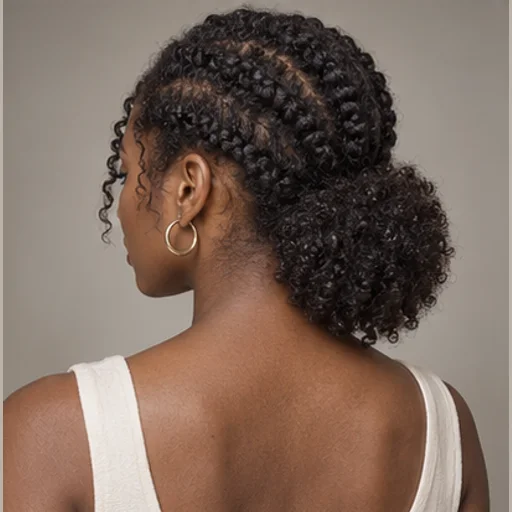
Flat twists into a low natural puff
Several directed front and side twists lead toward a low textured puff.
Moderate styling effort · Medium lengthDetails & styling for Flat twists into a low natural puff
Choose it for: A controlled route beside visible loose coils.
Think about: The puff and twists need their own comfort check. Neatness should not rely on pulling the hairline tight.
A routine to discuss
- Choose the part pattern and low gathering point.
- Create comfortable twists into the planned base or have a stylist demonstrate.
- Arrange the puff without over-tightening the front.
Upkeep: Rehearse the final weight and remove the arrangement if it pulls.
Your salon request: I want these directed twists with a full low puff, leaving ___ texture visible around the front.
Use this look in my brief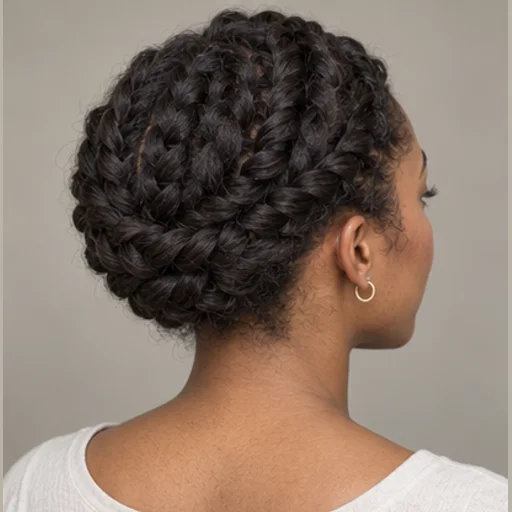
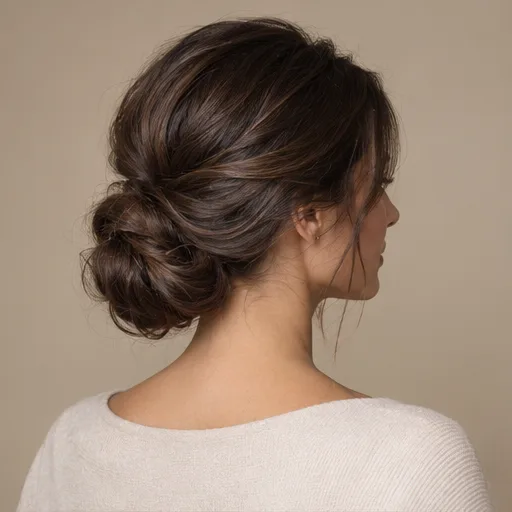
Textured wrapped crown updo
Raised braided and twisted-looking sections create a wrapped crown with a low gathered back.
Moderate styling effort · Medium lengthDetails & styling for Textured wrapped crown updo
Choose it for: A structured surface that keeps visible texture.
Think about: The photograph is not a step-by-step construction map. Agree on the actual technique and fastening with a stylist.
A routine to discuss
- Choose which texture remains visible and where the volume sits.
- Build and test the supporting arrangement before adding an accessory.
- Record the fasteners and removal sequence.
Upkeep: Use a trial to check weight, pressure and any difficult-to-reach fastening.
Your salon request: I like the wrapped crown and texture, with ___ volume. Please show a comfortable construction for my length.
Use this look in my brief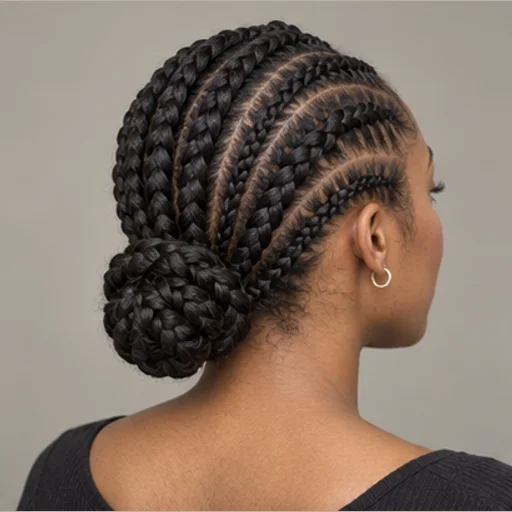
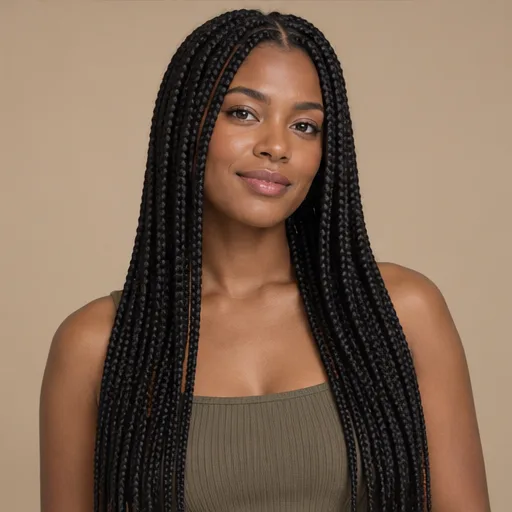
Cornrows into a low braided bun
Attached braid routes meet in a low bun with a textured surface.
Moderate styling effort · Long lengthDetails & styling for Cornrows into a low braided bun
Choose it for: A clearly patterned upper head and a low rear focal point.
Think about: Gathering the braids changes where their weight rests. Assess the finished bun as well as the individual rows.
A routine to discuss
- Plan the routes around the intended gathering point.
- Check row comfort before forming the bun.
- Secure the low arrangement and test seated headrest contact.
Upkeep: Know whether the bun can be released while the underlying braids remain.
Your salon request: I like this low finish, but need comfortable routes, manageable weight and an easy way to release the bun.
Use this look in my brief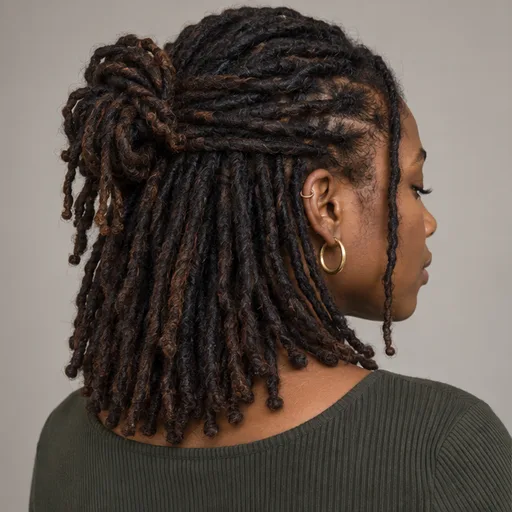
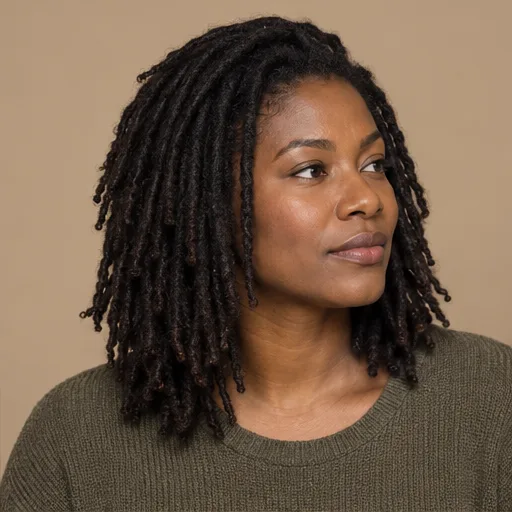
Loc half-up with length left down
A portion of the locs gathers above the remaining loose lengths.
Low styling effort · Medium lengthDetails & styling for Loc half-up with length left down
Choose it for: A front-opening change without lifting the weight of every loc.
Think about: Only gather locs that reach comfortably; the fastening and weight need individual assessment.
A routine to discuss
- Select the upper sections that naturally reach.
- Gather loosely using a suitable fastening.
- Check the hairline and turn your head before adding an accessory.
Upkeep: Release the gather if it pulls and know how to remove the fastening.
Your salon request: Use a partial loc gather at ___ and leave the lower length visible. Keep any short front locs outside.
Use this look in my brief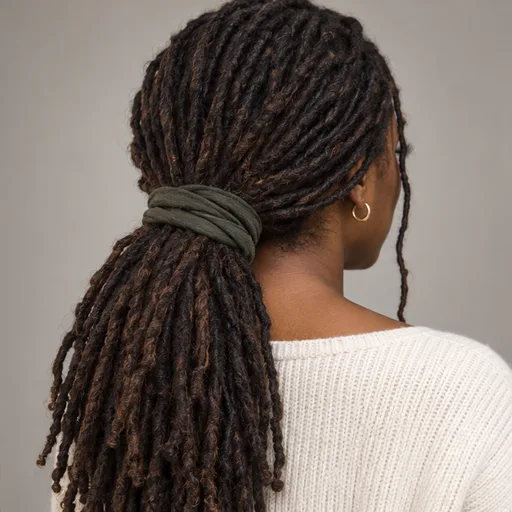
Low gathered loc arrangement
Locs meet near the nape in a compact low arrangement.
Moderate styling effort · Medium lengthDetails & styling for Low gathered loc arrangement
Choose it for: A lower point of emphasis and an open upper outline.
Think about: The gather can press against a headrest. Do not force short locs into the fastening.
A routine to discuss
- Test a loose nape gathering point.
- Fold or arrange the reaching length with a suitable fastening.
- Check weight, headrest contact and removal.
Upkeep: Rehearse the full arrangement with the outfit and accessories.
Your salon request: I want a low loc arrangement that stays comfortable when seated, with ___ pieces left loose.
Use this look in my brief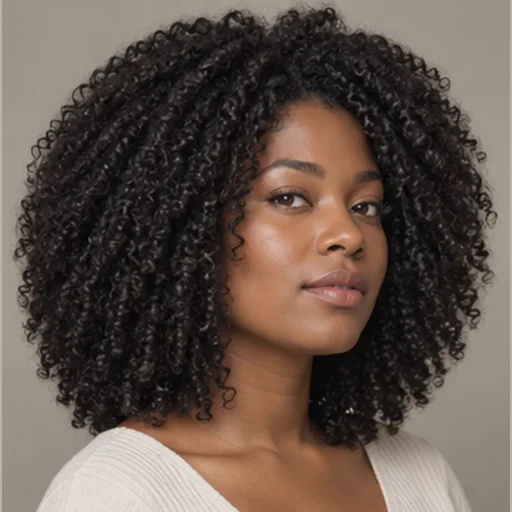
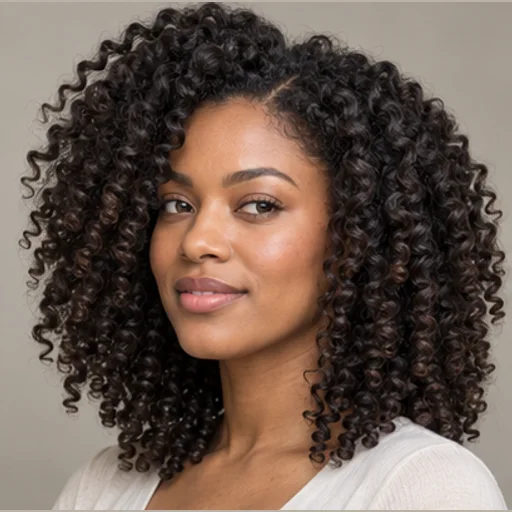
Full shoulder-length coily outline
Dense coils form a broad rounded silhouette with retained length near the shoulders.
Moderate styling effort · Medium lengthDetails & styling for Full shoulder-length coily outline
Choose it for: Fullness through the sides and lower shape in a loose natural finish.
Think about: The shown definition and grouping are part of the finish. Your shrinkage and density determine the dry outline.
A routine to discuss
- Work through manageable sections in your normal conditioning and definition routine.
- Arrange the part and desired side volume before drying.
- Lift or separate selectively once dry, stopping at the fullness you prefer.
Upkeep: Agree whether the shape is assessed in defined, stretched or softer loose texture.
Your salon request: Keep fullness at the sides and a dry endpoint at ___. I usually wear my coils ___.
Use this look in my briefCompare your options
Flat twists into a low puff
Twists direct the front and sides toward a lower gathering point while the puff remains visibly textured. It balances a controlled route with a softer loose shape.
Ask about: How much front tension and added fastening does the finished arrangement require?
Textured crown updo
Twisted or braided sections create a raised or wrapped crown arrangement. The construction can vary; agree on the actual method rather than treating a photograph as a tutorial.
Ask about: Where will the weight and pins sit, and can I remove them myself?
Defined loose curls or coils
The natural silhouette is the finished style, with definition, a part change or a small ornament adding occasion emphasis.
Ask about: How should the shape be refreshed if one side flattens during travel?
Loc half-up
Part of established loc hair is gathered while the lower locs stay down. It keeps length visible and can avoid the weight of gathering everything.
Ask about: Which locs comfortably reach and where can the fastening rest?
Low loc gather
A lower grouping or folded arrangement keeps the focus near the nape. Leave shorter locs outside when they do not reach without pulling.
Ask about: How does the gather feel against a headrest and through a full evening?
Braids arranged into a bun
An existing braid installation becomes the base for an occasion shape. Gathering changes where the weight rests, so evaluate the finished bun separately from the installation.
Ask about: Would a lower or partial gather be more comfortable than a high full bun?
Book for the actual starting state
Tell the stylist whether the hair will be loose, in twists, in braids or in established locs. Share the approximate length, current arrangement and what you want to keep. Ask which preparation is included rather than arriving with a starting state the appointment did not allow for.
If you are planning a new installation for the occasion, leave room to assess its comfort before adding a formal gather. The installation and the final arrangement are two separate service decisions.
Choose the visible texture deliberately
A loose coil outline, a twist-out and a stretched base produce different shapes. Show the finish you want in ordinary conditions and say which preparation you do not want. A stylist can then suggest an arrangement that uses that starting point.
For locs, avoid assuming every reference uses comparable length, maturity, number or thickness. Ask whether the proposed fold or half-up can be achieved with your own locs and what changes if some remain outside.
Test the finished weight and accessories
Put on the actual ornament, headpiece or veil during the trial. Turn your head, lean forward and sit as you will during travel. Pins should have a clear position and removal route. Heavy accessories can change the comfort of a style that was fine without them.
Repeated pulling can cause hair loss; AAD guidance is at aad.org source. Loosen or remove an arrangement that hurts or pulls. A special event is not a reason to tolerate an uncomfortable style.
Write a useful preparation and repair plan
- Record whether the hair should arrive freshly washed, fully dry, defined, stretched or in an existing arrangement, according to the agreed service.
- Confirm the order: base preparation, styling, fastening and accessory placement. Allow realistic drying time rather than rushing a damp base into a compact gather.
- Photograph all sides of the successful trial and note the exact accessory and fastening used.
- Learn one small repair, such as replacing a slipped clip or releasing a front section, plus a comfortable fallback.
- Agree how the arrangement comes down and who helps if the pins or ties are difficult to locate.
Take this to your appointment
A starting point for your brief
I want ___ texture to remain visible, with a gathering point at ___. My starting style is ___. Please plan preparation, comfortable fastening and removal, and test the weight with my actual accessory.
Use this in my briefAdapt the wording to your own hair, preferences and history.
Common questions
Must natural hair be straightened for an updo?
No. The construction can be designed around loose coils, curls, twists, braids or locs. Agree on the starting finish you actually want.
Can I use my existing braid or loc style?
Often an arrangement can work with it, but the length, weight and reaching sections need assessment. A partial gather may be more useful than forcing every section into a high bun.
Sources & further reading
Sources accessed 3 October 2026. These publishers have not reviewed this guide. Our editorial standards explain our method.