Styling how-tos
Bantu knots and knot-outs: section size, setting and comfort
Plan Bantu knots as a finished style or a temporary set. Learn gentle coiling, complete drying and take-down without over-tightening the roots.
Upkeep: Treat pressure and root tension as reasons to adjust the arrangement. Include enough drying and removal time if you want a knot-out rather than keeping the knots.
Effort is a planning estimate. The specific option and your routine change the commitment.
The starting point
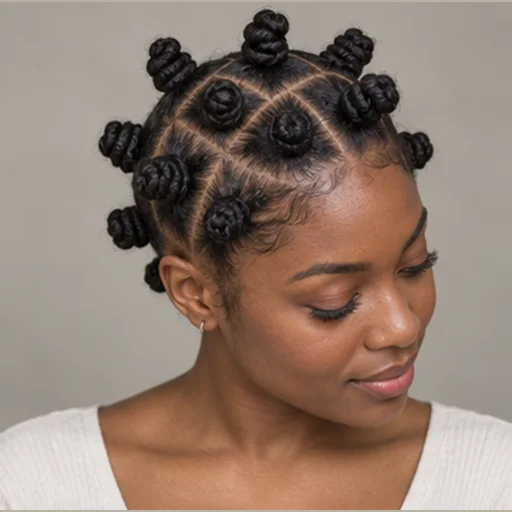
Bantu knots coil individual hair sections into small raised forms. They can be worn as the style or released into a knot-out. Section size, retained length and density determine the knot’s scale; the photograph is a shape reference, not a guarantee of the curl pattern after release.
Compare the visual directions
Concept references for shape and placement. Save the specific look you like and open its details. These are starting points for a consultation.
Bantu knots with a visible part pattern
Small raised coils form a deliberate arrangement across clearly separated sections.
Moderate styling effort · Short lengthDetails & styling for Bantu knots with a visible part pattern
Choose it for: The knots themselves as a finished style or a temporary set.
Think about: Compact coils can remain damp inside. Placement must feel comfortable against headwear and a pillow.
A routine to discuss
- Separate manageable sections and twist each length gently.
- Guide each section around its base without tightening the scalp.
- Secure lightly and check pressure before continuing.
Upkeep: Plan full drying for a knot-out and a methodical take-down.
Your salon request: I want this knot scale with a comfortable part pattern. Show me one secure knot and how to release it.
Use this look in my brief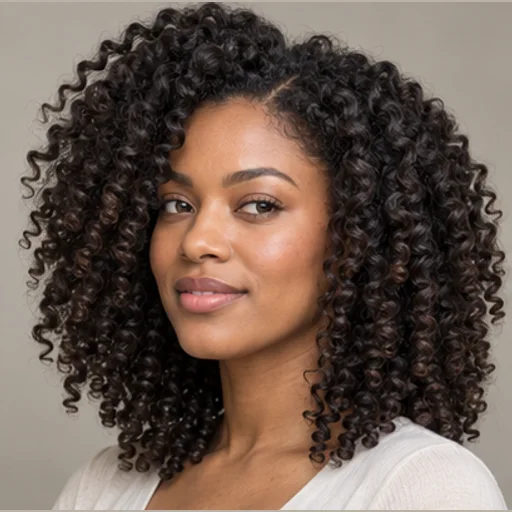
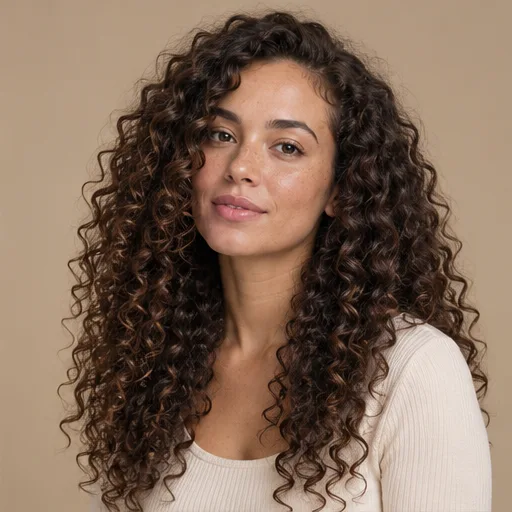
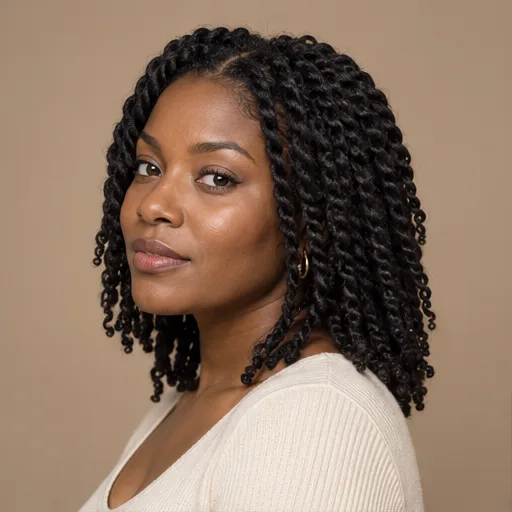
Defined loose twist-out direction
Rounder grouped definition builds a loose medium-length silhouette.
Moderate styling effort · Medium lengthDetails & styling for Defined loose twist-out direction
Choose it for: A released-set look with definition and volume held in balance.
Think about: The photo is an outcome reference. Your texture, section size and starting state affect the actual twist-out.
A routine to discuss
- Make a comfortable two-strand twist set in manageable sections.
- Let the full set dry before unraveling.
- Separate gradually until the balance of definition and fullness suits you.
Upkeep: Change one setting variable at a time when refining the routine.
Your salon request: I like these grouped curls with ___ fullness. Show a section size and release method I can repeat.
Use this look in my brief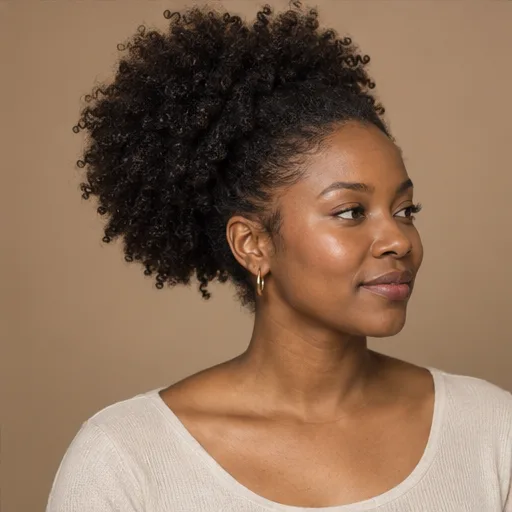
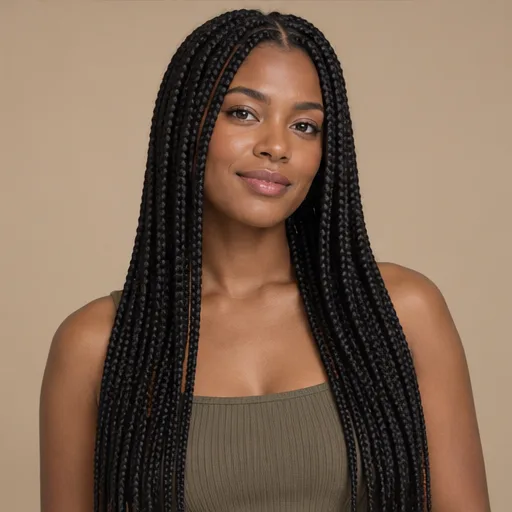
Loose high natural puff
Loose coils gather upward while retaining a full textured puff.
Low styling effort · Medium lengthDetails & styling for Loose high natural puff
Choose it for: An open face with natural texture concentrated above.
Think about: The hairline should not be pulled tight to create height. Shorter front pieces may remain outside.
A routine to discuss
- Choose a comfortable gathering point.
- Use a suitable loose fastening and arrange the puff with a light touch.
- Release or reposition if the front or scalp feels pulled.
Upkeep: Change the arrangement when comfort or scalp access requires it.
Your salon request: I want this textured puff at a comfortable height, with ___ front pieces left outside.
Use this look in my briefCompare your options
Larger statement knots
Fewer larger sections make the pattern easier to read from a distance. Dense or long hair creates a larger knot and may need more time to dry within the coil.
Ask about: Will this knot size remain comfortable under my usual headwear?
Smaller distributed knots
More sections create a more detailed pattern and distribute the arrangement around the head. They also require more setting and removal work.
Ask about: How many sections can I comfortably make and take down?
Partial knot arrangement
A few knots at the front or top can sit beside loose texture. The transition between set and loose hair becomes part of the design.
Ask about: Which sections stay loose, and will the knots pull them out of their usual shape?
Knot-out set
The knots are temporary forms used to set the hair before releasing it. The loose result depends on the starting hair and the way each section was coiled.
Ask about: How should I unravel without losing the pattern I want?
Set the part pattern before the coiling
Work with comfortably detangled sections. Straight, offset or irregular parts create different visual layouts, but none requires painful tension. Use clips to keep unworked hair out of the section.
A damp starting state may be useful for a set, while another routine may use a refreshed or stretched base. Thick coiled sections can stay damp inside. Plan around full drying rather than a fixed number of hours; do not promise a finished knot-out before you know your own timing.
Coil a section gently
This is a basic sequence to discuss with a stylist if the arrangement is unfamiliar.
- Take a separated section and gently twist its length so it begins to form a rope. Keep the scalp comfortable and stop if the root twists tightly against the skin.
- Guide the rope around its own base to form a small coil. Let the coil build naturally rather than forcing it to stand by pulling harder.
- Tuck or secure the end with an appropriate lightweight fastening if needed. Check that it can be removed without catching hair.
- Release your hands and assess comfort. If the knot feels tight, unwind and rebuild more loosely or use a different section size.
- Repeat the planned sections, then check the whole arrangement while turning your head and resting against a headrest. Change any position that presses or pulls.
Take down a knot-out
Wait until the whole section is dry. Remove any fastening first, then unwind the coil and the twisted length in reverse. Start at the end and support the section rather than dragging it outward from the scalp.
Let each section separate naturally before adding more volume. A little deliberate separation softens the pattern; repeated brushing can produce a different, fuller finish. Choose the level of definition you actually want rather than trying to preserve every strand.
Make comfort the deciding factor
A knot that needs constant pressure at the root to remain in place may need a different section size, position or fastening. A hard raised arrangement can also be uncomfortable to sleep on; remove or change it instead of tolerating the pressure.
The AAD warns about repeated pulling in hairstyles at aad.org source. Pain, stinging or a sore pulled scalp are reasons to loosen or remove the arrangement. Seek qualified advice for new thinning or scalp symptoms rather than covering the area with a tighter style.
Take this to your appointment
A starting point for your brief
I want Bantu knots as a finished style / a knot-out set. I prefer ___ size sections and need comfortable placement for ___. Show me how to secure and remove one knot without pulling the roots.
Use this in my briefAdapt the wording to your own hair, preferences and history.
Common questions
Are Bantu knots only a setting method?
No. The knots can be the finished style. Decide whether you want to wear the raised arrangement or release it into a loose result.
Why is the centre still damp?
Hair layered into a compact coil can dry unevenly. The surface may feel ready while the interior is not. Use manageable sections and allow more time rather than releasing early and expecting the same definition.
Sources & further reading
Sources accessed 3 October 2026. These publishers have not reviewed this guide. Our editorial standards explain our method.