Hair care basics
Overnight hair: preserve the shape without a tight arrangement
Choose a loose braid, soft gather, wrap or free short style for overnight comfort. Plan a small morning reset instead of chasing an unchanged salon finish.
Upkeep: Check any tie, wrap or fastening for pressure and pulling. Wash or replace items as needed for your routine, and remove event pins or uncomfortable accessories before sleeping.
Effort is a planning estimate. The specific option and your routine change the commitment.
The starting point
An overnight routine should make the next morning easier while remaining comfortable to sleep in. Choose how the hair is arranged based on length, texture and what you want to preserve. The goal is a manageable reset, not a guarantee that every wave or curl will remain untouched.
Compare the visual directions
Concept references for shape and placement. Save the specific look you like and open its details. These are starting points for a consultation.
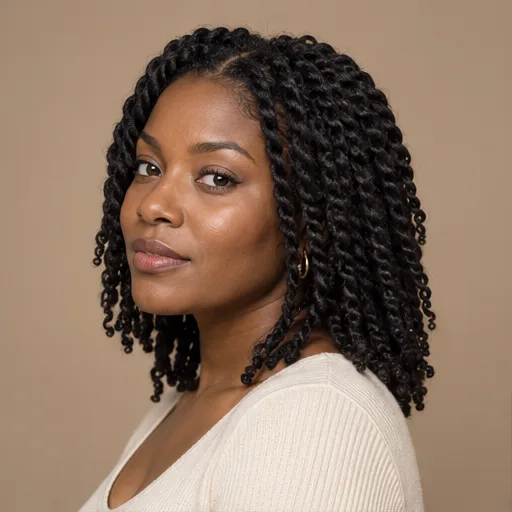
Medium two-strand twists
Individual rope-like twists retain a clearly separated arrangement through the medium length.
Moderate styling effort · Medium lengthDetails & styling for Medium two-strand twists
Choose it for: An organised twist pattern that can be the finished style.
Think about: Added hair and attachment cannot be assumed from a photograph. Ask what construction suits your starting point.
A routine to discuss
- Divide manageable sections without pulling the roots.
- Wrap the two strands consistently and arrange the ends gently.
- Plan washing, drying and take-down before committing to the routine.
Upkeep: Setting and removal time count alongside daily handling.
Your salon request: I like this twist size and length. Please explain the construction, weight and care plan for my hair.
Use this look in my brief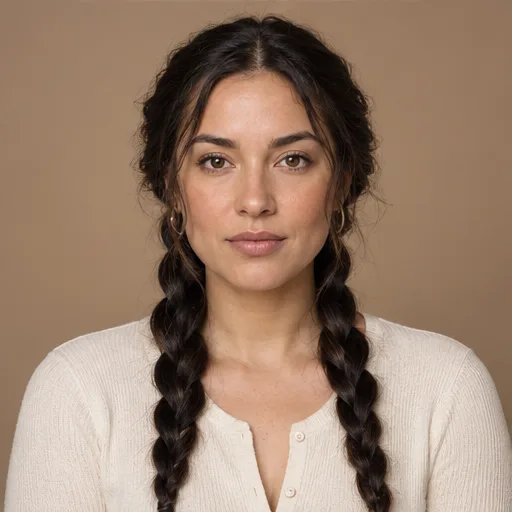
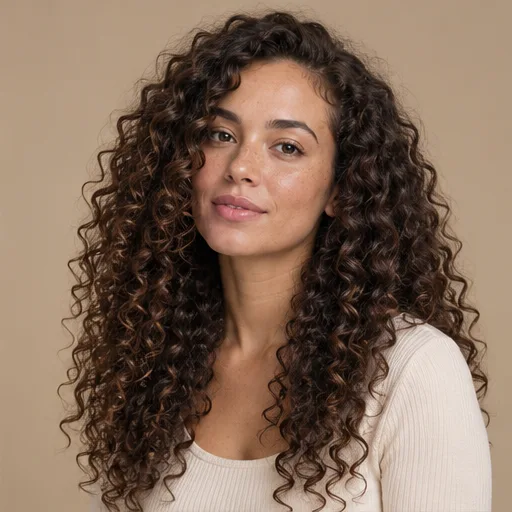
Two loose three-strand braids
Two separate low plaits keep the length organised on either side.
Low styling effort · Long lengthDetails & styling for Two loose three-strand braids
Choose it for: A simple route with fewer hand changes than an attached braid.
Think about: Short front layers may remain outside. The pictured placement does not require collecting every strand tightly.
A routine to discuss
- Part into two manageable sections.
- Cross each outside strand over the middle alternately down the length.
- Secure softly and check that the roots remain comfortable.
Upkeep: Remove and reset as needed; the arrangement should not depend on continuous tension.
Your salon request: I want two loose plaits with the front ___ and enough comfort for ___.
Use this look in my brief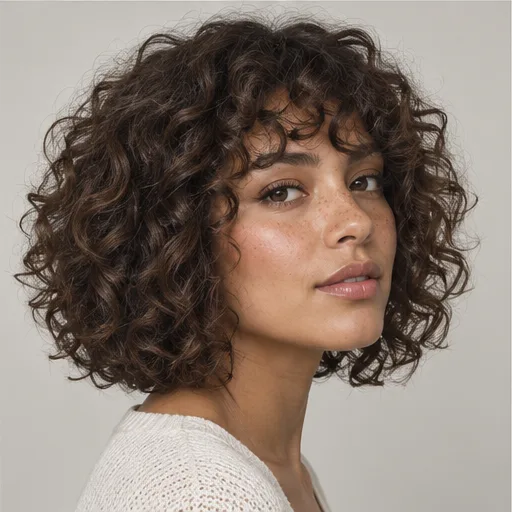
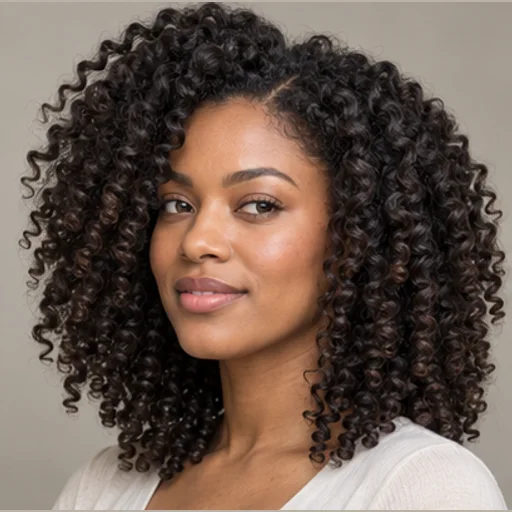
Rounded curly bob with fringe
The dry outline rounds around the cheeks and jaw, with curls forming the fringe. The shortest front curls and the lowest perimeter need separate agreements.
Moderate styling effort · Short lengthDetails & styling for Rounded curly bob with fringe
Choose it for: A contained curly shape with visible framing at the forehead.
Think about: Different curl patterns can spring to different heights. A wet length or stretched curl is not the finished landmark.
A routine to discuss
- Apply your usual styling method in manageable sections.
- Arrange the front curls in their intended direction, allow them to dry fully, then separate only where the shape needs it.
Upkeep: Review the shape in the curl finish you actually wear, including the fringe on a second day.
Your salon request: Keep the lowest dry curl at ___ and the shortest fringe curl at ___. Concentrate fullness around ___ and preserve ___.
Use this look in my brief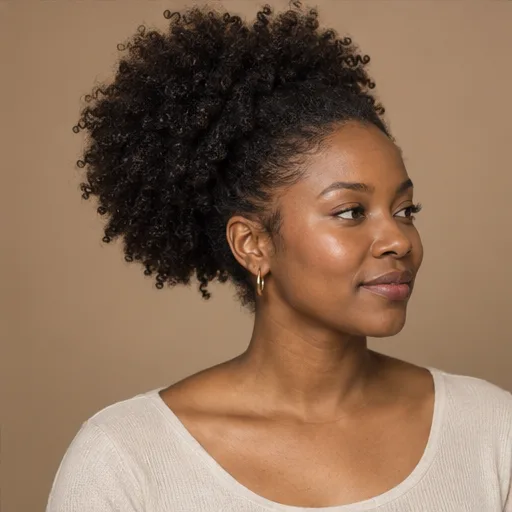
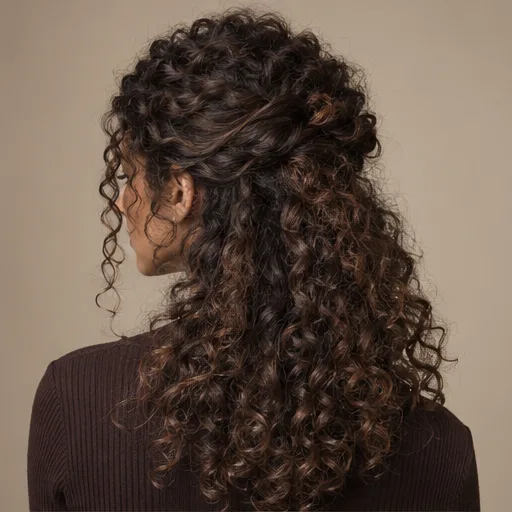
Loose high natural puff
Loose coils gather upward while retaining a full textured puff.
Low styling effort · Medium lengthDetails & styling for Loose high natural puff
Choose it for: An open face with natural texture concentrated above.
Think about: The hairline should not be pulled tight to create height. Shorter front pieces may remain outside.
A routine to discuss
- Choose a comfortable gathering point.
- Use a suitable loose fastening and arrange the puff with a light touch.
- Release or reposition if the front or scalp feels pulled.
Upkeep: Change the arrangement when comfort or scalp access requires it.
Your salon request: I want this textured puff at a comfortable height, with ___ front pieces left outside.
Use this look in my briefCompare your options
Loose braid for longer hair
A simple loose plait can keep long lengths organised, while also leaving a bend when released. Choose this if you like that possible change in texture.
Ask about: Do I want the braid pattern in the morning, or am I trying to keep a smooth finish?
Soft loose gather
A loose gathering point keeps some hair away from the sleeping surface. Placement must suit your length and position; high is not automatically better.
Ask about: Where can it sit without pulling the hairline or pressing against my pillow?
Comfortable wrap or bonnet
A wrap can contain loose texture or an established arrangement. Fit and fastening matter; it should not rely on a tight band or knot to stay on.
Ask about: Does this stay comfortable through the night, and can I put it on and remove it easily?
Leave a short cut free
A short crop or bob may be simpler to leave loose and reset selectively in the morning. There may be little benefit in forcing short pieces into a tie.
Ask about: Which small area usually needs resetting, and can I plan for just that?
Choose what you are preserving
A polished blowout, defined curls, a twist set and a loose natural outline have different aims. A braid may organise length but create waves; a compact bun may leave a bend; a wrap may flatten a lifted front. Choose the compromise you actually prefer.
For a temporary set, allow the hair to dry properly before assuming it is ready for release. Thick twists or knots can stay damp inside. If a set is uncomfortable to sleep on, use a different arrangement or setting time rather than tolerating pressure.
Keep the arrangement easy to undo
Remove event pins, ornaments and rigid clips that press against the scalp. Use a loose, suitable tie if gathering is helpful, and leave pieces outside if they cannot reach comfortably. A style does not need every short strand captured to be useful.
Avoid tightening a wrap or gather each time it slips. Change its position, size or design instead. The AAD’s guidance on gentle handling and avoiding pulling is linked below; this page does not claim that any fabric or accessory treats breakage or hair loss.
Use a small morning decision sequence
- Release the overnight arrangement slowly and check the scalp and hairline for comfort.
- Look at the shape before adding anything. Decide whether you need a full wash, a small-area reset or simply a change of part.
- For a flattened fringe or curl group, reset that section with your familiar method rather than brushing through all the texture.
- If the shape has changed more than you want, use a comfortable fallback such as a loose half-up style or low gather. Note what to change in the next overnight arrangement.
Adapt for established styles
For braids or locs, avoid gathering all the weight tightly into one position simply to fit a small covering. Ask your stylist how to contain the actual length and arrangement comfortably. A formal updo may need to come down rather than be preserved overnight.
For children or anyone who finds wrapping or tying difficult, a simpler loose arrangement may be more sustainable. The routine should fit the wearer’s comfort and abilities, not require a complex nightly ritual. If new scalp symptoms or thinning appear, get qualified advice instead of repeatedly changing accessories.
Take this to your appointment
A starting point for your brief
I want to preserve ___ overnight, but I usually wake with ___. I need a comfortable option that I can put on and remove easily. Please show a loose arrangement and a small morning reset for my length.
Use this in my briefAdapt the wording to your own hair, preferences and history.
Common questions
Will a bonnet keep every curl unchanged?
No arrangement guarantees that. Fit, movement, the starting style and your own hair affect the result. Plan for a small refresh and choose comfort first.
Should short hair be tied up for sleep?
Only if there is a comfortable useful reason. A short cut can often stay loose, with a small reset of the front or flattened area in the morning.
Sources & further reading
Sources accessed 3 October 2026. These publishers have not reviewed this guide. Our editorial standards explain our method.