Styling how-tos
Chignon, high bun or French twist: choose and build the shape
Compare low horizontal volume, a high bun and a vertical French twist. Learn a basic twist sequence, fastening checks and shorter or denser-hair adaptations.
Upkeep: An event arrangement needs a trial and an understandable removal plan. Recheck comfort after accessories are added, not only when the base is first secured.
Effort is a planning estimate. The specific option and your routine change the commitment.
The starting point
A chignon concentrates the shape near the nape; a high bun places it above; a French twist makes a vertical roll against the back of the head. Choose the position and profile first. Length, density and layer height determine how much can be gathered and whether a simpler partial style is a better fit.
Compare the visual directions
Concept references for shape and placement. Save the specific look you like and open its details. These are starting points for a consultation.
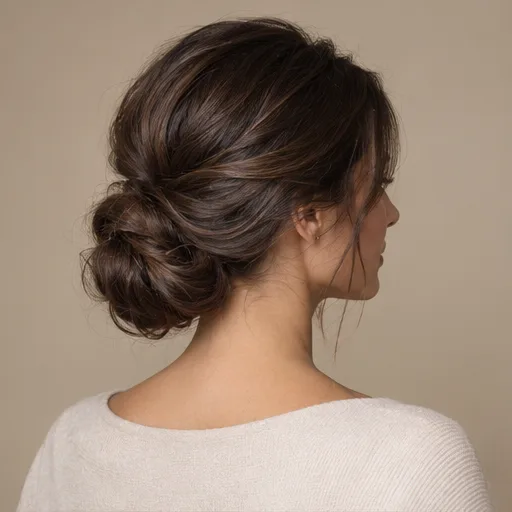
Low chignon at the nape
The hair is gathered low into a compact bun, leaving the crown relatively quiet. Placement matters when a collar, veil or headrest will touch the style.
Moderate styling effort · Medium lengthDetails & styling for Low chignon at the nape
Choose it for: A contained shape with an open neckline.
Think about: A tight-looking surface does not require painful tension. Choose a softer finish if smoothness would require pulling.
A routine to discuss
- Make a comfortable low ponytail and check the position against the outfit.
- Wrap the length into a bun and secure the base; hide pins only after the shape feels stable.
- Turn your head and lean back before adding accessories.
Upkeep: Remove accessories and pins carefully at the end of the event; do not sleep in a heavy arrangement.
Your salon request: Place the chignon at ___. Keep the surface ___ and leave these face-framing pieces free: ___.
Use this look in my brief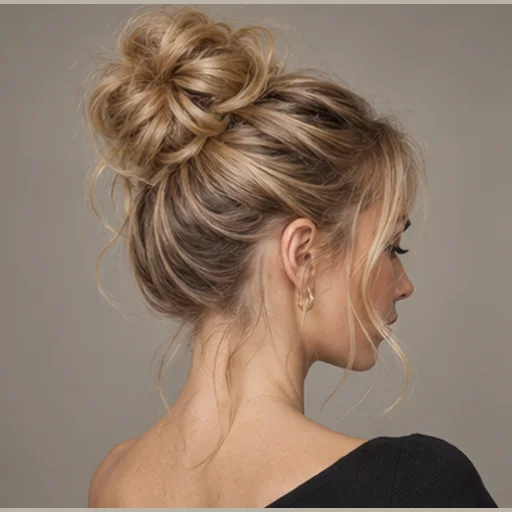
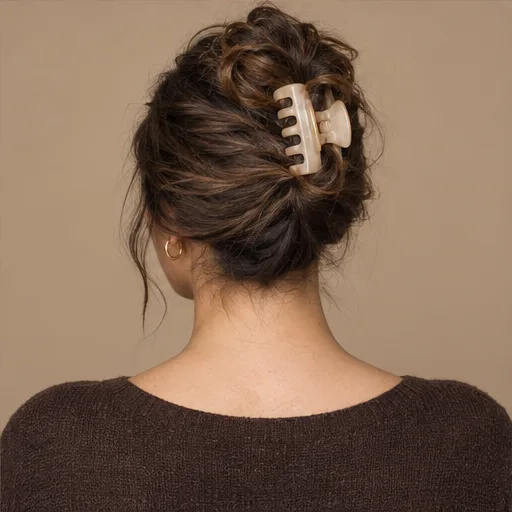
High textured occasion bun
The main volume sits high, with loose surface texture and face-framing pieces.
Moderate styling effort · Long lengthDetails & styling for High textured occasion bun
Choose it for: An elevated silhouette and an open neck.
Think about: The apparent softness can hide substantial fastening. Test the finished weight and leave short pieces outside rather than pulling them in.
A routine to discuss
- Arrange the base texture before gathering.
- Build a comfortable high grouping and secure it with appropriate fasteners.
- Check the profile, head movement and removal sequence.
Upkeep: Rehearse the fastening and a lower-gather fallback.
Your salon request: I like the high volume and soft surface. Keep ___ loose and test it with my accessory.
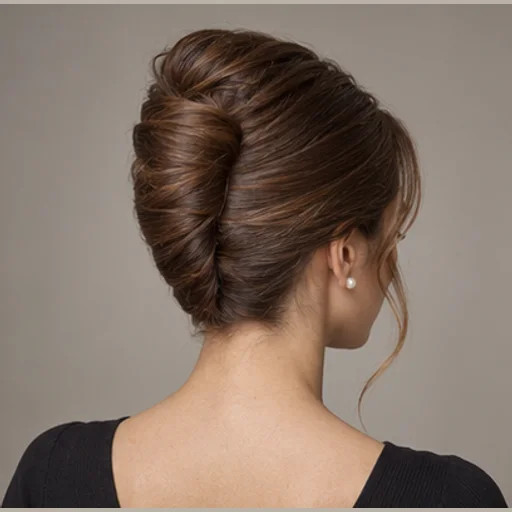
Use this look in my briefSmooth vertical French twist
A polished vertical roll holds the length against the back of the head.
Moderate styling effort · Medium lengthDetails & styling for Smooth vertical French twist
Choose it for: A continuous upright rear shape instead of a round bun at one point.
Think about: Length and density determine how much fits in the roll. A polished version may need professional construction.
A routine to discuss
- Arrange the front and gather the back comfortably.
- Roll upward, manage the excess ends and secure the fold deliberately.
- Test support and locate the fasteners for removal.
Upkeep: Practise before the event; a slipping base needs better support rather than a tighter hairline.
Your salon request: I want this vertical smooth roll with ___ front shape, and need to know how to take it down.
Use this look in my brief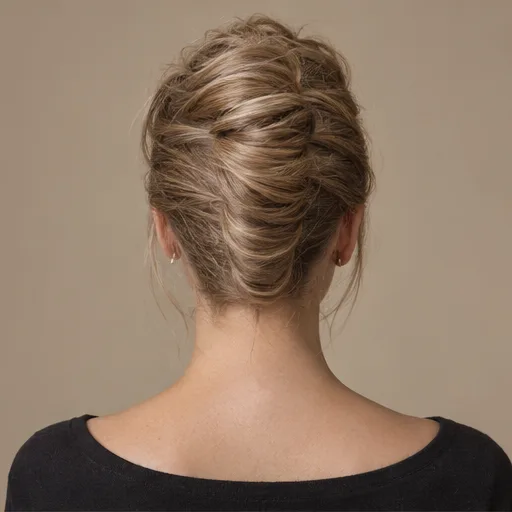
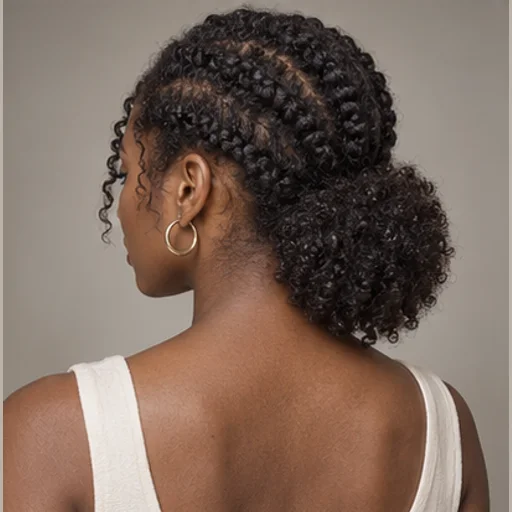
Vertical textured twist
The length is folded into a vertical roll at the back, creating height and a narrow side profile. Loose surface texture makes a different finish from a smooth formal roll.
High styling effort · Medium lengthDetails & styling for Vertical textured twist
Choose it for: An updo that opens the neck without a round bun.
Think about: Very short layers can fall out of the roll. A stylist can adapt the construction rather than forcing every strand into it.
A routine to discuss
- Practice on detangled hair with enough grip for pins.
- Gather at the back, fold the length into a vertical roll, and secure the seam in small comfortable sections.
- Test the hold before hiding ends or placing a comb.
Upkeep: Treat this as an event arrangement; the construction should be fully taken down afterwards.
Your salon request: I like the vertical shape and ___ amount of texture. Please keep the neck ___ and fit the accessory at ___.
Use this look in my brief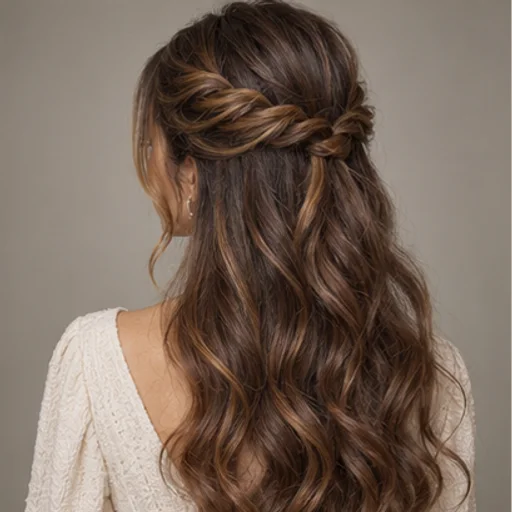
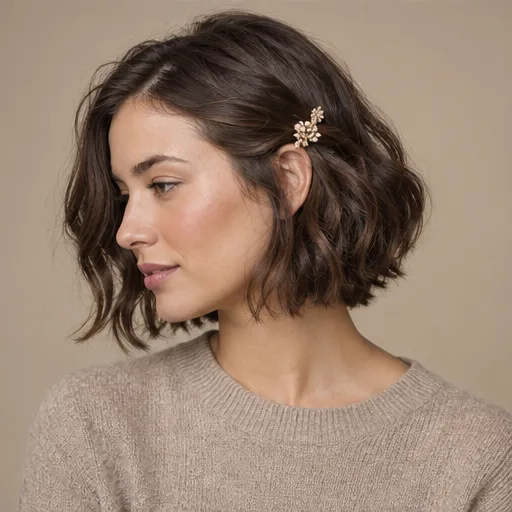
Two side twists over loose waves
Two twisted side sections meet at the back above the remaining loose lengths.
Moderate styling effort · Long lengthDetails & styling for Two side twists over loose waves
Choose it for: A visible rear detail while keeping most hair down.
Think about: Short front layers may not reach the joining point. The pictured loose waves are a separate preparation step.
A routine to discuss
- Prepare the loose finish you want first.
- Twist the two reaching side sections gently and join them with a suitable fastening.
- Leave shorter front pieces out intentionally and test head movement.
Upkeep: Carry the same type of spare fastener used in the trial.
Your salon request: I want the side twists to meet at ___ while most of the length stays down. Keep the front ___.
Use this look in my briefCompare your options
Low chignon
A compact or soft bun sits near the nape. It exposes the upper neck differently from a high bun and may rest against a collar or headrest.
Ask about: Where should the bun sit so it clears my outfit and travel position?
High textured bun
The gathering point moves upward and loose texture builds the outline. Long heavy hair can place more weight at the base than the photograph suggests.
Ask about: Would a partial gather or lower placement be more comfortable?
Smooth French twist
A vertical fold or roll hides much of the loose length against the head. The side and rear profile are the defining views.
Ask about: How will the ends be tucked, and where will the pins anchor?
Soft textured twist
The vertical idea stays, but curls, loose ends or a less polished surface remain visible. This can accommodate a different finish from a perfectly smooth roll.
Ask about: Which loose pieces are intentional, and which need secure support?
Half-up alternative
Only the upper or side sections meet at the back. It reduces the amount of hair that must fit into one compact construction and leaves length visible.
Ask about: Does a half-up shape achieve the same front view with less gathering?
Start from the fastening, not a promise of universal length
The shortest pieces that must enter the arrangement determine feasibility. A long back with very short crown layers may not create a smooth single roll without additional planning. Dense hair may make a much larger shape than fine hair at the same length.
Gather the hair loosely at the proposed position to test reach. Leave short face-framing pieces out deliberately if you like them. Do not pull harder to make a section reach a point it comfortably cannot.
A basic French-twist practice sequence
Use a mirror, section clips and suitable hairpins or a fastener you know how to remove. Practise before the event; a polished professional roll may require more shaping than this simple version.
- Arrange the front and part, leaving any intended loose pieces outside. Gently gather the remaining hair low at the back without tightening the hairline.
- Hold the gathered length and turn it upward, letting it form a vertical roll against the back of the head. Keep the base comfortable.
- Fold or tuck excess ends into the roll according to the available length. If there is too much bulk, stop and choose a larger, softer construction or a different style.
- Secure the fold by catching a small amount of the roll with a suitable pin and anchoring it into the supporting hair beneath. Place pins deliberately rather than pushing them randomly toward the scalp.
- Release your hands and check support. Turn the head and assess pressure; rebuild an unstable or painful area instead of tightening the whole style.
- Soften selected surface pieces if desired. Count or remember the fasteners so the style can be taken down methodically.
Use a bun when it better suits the hair
For a basic low bun, gather comfortably, form the length into a loose coil or fold and secure it to the base with an appropriate tie or pins. The easy-updo guide gives the full beginner sequence. A high bun uses a different gathering point, so its comfort should be retested.
Curls and coils can supply visible texture without forcing a sleek surface. Established braids or locs need a fastening suited to their weight and arrangement; seek help if the structure or removal is unfamiliar.
Fix the source of slipping
If the whole construction drops, the support at the base may be inadequate for its weight. If only the ends escape, the tuck or length management may need changing. If the front pulls while the back stays loose, tightening the front further will not correct the back.
A comfortable half-up arrangement is a useful fallback when a compact updo is not cooperating. For the event trial, include the real accessory, an outfit neckline and travel posture. Know which pin or clip can be replaced without rebuilding everything.
Take this to your appointment
A starting point for your brief
I prefer low / high / vertical volume with a smooth / textured surface. My shortest layers reach ___. Please test the support with my accessory, explain the fasteners and show how the style comes down.
Use this in my briefAdapt the wording to your own hair, preferences and history.
Common questions
Is a French twist the same as a bun?
No. A French twist creates a vertical roll against the back of the head; a bun or chignon groups the length around a particular gathering point.
How do I make an updo last without pulling it tighter?
Check the base support, weight and fastening method. A trial can reveal which section slips. More tension at the hairline does not necessarily strengthen the construction.