Occasion hair
Short wedding and party hair: pixies, bobs and accessories
Plan a formal short style without assuming you need extensions. Compare a polished pixie, waved bob, natural texture, side detail and small pinned arrangement.
Upkeep: Rehearse the finish and fastening before the event. A short cut close to the date can change how an accessory anchors, so coordinate the haircut and trial.
Effort is a planning estimate. The specific option and your routine change the commitment.
The starting point
Short occasion hair can get its impact from shape, surface or one well-placed detail. Choose whether the change is a new direction, a more defined texture, a polished outline or an accessory. An updo is only one option, and it may not be the best way to use the length you have.
Compare the visual directions
Concept references for shape and placement. Save the specific look you like and open its details. These are starting points for a consultation.
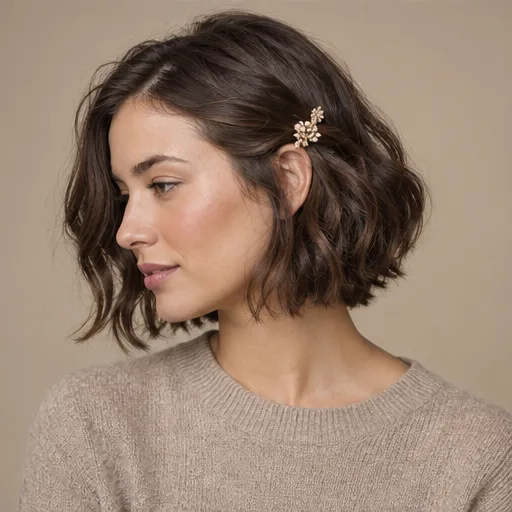
Short waves with a side accessory
A small accessory holds or decorates one side of a short wavy bob. Most of the hairstyle stays down, so the part and visible edge remain important.
Moderate styling effort · Short lengthDetails & styling for Short waves with a side accessory
Choose it for: An occasion finish without adding extension length or a full updo.
Think about: Heavy combs can slip or change the side shape. Test the actual accessory on your own hair before the event.
A routine to discuss
- Create the part and finish the wave or natural bend first.
- Anchor the accessory in a small section with enough grip, keeping sharp ends away from the scalp.
- Turn and bend to check that the clip stays comfortable.
Upkeep: Carry a simpler backup clip if the main accessory moves.
Your salon request: Keep the bob down with ___ side tucked. Place my accessory at ___ and show a secure, comfortable backup.
Use this look in my brief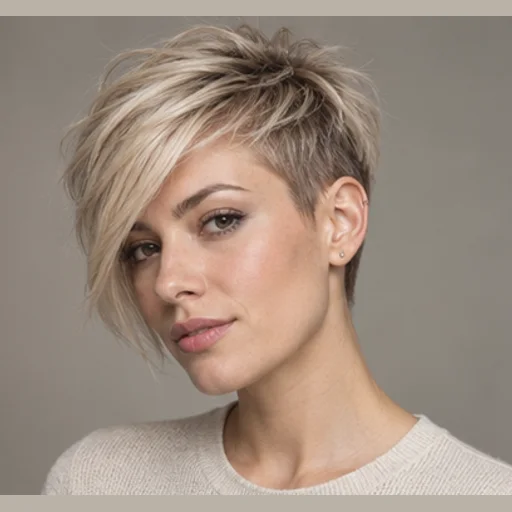
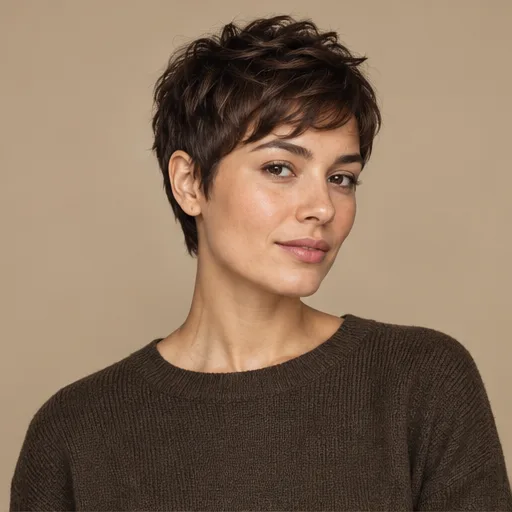
Pixie with a long swept fringe
A long diagonal fringe crosses a much shorter ear area, creating a clear side-to-side contrast.
Moderate styling effort · Short lengthDetails & styling for Pixie with a long swept fringe
Choose it for: A strong front direction with a compact nape and sides.
Think about: The long front can cover an eye or require a clip. Ask how it falls without the polished styling.
A routine to discuss
- Direct the roots toward the sweep while drying.
- Use a small amount of finish through the longer front if wanted.
- Keep a simple pin-back option for days when the fringe is in the way.
Upkeep: Short edges and the long fringe need different maintenance decisions.
Your salon request: I want this long diagonal front with ___ ear exposure. Show the loose, unstyled shape too.
Use this look in my brief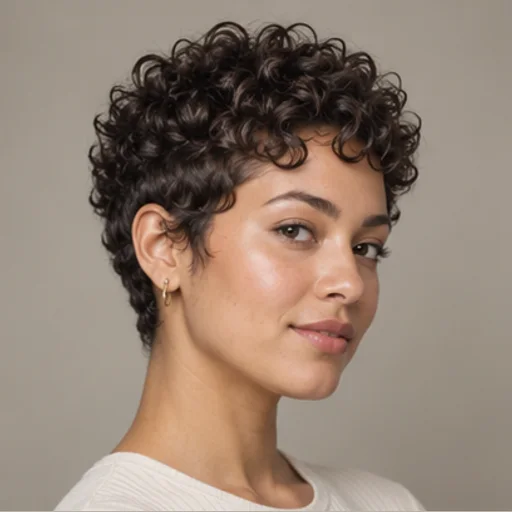
Ear-length curly pixie
Visible curls remain above an exposed ear and short nape. The compact side profile differs from a rounded bob.
Moderate styling effort · Short lengthDetails & styling for Ear-length curly pixie
Choose it for: A short neck and ear area while keeping curl movement on top.
Think about: The top needs enough dry length for the curl groups you want; a very short fringe has fewer pin-back options.
A routine to discuss
- Arrange the top in its usual direction while damp.
- Reset only flattened curl groups once the overall shape is established.
- Check the dry nape and ear outline separately from the top.
Upkeep: The nape may need attention before the curls on top do.
Your salon request: Keep enough dry length for these top curls, expose the ear like this and show me the nape boundary before cutting.
Use this look in my brief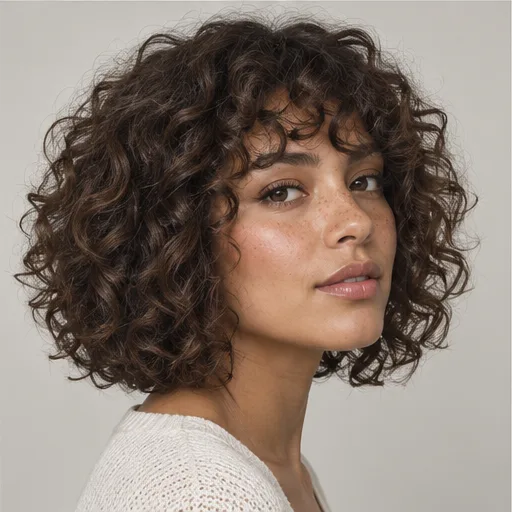
Rounded curly bob with fringe
The dry outline rounds around the cheeks and jaw, with curls forming the fringe. The shortest front curls and the lowest perimeter need separate agreements.
Moderate styling effort · Short lengthDetails & styling for Rounded curly bob with fringe
Choose it for: A contained curly shape with visible framing at the forehead.
Think about: Different curl patterns can spring to different heights. A wet length or stretched curl is not the finished landmark.
A routine to discuss
- Apply your usual styling method in manageable sections.
- Arrange the front curls in their intended direction, allow them to dry fully, then separate only where the shape needs it.
Upkeep: Review the shape in the curl finish you actually wear, including the fringe on a second day.
Your salon request: Keep the lowest dry curl at ___ and the shortest fringe curl at ___. Concentrate fullness around ___ and preserve ___.
Use this look in my brief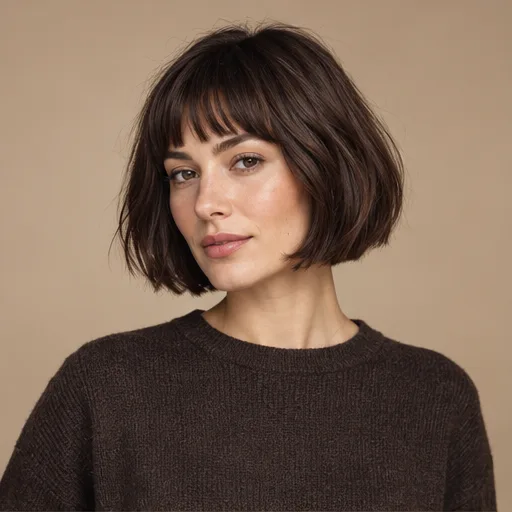
Chin bob with a full fringe
A compact bob and a substantial straight-across fringe create two visible lines. The fringe commitment is separate from the choice of bob length.
Moderate styling effort · Short lengthDetails & styling for Chin bob with a full fringe
Choose it for: An intentionally framed face with a compact perimeter.
Think about: A full fringe concentrates hair at the forehead. Ask about density, growth direction and what happens after sleeping or exercising.
A routine to discuss
- Set the fringe roots in the direction they need while damp.
- Let the sides settle without overworking them; finish the fringe separately from the bob edge.
Upkeep: The fringe can need attention before the bob perimeter needs another cut.
Your salon request: Keep the bob edge at ___ and the fringe at ___ when dry. Explain the simplest way to reset my fringe roots.
Use this look in my briefCompare your options
Polished pixie or crop
A defined side direction, lifted front or carefully arranged curls can make the existing cut feel deliberate. Choose one feature rather than trying to add length everywhere.
Ask about: Can I repeat the shape, and what happens if the front relaxes during the event?
Waved bob with a side comb
A small accessory adds a focal point while the bob remains down. Its weight and fastening matter as much as its appearance.
Ask about: Will this comb hold in my hair without gripping uncomfortably?
Natural curls with a single side detail
Defined or softly separated curls remain the main shape, with a barrette or pin arrangement on one side. The curl pattern does not need to be erased to look formal.
Ask about: How will the accessory sit without stretching or flattening the curls I want visible?
Small half-up or pinned-back sides
Only the pieces that reach are gathered, leaving the lower shape down. This can keep hair off the face without forcing a full bun.
Ask about: Which short pieces should stay loose, and where can the fastening hide?
Sleek tuck or part change
A different part and controlled tuck can change the silhouette with little added equipment. The effect depends on whether the front reaches comfortably.
Ask about: Can the tuck hold through turning, dancing and putting on my outfit?
Choose the feature visible from the front
A rear accessory can be beautiful but may barely appear in the photographs you care about. Consider front, side and back views together. If the outfit has a strong neckline or large earrings, decide whether the hair should expose them or create a softer border.
For a veil or heavier ornament, bring the actual item to a trial. Ask where it anchors and whether someone can remove it without dismantling the hairstyle. Do not assume an attachment method that worked in a long updo transfers to a short bob.
Run a useful short-hair trial
Wear the earrings, glasses and headpiece if relevant. A phone photo in ordinary light can help show whether the shape is clear without relying on perfect salon lighting.
- Start from the length and texture you expect on the event day. Tell the stylist about any haircut planned between the trial and the event.
- Build the intended part, wave or curl finish first; place the accessory after its supporting shape is clear.
- Check the front and both profiles. Look down, turn the head and sit against a headrest if travel is involved.
- Wear the style long enough to notice pressure or slipping. Change the fastening or placement rather than accepting discomfort.
- Agree on a simple repair and a fallback such as removing the accessory or releasing one pinned section.
Adapt instead of forcing a full updo
A short bob may allow sides to meet at the back while the lower layers remain too short for a bun. A pixie can use direction and texture instead. A natural coily crop can keep its rounded outline with a small detail placed where it sits comfortably.
Extensions and added pieces are optional service choices with their own attachment and comfort considerations. If you prefer your actual short length, state that as part of the brief rather than treating it as a problem to hide.
Plan the event-day sequence
Put on clothing that can be removed or changed without dragging across the finished hair, where practical. Keep the accessory, correct fasteners and a reference photo together. Agree who is responsible for attaching and later removing a veil or ornament.
For your repair kit, take only items you know how to use: a spare appropriate clip, a few matching pins or a small amount of the familiar finishing product. A complicated kit cannot replace a clear fallback arrangement.
Take this to your appointment
A starting point for your brief
I want my short length to remain visible. The main feature should be ___, with the accessory at ___. Please test it with my glasses / veil / earrings and show one repair I can manage myself.
Use this in my briefAdapt the wording to your own hair, preferences and history.
Common questions
Do I need extensions for wedding hair?
No. A polished crop, waved bob, natural texture or small pinned detail can be the complete style. Added hair is optional and should serve your preference.
Should I cut it just before the event?
Coordinate with your stylist. A changed fringe or perimeter can alter the fastening and finish tested at the trial, so leave room to check the actual event-day shape.