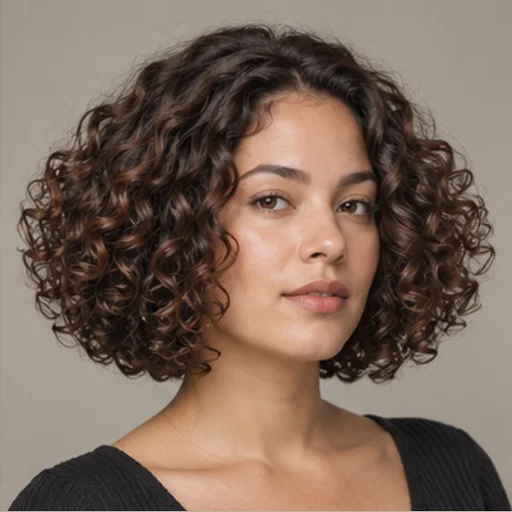
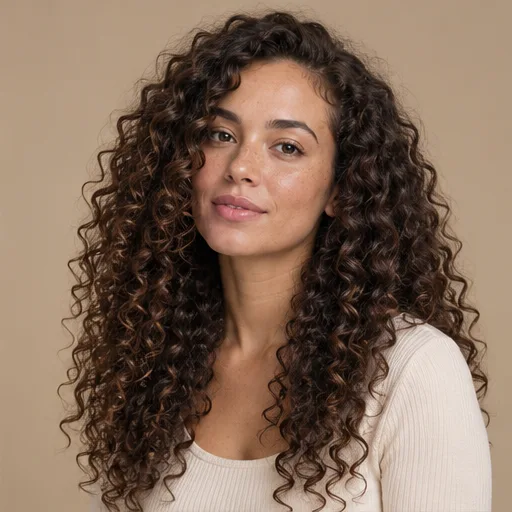
Texture & density
Curly bangs: shape, styling and the grow-out plan
Choose a full curly fringe, a parted fringe or longer face-framing curls. Plan dry length, glasses clearance and a realistic refresh.
Upkeep: The front can need reshaping while the rest of the cut still feels right. Set a fringe-specific plan and avoid reflexively shortening curls on a day when they have sprung up more.
Effort is a planning estimate. The specific option and your routine change the commitment.
The starting point
Curly bangs are a separate group of shorter curls at the front. Their dry position matters more than where they reach when pulled straight. Before cutting, choose whether you want forehead coverage, an opening through the middle or simply shorter curls beside the face.
Compare the visual directions
Concept references for shape and placement. Save the specific look you like and open its details. These are starting points for a consultation.
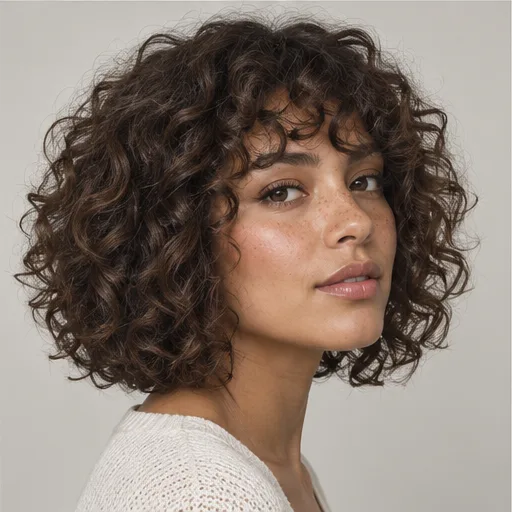
Rounded curly bob with fringe
The dry outline rounds around the cheeks and jaw, with curls forming the fringe. The shortest front curls and the lowest perimeter need separate agreements.
Moderate styling effort · Short lengthDetails & styling for Rounded curly bob with fringe
Choose it for: A contained curly shape with visible framing at the forehead.
Think about: Different curl patterns can spring to different heights. A wet length or stretched curl is not the finished landmark.
A routine to discuss
- Apply your usual styling method in manageable sections.
- Arrange the front curls in their intended direction, allow them to dry fully, then separate only where the shape needs it.
Upkeep: Review the shape in the curl finish you actually wear, including the fringe on a second day.
Your salon request: Keep the lowest dry curl at ___ and the shortest fringe curl at ___. Concentrate fullness around ___ and preserve ___.
Use this look in my brief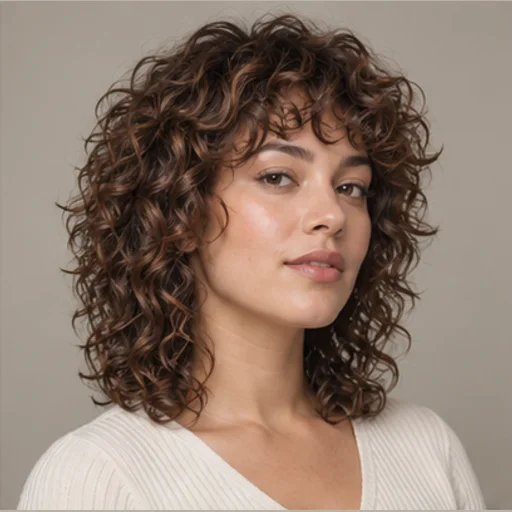
Loose curly shag with fringe
Shorter crown pieces and a textured fringe sit above narrower shoulder-length ends.
Moderate styling effort · Medium lengthDetails & styling for Loose curly shag with fringe
Choose it for: A more broken-up silhouette and emphasis around the crown and eyes.
Think about: The reference has loose curls and waves. Tighter curls need a separate dry-length plan, and short crown layers take time to grow.
A routine to discuss
- Set the fringe opening first.
- Give the short crown its own drying direction instead of pulling every section downward.
- Soften only selected pieces after the hair is dry.
Upkeep: Reshape the fringe separately if the overall length still works.
Your salon request: I want this crown-to-end contrast but the shortest dry layer must still reach ___.
Use this look in my brief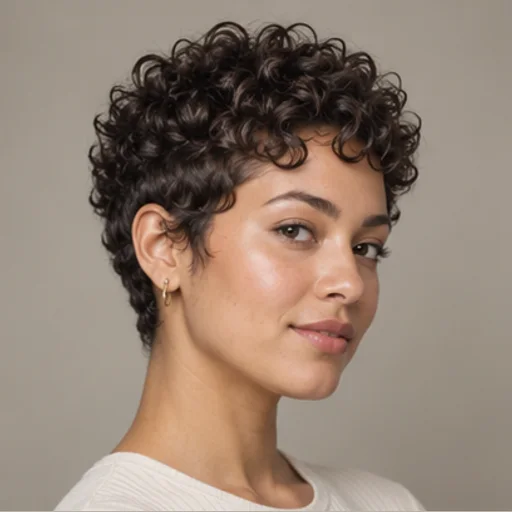
Ear-length curly pixie
Visible curls remain above an exposed ear and short nape. The compact side profile differs from a rounded bob.
Moderate styling effort · Short lengthDetails & styling for Ear-length curly pixie
Choose it for: A short neck and ear area while keeping curl movement on top.
Think about: The top needs enough dry length for the curl groups you want; a very short fringe has fewer pin-back options.
A routine to discuss
- Arrange the top in its usual direction while damp.
- Reset only flattened curl groups once the overall shape is established.
- Check the dry nape and ear outline separately from the top.
Upkeep: The nape may need attention before the curls on top do.
Your salon request: Keep enough dry length for these top curls, expose the ear like this and show me the nape boundary before cutting.
Use this look in my briefCompare your options
Full curly fringe
Curls cross the forehead with a visibly connected front edge. Gaps between curl groups remain part of the texture; full does not mean an opaque straight line.
Ask about: How wide should the section be, and where will its shortest dry curl land?
Parted curly fringe
A soft opening leaves space through the middle while shorter pieces sit to either side. It may cooperate better with an established part, but a persistent cowlick can still control the opening.
Ask about: Can my front curl groups separate where this reference parts?
Long side fringe
A longer front travels sideways into the rest of the cut. This keeps more pin-back options and can be an intermediate step toward a shorter fringe.
Ask about: Which side does it naturally favour, and does the shortest piece reach my clip?
Face-framing curls without bangs
Shorter side curls frame the cheeks while the central forehead remains open. This is useful when you want a change around the face without a forehead section to reset.
Ask about: Where should the front layer begin so it still gathers with the rest?
Agree the fringe while looking at dry behaviour
Bring a photograph taken after your own routine, not only a salon finish. Show front sections that loosen, shrink more or divide around a cowlick. Explain glasses, helmets and whether you touch or move the fringe during the day.
Consider starting with a longer front before approving the final short point. More can be removed after reassessing the dry position; the reverse needs grow-out. Do not try to force every curl to end at the same level if that removes the shape you wanted.
Refresh without restarting everything
Use a small, deliberate reset when the rest of the hair still feels comfortable.
- Separate the fringe gently from the longer hair so you can work on it without pulling the sides forward.
- Lightly dampen the misshapen curls and redistribute a little of your usual product if needed. Avoid repeatedly layering product onto a coated front section.
- Arrange the opening or curl groups where you want them to dry. Do not stretch the curls down to the brow to check the final length.
- Allow to dry, then assess visibility and glasses clearance. Move a curl aside or pin it back if needed rather than reaching for scissors mid-refresh.
Identify the reason it is not sitting right
A central split may be the natural part rather than insufficient styling hold. A heavy fringe may need its width or section depth reconsidered rather than a shorter hem. A front that looks sparse after layering may need more growth, not another round of cutting.
If the fringe repeatedly catches in glasses, discuss a dry endpoint above the frame or longer side pieces that move around it. Take the glasses to the appointment and try looking down and turning your head.
Grow from coverage to an opening
During grow-out, separate the fringe toward the sides as length allows. Small clips or a comfortable headband can help, but they should not pull at the roots. The shortest middle pieces usually determine when the fringe joins a half-up style.
Ask for only the changes that help connect the front with the side layers. A request to tidy the fringe can otherwise restore the original short outline. Describe your new destination explicitly.
Take this to your appointment
A starting point for your brief
I want a ___ curly fringe with a dry endpoint at ___. My front curls divide at ___. I wear ___ and need to be able to pin the fringe away / keep the forehead covered. Please agree on its width and dry shape before cutting.
Use this in my briefAdapt the wording to your own hair, preferences and history.
Common questions
Should curly bangs always be cut dry?
The technique depends on the stylist and the finish being planned. Discuss how the dry result will be checked; one slogan cannot replace assessment of curl pattern, shrinkage and the way you wear it.
Why do my bangs look shorter some days?
Drying direction, curl grouping and the way the front was set can change its apparent length. Compare it after a familiar routine before deciding it needs another cut.