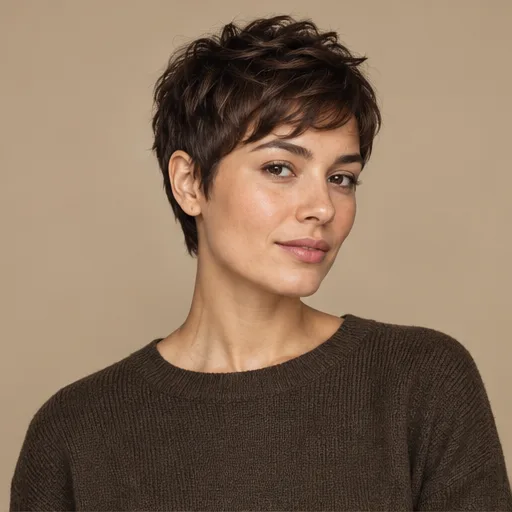
Salon preparation
Grow out bangs: a plan from forehead to face frame
Move from blunt, wispy or curly bangs toward a side sweep, curtain shape or longer face frame. Keep track of the pieces that must catch up.
Upkeep: Ask for grow-out shaping only. State which short pieces must remain untouched and which longer corners can be connected to the sides.
Effort is a planning estimate. The specific option and your routine change the commitment.

The starting point
Growing out bangs is easier to plan by functional checkpoints than by a promised date. First they move aside, then reach a comfortable clip, then join the side layers or tie-back you want. The shortest section controls that transition; repeatedly restoring its old outline keeps you at the start.
Compare the visual directions
Concept references for shape and placement. Save the specific look you like and open its details. These are starting points for a consultation.
Long copper layers with curtain fringe
A parted front frames the face while long layers retain movement below the shoulders.
Moderate styling effort · Long lengthDetails & styling for Long copper layers with curtain fringe
Choose it for: A visible face-framing change while keeping a long back.
Think about: The fringe and the copper shade are separate decisions. You can choose the shape without choosing the color.
A routine to discuss
- Arrange the front opening before it dries.
- Guide the sides into the direction you want to repeat.
- Use a clip or tuck when the shortest front pieces are long enough.
Upkeep: Plan fringe upkeep separately from the long perimeter and any color service.
Your salon request: I like this curtain shape and long back. My shortest front piece should finish at ___, in my own color.
Use this look in my brief
Chin bob with a full fringe
A compact bob and a substantial straight-across fringe create two visible lines. The fringe commitment is separate from the choice of bob length.
Moderate styling effort · Short lengthDetails & styling for Chin bob with a full fringe
Choose it for: An intentionally framed face with a compact perimeter.
Think about: A full fringe concentrates hair at the forehead. Ask about density, growth direction and what happens after sleeping or exercising.
A routine to discuss
- Set the fringe roots in the direction they need while damp.
- Let the sides settle without overworking them; finish the fringe separately from the bob edge.
Upkeep: The fringe can need attention before the bob perimeter needs another cut.
Your salon request: Keep the bob edge at ___ and the fringe at ___ when dry. Explain the simplest way to reset my fringe roots.
Use this look in my brief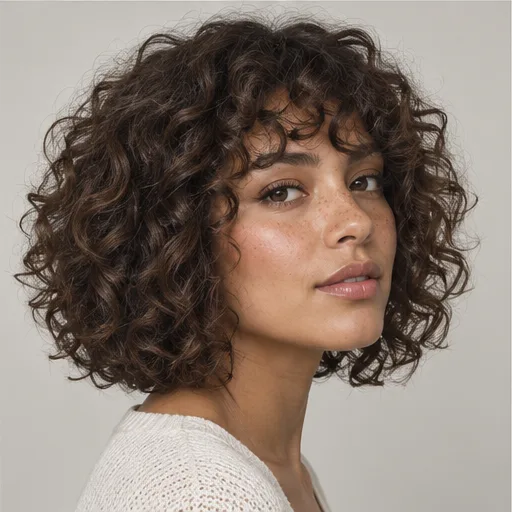
Rounded curly bob with fringe
The dry outline rounds around the cheeks and jaw, with curls forming the fringe. The shortest front curls and the lowest perimeter need separate agreements.
Moderate styling effort · Short lengthDetails & styling for Rounded curly bob with fringe
Choose it for: A contained curly shape with visible framing at the forehead.
Think about: Different curl patterns can spring to different heights. A wet length or stretched curl is not the finished landmark.
A routine to discuss
- Apply your usual styling method in manageable sections.
- Arrange the front curls in their intended direction, allow them to dry fully, then separate only where the shape needs it.
Upkeep: Review the shape in the curl finish you actually wear, including the fringe on a second day.
Your salon request: Keep the lowest dry curl at ___ and the shortest fringe curl at ___. Concentrate fullness around ___ and preserve ___.
Use this look in my brief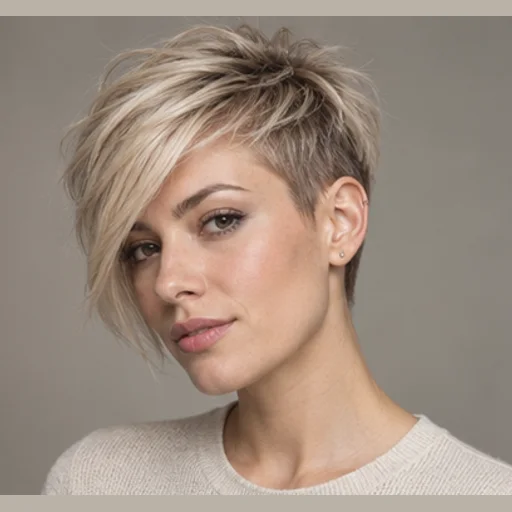
Pixie with a long swept fringe
A long diagonal fringe crosses a much shorter ear area, creating a clear side-to-side contrast.
Moderate styling effort · Short lengthDetails & styling for Pixie with a long swept fringe
Choose it for: A strong front direction with a compact nape and sides.
Think about: The long front can cover an eye or require a clip. Ask how it falls without the polished styling.
A routine to discuss
- Direct the roots toward the sweep while drying.
- Use a small amount of finish through the longer front if wanted.
- Keep a simple pin-back option for days when the fringe is in the way.
Upkeep: Short edges and the long fringe need different maintenance decisions.
Your salon request: I want this long diagonal front with ___ ear exposure. Show the loose, unstyled shape too.
Use this look in my briefCompare your options
Side sweep
Direct the fringe toward the side it naturally accepts. This can move an eye-level front section out of the way before it is long enough to tuck.
Ask about: Is this side compatible with my growth direction, and should the outer corner be connected?
Parted curtain stage
An opening through the middle lets the front move toward either cheek. A very blunt, short fringe may need time before both halves sit comfortably.
Ask about: How do we soften the outer connection while keeping the central pieces growing?
Small clip or barrette
A light clip can hold a selected section rather than dragging the entire front tightly backward. Place it where the shortest pieces reach without strain.
Ask about: Which clip position is comfortable and least likely to slip in my hair?
Longer face frame
Once the fringe connects with the side length, it can become a deliberate front layer. Choose its new endpoint before trimming it into another short fringe.
Ask about: Where should the new front layer begin, and does it join my everyday tie-back?
Name what is growing
Mark the shortest middle section, the side corners and any pieces that were cut further back to make a dense fringe. Those areas may reach the next checkpoint at different times. A full fringe cannot always become a light face frame in one tidy-up.
Tell the stylist plainly: “I am growing the fringe out, so do not reset its short edge.” Agree whether the appointment changes only its connection to the sides or also the rest of the haircut.
Reset the direction early
A front section that has dried pointing forward is often harder to redirect without starting that small area again. Work with the growth direction instead of repeatedly forcing a hard opposite part.
- Choose a part or side sweep while the front is damp enough to rearrange. Keep the rest of the hair out of the way.
- Use fingers or your usual gentle drying method to direct the roots into the chosen opening. Avoid excessive tension against a cowlick.
- Let the direction set before releasing it. Add a small clip only where the shortest pieces reach comfortably.
- For curls, arrange curl groups toward the sides without stretching them into an artificial length. Reassess when dry.
Match the workaround to the obstacle
If hair catches in glasses, moving the piece outward around the frame may be more useful than pinning it directly back. If a helmet flattens a curtain opening, carry a light clip and choose a simple post-helmet arrangement. If a headband presses on a tender area, use a different arrangement rather than tightening it.
A short braid or twist at the front can collect some intermediate lengths, but loose ends are normal. Do not pull harder to force every piece into the same route.
Know when to stop shaping
At each appointment, compare the current length with your next function: tuck, clip, half-up or ponytail. Ask whether removing a corner moves you toward that function or away from it.
Take a photo in your ordinary finish after the appointment. It helps track which section is catching up without measuring daily. Hair growth varies; fixed countdowns do not account for your starting fringe or chosen endpoint.
Take this to your appointment
A starting point for your brief
I am growing my fringe toward ___. Keep the shortest ___ section growing. Only connect the corners if that helps it reach ___. My everyday obstacle is glasses / a cowlick / headwear / ___.
Use this in my briefAdapt the wording to your own hair, preferences and history.
Common questions
Should I trim bangs while growing them out?
Sometimes the side connection benefits from shaping, but trimming the shortest section delays its next length checkpoint. Agree exactly what is being changed.
Can I turn blunt bangs into curtain bangs immediately?
It depends on the starting length and growth direction. You can try an opening, but short central pieces may need time before they lie to either side.