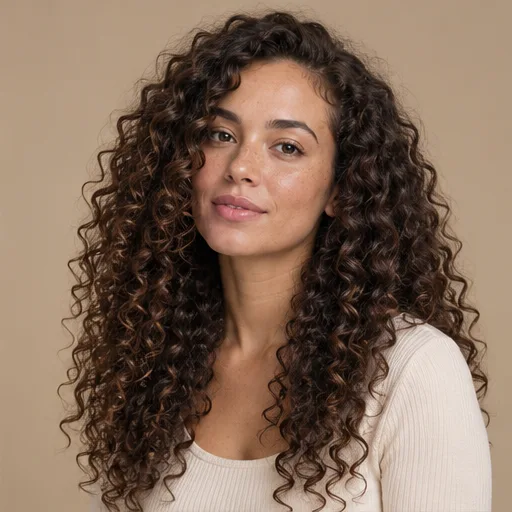
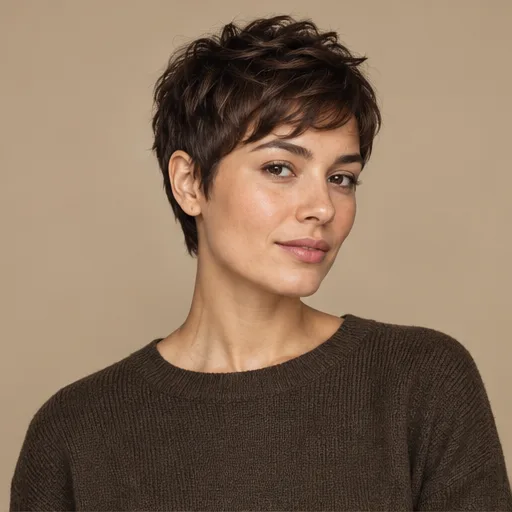
Texture & density
Curly pixies and short crops: keep the curls you want
Compare an ear-length curly pixie, a longer curly crop and a coily taper. Choose the fringe, sides and nape separately.
Upkeep: A crisp nape and temple taper show grow-out sooner than a soft outline. Ask whether a small edge appointment can maintain the cut without shortening the top.
Effort is a planning estimate. The specific option and your routine change the commitment.
The starting point
A short curly cut works best as a map: enough length for the curls you want on top, the amount of hair you want around the ears, and a clearly agreed nape. A curly pixie can keep soft edges, while a localized taper gives a sharper boundary. These are separate decisions, not an automatic package.
Compare the visual directions
Concept references for shape and placement. Save the specific look you like and open its details. These are starting points for a consultation.
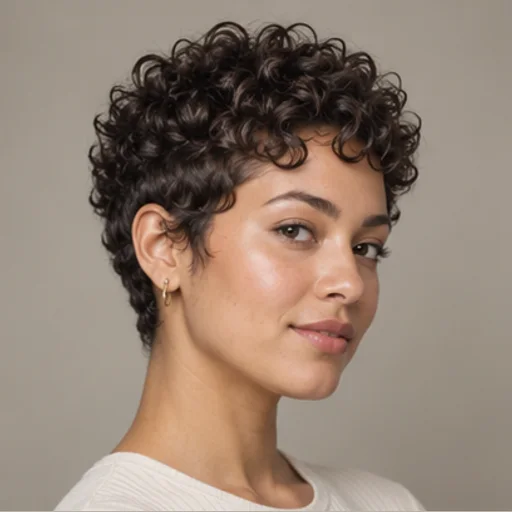
Ear-length curly pixie
Visible curls remain above an exposed ear and short nape. The compact side profile differs from a rounded bob.
Moderate styling effort · Short lengthDetails & styling for Ear-length curly pixie
Choose it for: A short neck and ear area while keeping curl movement on top.
Think about: The top needs enough dry length for the curl groups you want; a very short fringe has fewer pin-back options.
A routine to discuss
- Arrange the top in its usual direction while damp.
- Reset only flattened curl groups once the overall shape is established.
- Check the dry nape and ear outline separately from the top.
Upkeep: The nape may need attention before the curls on top do.
Your salon request: Keep enough dry length for these top curls, expose the ear like this and show me the nape boundary before cutting.
Use this look in my brief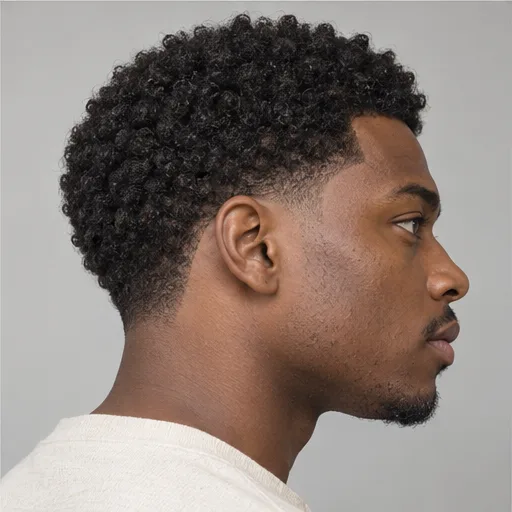
Full coils with a localized taper
Most fullness stays on top while shorter temple and nape sections define the edge. The taper is localized rather than a broad fade up the sides.
Moderate styling effort · Short lengthDetails & styling for Full coils with a localized taper
Choose it for: A natural top with a clearly outlined perimeter.
Think about: The edge may need attention before the top needs shortening. Ask for those services separately.
A routine to discuss
- Arrange or define the top using your usual routine.
- Check the side profile after drying; avoid pulling the edges tight to imitate a shorter haircut.
Upkeep: Agree whether the next visit is an edge tidy, a shape adjustment or both.
Your salon request: Preserve ___ length on top. Keep the taper confined to ___ and leave the shortest finish at ___.
Use this look in my brief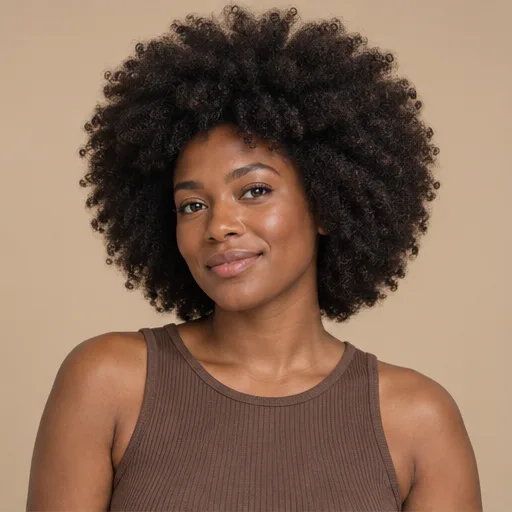
Rounded natural coily outline
The interest is the rounded outer silhouette rather than a defined part or a tapered side. Its dimensions change with shrinkage and the finish you choose.
Moderate styling effort · Medium lengthDetails & styling for Rounded natural coily outline
Choose it for: An even, sculpted shape that keeps fullness around the head.
Think about: A picked-out reference and a defined-coil finish do not have the same outline. Bring a photograph of the finish you wear most.
A routine to discuss
- Prepare and detangle using your normal conditioned routine.
- Shape gently from the roots where needed, leaving the ends alone when they are already sitting well.
Upkeep: Review the cut in a consistent dry finish so uneven shrinkage is not mistaken for a cutting error.
Your salon request: Assess the shape in my usual ___ finish. Keep fullness at ___ and avoid taking the dry outline shorter than ___.
Use this look in my briefCompare your options
Soft curly pixie
The nape is short and the ear area is exposed while curls remain visibly formed on top. The cut reads compact without requiring shaved sides. It is useful when you want curl movement but less hair around the neck.
Ask about: How much dry length does the top need to form the curls I want?
Longer curly crop
A fuller top and some length near the ears give more direction-changing options. This can bridge a bob and pixie, but the front may fall into the eyes until it is pinned or reset.
Ask about: Can the front sit to either side, and which pieces will still fit a small clip?
Coily top with a localized taper
The fullness stays high while the temples and nape are reduced. The outline gives a clear contrast without requiring the whole side to fade high. The clippered part needs its own grow-out plan.
Ask about: Show the highest point of the taper and the amount of fullness left above it.
Rounded short natural shape
Keeping the sides connected to the top creates a more continuous rounded outline. It offers an alternative when the exposed temple contrast is not your goal.
Ask about: Where should the widest part be in my usual, un-stretched finish?
Test the shortest areas before committing
Start with the places that cannot be tucked away after the cut. An exposed ear, a very short nape and a short curly fringe each change the silhouette differently. Use a side photo to agree on those areas rather than approving only the top.
Hair growth patterns are conspicuous at this length. Show the stylist a crown swirl or a front section that points away from your preferred direction. A cut can accommodate that behaviour; it cannot promise that a stubborn section will lie flat without styling.
Keep a curl-length reserve
Explain which curls you want to remain visibly formed. A top that looks long when stretched may dry into a compact shape. Discuss the planned dry finish before choosing a clipper number or a wet measurement.
For mixed patterns, a uniform stretched length may produce an uneven-looking dry outline. Decide whether your priority is the shape in its natural finish or versatility when stretched, and discuss the compromise.
A small-area morning reset
You may not need to redo every curl. Begin with the areas flattened or redirected since the last wash.
- Check the crown, fringe and side you slept on before adding product.
- Lightly dampen the particular curls that need rearranging, using your normal tolerable products only where useful.
- Guide those pieces into the intended direction with fingers. Avoid pulling the fringe straight to make it appear longer.
- Let the reset area dry, then soften or separate a few pieces. If everything needs substantial correction every day, bring that problem back to the haircut consultation.
Plan the exit route
To grow toward a bob, the top and sides often need time while the nape can become long first. Ask to tidy only the lower outline when that fits the destination. Cutting all sections back to the same short silhouette restarts the transition.
If your goal is a fuller rounded natural cut, retain the side sections instead of repeatedly re-establishing a high fade. Photograph the outline you are growing toward so maintenance serves that shape.
Take this to your appointment
A starting point for your brief
I want a short curly shape with ___ fullness on top. Keep the temple transition below ___ and leave the front long enough to ___. My preferred dry curl shape matters more than a fixed wet length.
Use this in my briefAdapt the wording to your own hair, preferences and history.
Common questions
Do I have to shave the sides?
No. Soft scissor-cut sides, short connected curls and a defined taper are different options. Specify which you want.
Can I judge the final length while the hair is stretched?
A stretched measurement helps describe retained length, but not the final silhouette. Agree on the expected dry outline and account for different shrinkage across the head.