Hair care basics
Detangling hair: choose the starting state and work in sections
Build a gentle detangling sequence for straight hair, waves, curls or coils. Compare tools, section size and when to stop instead of pulling through.
Upkeep: Make detangling part of the wash and styling plan. If the process is consistently painful, takes much longer than usual or accompanies new breakage or thinning, reassess rather than forcing the same routine.
Effort is a planning estimate. The specific option and your routine change the commitment.
The starting point
Detangling means separating knots with the least force needed, not passing a brush from scalp to ends until it gets through. Start by choosing an appropriate dampness and a manageable section. Hair texture and condition affect that starting point; one wet-or-dry rule does not suit every head.
Compare the visual directions
Concept references for shape and placement. Save the specific look you like and open its details. These are starting points for a consultation.

Long straight hair with a full edge
Long straight lengths keep a strong, relatively continuous lower silhouette.
Low styling effort · Long lengthDetails & styling for Long straight hair with a full edge
Choose it for: Length, a clear edge and simple gathering options.
Think about: Long hair still takes detangling and drying time. Fine-looking ends may change how full the perimeter appears.
A routine to discuss
- Detangle gently in manageable sections.
- Let the normal part and natural fall guide the finish.
- Gather loosely when wanted, leaving short front pieces outside if needed.
Upkeep: Ask which ends need attention while preserving the side and back length you value.
Your salon request: Keep this long full perimeter and only add front shaping at ___. I need the hair to reach ___.
Use this look in my brief
Soft shoulder waves without a fringe
Loose waves and an open forehead create a connected medium-length shape.
Low styling effort · Medium lengthDetails & styling for Soft shoulder waves without a fringe
Choose it for: An outline that keeps natural bends visible and avoids a separate bang routine.
Think about: Your waves may vary across the head. A photo of one finished day cannot predict every air-dried result.
A routine to discuss
- Set your usual part.
- Let the waves form with minimal unnecessary handling while drying.
- Refresh only the sections that have flattened or changed direction.
Upkeep: Discuss the dry outline and shoulder-level bends at the next cut.
Your salon request: Keep this open front and shoulder movement, with enough perimeter fullness for my density.
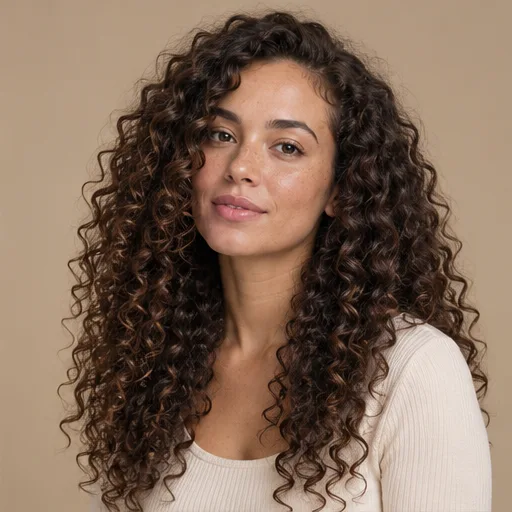
Use this look in my briefLong curls with a retained perimeter
Length remains the dominant feature while selective layers allow curls to sit at different heights. The result depends on where the shortest layers begin.
Moderate styling effort · Long lengthDetails & styling for Long curls with a retained perimeter
Choose it for: Keeping long hair while making room for movement.
Think about: Aggressive layering can make the ends look sparser. Explain which lower sections must keep their weight.
A routine to discuss
- Detangle gently with a method suited to your curl pattern.
- Style in sections so the underneath receives attention, then let the hair dry before deciding where more separation is needed.
Upkeep: Check the balance between the lower perimeter and crown; a trim and a major layer change are different requests.
Your salon request: Keep the bottom at ___ when dry. Begin the shortest useful layers at ___ and retain fullness through ___.
Use this look in my brief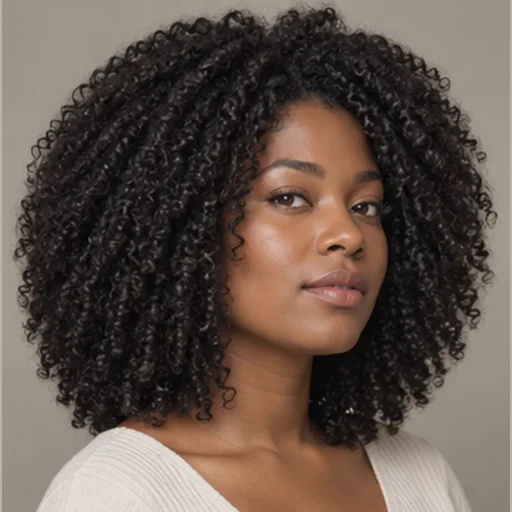
Full shoulder-length coily outline
Dense coils form a broad rounded silhouette with retained length near the shoulders.
Moderate styling effort · Medium lengthDetails & styling for Full shoulder-length coily outline
Choose it for: Fullness through the sides and lower shape in a loose natural finish.
Think about: The shown definition and grouping are part of the finish. Your shrinkage and density determine the dry outline.
A routine to discuss
- Work through manageable sections in your normal conditioning and definition routine.
- Arrange the part and desired side volume before drying.
- Lift or separate selectively once dry, stopping at the fullness you prefer.
Upkeep: Agree whether the shape is assessed in defined, stretched or softer loose texture.
Your salon request: Keep fullness at the sides and a dry endpoint at ___. I usually wear my coils ___.
Use this look in my briefCompare your options
Straight hair after some drying
The AAD advises letting straight hair dry a little before gently using a wide-tooth comb. Avoid treating very wet hair as something to pull through quickly.
Ask about: At what stage can I handle my hair gently without adding a lot of brushing?
Tight curls or textured hair while damp
The AAD advises damp detangling with a wide-tooth comb for this group. Conditioner can help the process when needed. The aim is comfortable separation, not stretching every section straight.
Ask about: Which section size lets me work through tangles without tugging?
Fingers for initial separation
Fingers can locate a knot and separate surrounding strands before a comb reaches it. This does not mean forcing apart a compact mat.
Ask about: Is this an ordinary small tangle or does it need patient professional help?
A tool you can control
A wide-tooth comb is a useful starting option. Handle shape and grip matter if a tool is difficult to hold; a tool that catches or hurts is not helping just because it is marketed for your texture.
Ask about: Can I grip it comfortably and stop immediately when it meets resistance?
Use the source distinction without turning it into a rigid rule
The AAD’s handling recommendations distinguish straight hair from tight curls or textured hair. Read its guidance at aad.org source. For waves or mixed patterns, observe what allows gentle separation in your own hair and ask a qualified stylist if you are unsure.
Your starting state also includes product buildup, an installed style, recent services and the location of the tangles. A knot at the nape may need its own small section rather than another full brush-through of the whole head.
Work from the free ends toward the remaining tangle
This sequence is for ordinary tangles, not severe matting.
- Separate the hair into sections small enough to control. Clip the rest away loosely so it does not rejoin the area you are working on.
- Support the section above the tangle so the scalp is not taking every movement. Start near the free ends below the knot.
- Use fingers or a wide-tooth comb gently through the already-looser area. When you meet resistance, stop and make the working section smaller.
- Move gradually upward as each lower area separates. Do not drag a blocked tool downward from the roots.
- If appropriate for your routine, use conditioner to help separation, following its directions. Avoid repeatedly adding unrelated products in the hope that force will become safe.
- Once the section is comfortably clear, keep it separate from the unworked hair and continue. Stop if the task becomes painful or you cannot make progress gently.
Check why the same knot returns
A nape tangle may recur where hair rubs against a collar or gathers in a tie. Ends may wrap around each other after a particular style. Note the location and what happened before it formed so you can change that part of the routine.
Try a less complicated overnight arrangement, a different tie position or smaller wash-day sections as appropriate. This is a practical styling experiment, not a diagnosis of hair damage. Avoid daily repeated brushing solely to reach an arbitrary stroke count.
Know when this is no longer a basic styling task
Compact matting, pain or an installation you cannot remove safely may need an experienced professional. If you cannot tell where your natural hair ends, do not guess with scissors. New thinning, persistent scalp symptoms or ongoing breakage deserve qualified assessment.
The goal is manageable, comfortable care. A routine that depends on enduring pain or repeatedly snapping through resistance needs to change; buying a stronger brush is not a complete answer.
Take this to your appointment
A starting point for your brief
Detangling is difficult at ___, especially after ___. I usually start with the hair ___. Please demonstrate one manageable section and a tool or grip I can use gently, and help me identify when to stop.
Use this in my briefAdapt the wording to your own hair, preferences and history.
Common questions
Should everyone detangle soaking-wet hair?
No. The AAD distinguishes straight hair, which should dry somewhat first, from tight curls or textured hair, for which damp combing is advised. Handle either gently and adapt the routine to your hair.
Should I pull the brush through a stubborn knot?
No. Stop, separate the working section and address the knot gently from the free ends. Get help with compact matting or pain rather than increasing force.
Sources & further reading
Sources accessed 3 October 2026. These publishers have not reviewed this guide. Our editorial standards explain our method.