Haircuts
Blunt, angled, stacked or layered: read the bob shape
See what separates a blunt bob, an angled front, a stacked back and a layered bob. Bring a useful front, side and rear reference.
Upkeep: Graphic outlines and short napes make small changes easier to notice. Agree on the point at which the shape needs attention rather than accepting a universal trim interval.
Effort is a planning estimate. The specific option and your routine change the commitment.
The starting point
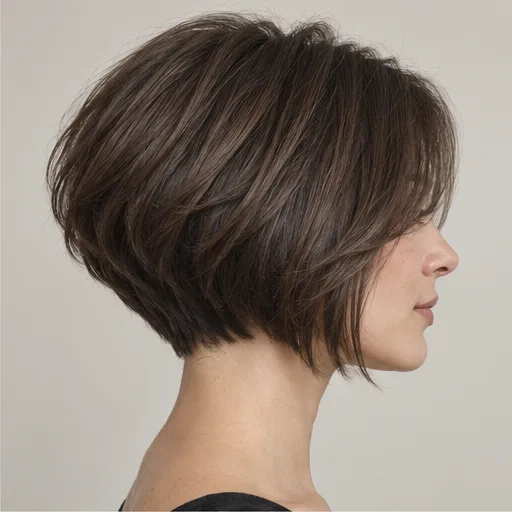
Blunt describes an edge, angled describes the change from back to front, and stacked describes shorter graduated layers building shape at the back. These features can overlap. Choose the perimeter and the back construction separately so your stylist knows which part of a bob photo you actually want.
Compare the visual directions
Concept references for shape and placement. Save the specific look you like and open its details. These are starting points for a consultation.
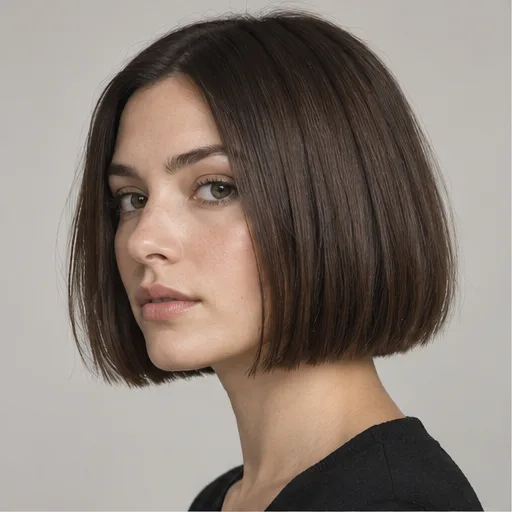
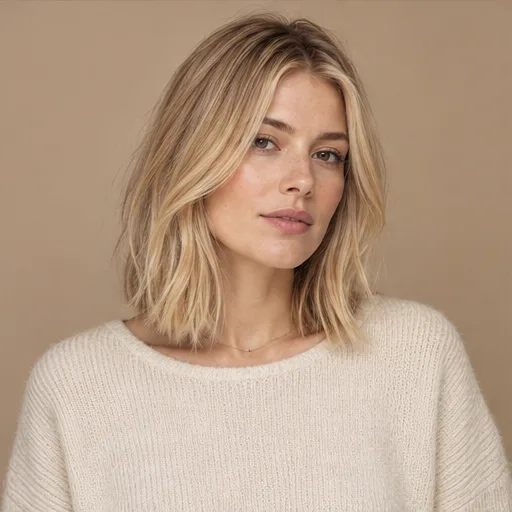
A level jaw-length bob
The edge stays level from front to back, making the perimeter the strongest feature. It gives a different outline from a stacked or forward-sloping bob.
Moderate styling effort · Short lengthDetails & styling for A level jaw-length bob
Choose it for: A clear edge you can wear straight or with your natural bend.
Think about: A tucked side changes the visible length. Ask to see both tucked and untucked before choosing the final landmark.
A routine to discuss
- Choose the part before drying so the edge settles in the direction you wear it.
- Dry the roots first, then guide the ends down with a brush or your fingers rather than repeatedly turning them under.
Upkeep: Refresh when the line loses the edge you wanted; do not confuse a tidy perimeter with adding layers.
Your salon request: Keep a level dry edge at my ___. Preserve ___ density at the ends and show how it sits tucked behind my ears.
Use this look in my brief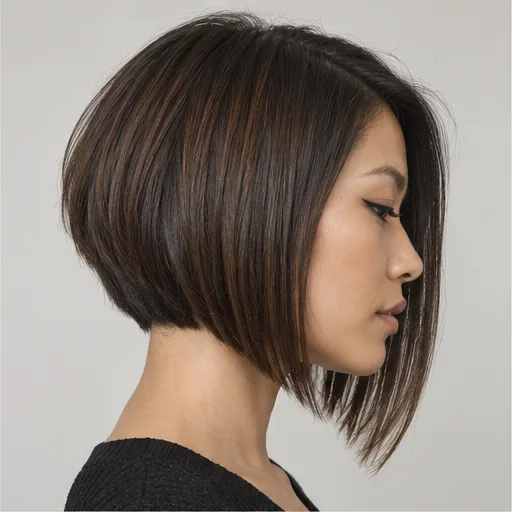
Longer-front angled bob
A shorter back slopes toward longer front pieces. The diagonal outline comes from the length difference, while stacking at the back is a separate choice.
Moderate styling effort · Short lengthDetails & styling for Longer-front angled bob
Choose it for: Keeping a face-framing front while opening the nape.
Think about: The longest front pieces may still fall out of a ponytail. Check the shortest back section, not just the front, for tying up.
A routine to discuss
- Set your usual part and dry the nape in its growth direction.
- Guide front pieces forward or tuck one side; compare both finishes before using extra heat.
Upkeep: Ask whether the next cut will restore the slope or move toward a level lob.
Your salon request: I want a visible front-to-back slope, with the front at ___ and back at ___. Please discuss graduation separately.
Use this look in my briefRounded graduated back
Shorter stacked layers support a rounded shape above the nape. This back view is the useful reference: a front photograph alone cannot show the weight placement.
Moderate styling effort · Short lengthDetails & styling for Rounded graduated back
Choose it for: Fullness concentrated behind the head rather than a heavy level edge.
Think about: Strong nape growth patterns can change how the shortest layers sit. Discuss the back in an ordinary dry finish.
A routine to discuss
- Dry the roots at the back with controlled direction.
- Use a small brush only where you want curvature; leave the ends soft rather than making every section into a curl.
Upkeep: The rounded back can need reshaping before the front feels long. Agree what should grow and what should stay defined.
Your salon request: Place the fullest part of the back at ___. Keep the nape ___ and tell me how much styling that curve needs.
Use this look in my brief
Chin bob with a full fringe
A compact bob and a substantial straight-across fringe create two visible lines. The fringe commitment is separate from the choice of bob length.
Moderate styling effort · Short lengthDetails & styling for Chin bob with a full fringe
Choose it for: An intentionally framed face with a compact perimeter.
Think about: A full fringe concentrates hair at the forehead. Ask about density, growth direction and what happens after sleeping or exercising.
A routine to discuss
- Set the fringe roots in the direction they need while damp.
- Let the sides settle without overworking them; finish the fringe separately from the bob edge.
Upkeep: The fringe can need attention before the bob perimeter needs another cut.
Your salon request: Keep the bob edge at ___ and the fringe at ___ when dry. Explain the simplest way to reset my fringe roots.
Use this look in my brief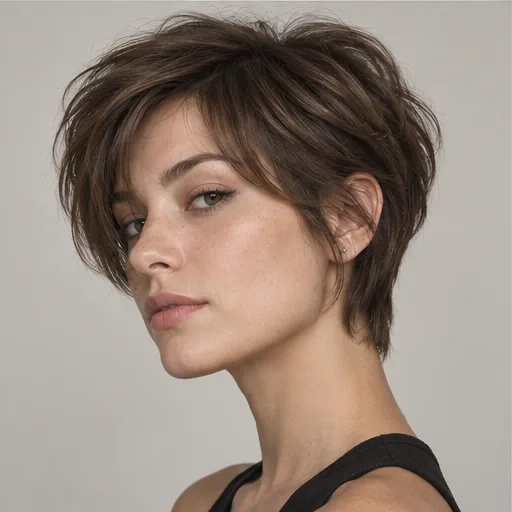
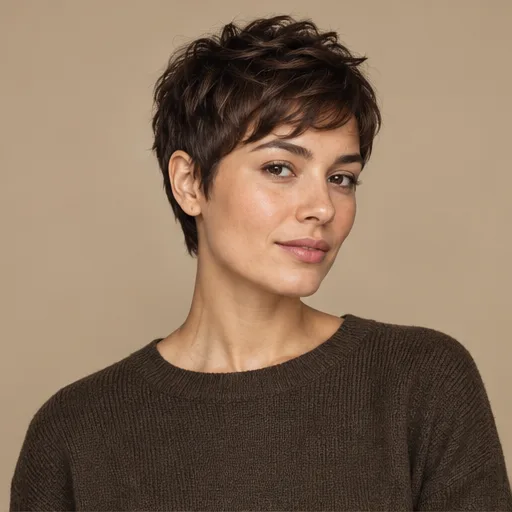
Soft ear-length bixie
Longer pixie sections overlap around the ears and nape, creating a softer outline than a close crop. The fringe can remain separate from the side length.
Moderate styling effort · Short lengthDetails & styling for Soft ear-length bixie
Choose it for: Short hair with some pieces to tuck and move.
Think about: Hair that kicks outward around the ears may need a deliberate finish. Extra length does not automatically make the cut easier.
A routine to discuss
- Choose whether the front falls across or away from the face.
- Work a small amount of styling product through the ends with fingertips, keeping the root area light.
Upkeep: Review the outline at the ears and nape as it grows toward a bob.
Your salon request: Leave enough length at the ears to ___, keep the nape ___ and make the fringe finish at ___.
Use this look in my brief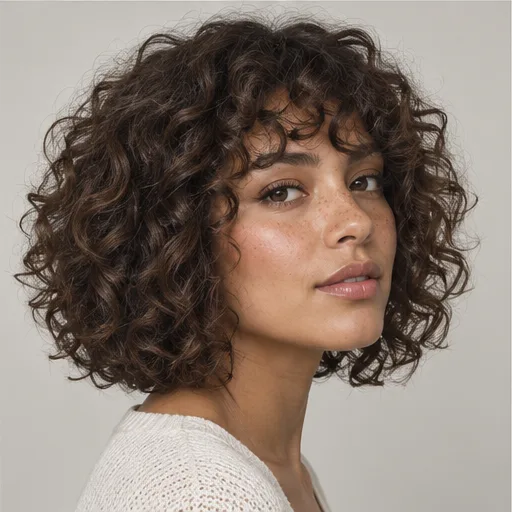
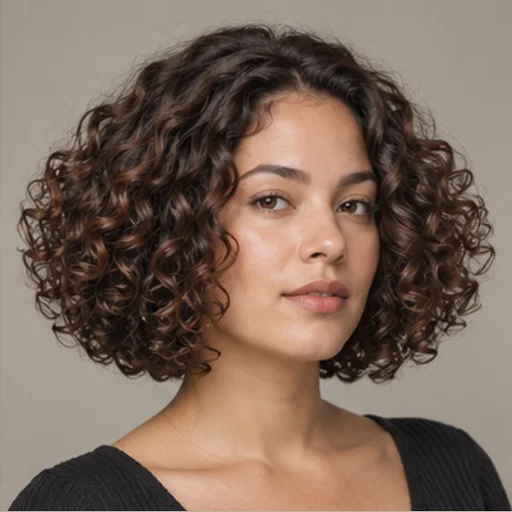
Rounded curly bob with fringe
The dry outline rounds around the cheeks and jaw, with curls forming the fringe. The shortest front curls and the lowest perimeter need separate agreements.
Moderate styling effort · Short lengthDetails & styling for Rounded curly bob with fringe
Choose it for: A contained curly shape with visible framing at the forehead.
Think about: Different curl patterns can spring to different heights. A wet length or stretched curl is not the finished landmark.
A routine to discuss
- Apply your usual styling method in manageable sections.
- Arrange the front curls in their intended direction, allow them to dry fully, then separate only where the shape needs it.
Upkeep: Review the shape in the curl finish you actually wear, including the fringe on a second day.
Your salon request: Keep the lowest dry curl at ___ and the shortest fringe curl at ___. Concentrate fullness around ___ and preserve ___.
Use this look in my brief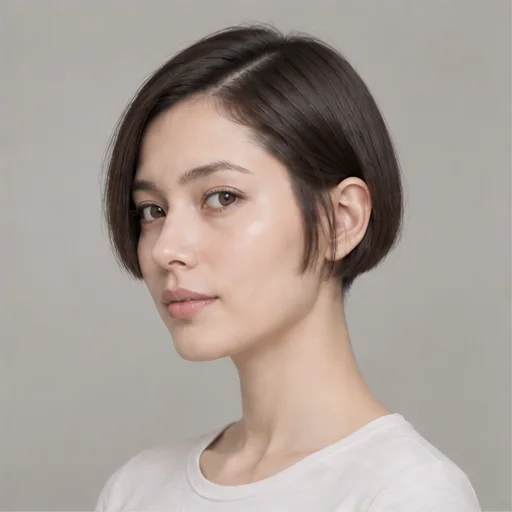
Above-jaw micro bob
A high compact perimeter exposes the lower jaw and much of the neck.
Moderate styling effort · Short lengthDetails & styling for Above-jaw micro bob
Choose it for: A much shorter boundary than a chin-length bob.
Think about: The front may no longer tuck. Growth direction and texture determine whether this high edge sits smoothly.
A routine to discuss
- Arrange the natural part and dry direction.
- Check the exposed ear and nape outline without forcing a tuck.
Upkeep: The graphic edge may need reshaping before a longer bob would.
Your salon request: I like this high edge, but agree the endpoint at ___ and show how it sits in my natural finish.
Use this look in my briefCompare your options
Blunt perimeter
The lower edge reads as a clear continuous line. It can preserve a solid-looking border, although the interior may still be adjusted. Choose this for the edge itself rather than assuming the whole cut has no layers.
Ask about: What internal work would you use while keeping the visible perimeter strong?
Angled or A-line outline
The front is longer than the back. A gentle angle keeps the transition subtle; a steep one makes the side profile more directional. The back can be solid or graduated.
Ask about: Show the difference between front and nape, and whether the front still tucks behind the ear.
Stacked or graduated back
Shorter lengths at the lower back build into longer hair above, creating a shaped rear profile. The visible roundness is a separate feature from the longer front.
Ask about: Where is the fullest point at the back, and how close is the nape cut?
Layered bob
Layers create internal movement and reduce an entirely solid silhouette. Placement matters: crown movement, lightened sides and textured ends are different outcomes.
Ask about: Which area loses weight and how will the edge look when I air-dry?
French-inspired bob
Usually a compact jaw-area shape paired with a fringe, but the name does not fix its exact length or construction. Compare the actual fringe, cheek exposure and ear-tucking room.
Ask about: Which of these visible features matters more than the label?
Bixie between bob and pixie
A shorter, more layered outline keeps softness around the ears while losing much of a bob perimeter. It provides a different grow-out route and may require more direction-setting in the morning.
Ask about: How much remains around the ear and crown, and how does the rear differ from this bob photo?
Above-jaw micro bob
A higher perimeter exposes more of the jaw and neck than a chin-level bob. The remaining front length may no longer tuck, and the ear area becomes a major part of the outline.
Ask about: Show the dry endpoint relative to my cheekbone and jaw, and whether the front can tuck.
Use three photographs for three decisions
A front view shows the fringe and how the cut sits beside the face. A profile reveals the angle and ear clearance. A rear view shows nape exposure, stacking and where the back is fullest. If you only have a front image, ask to agree on the unseen back before the service.
Try saying “the edge in this photo, the front length in that one, and a softer back than either.” Your stylist can then explain whether the combination works with your hair. A collage should open a discussion rather than become an impossible exact-copy instruction.
Place the line on your own landmarks
Use the cheek, jaw, neck and collarbone as the starting vocabulary. The same measured length looks different on different neck lengths, curl patterns and shoulder positions. Turn your head, look down and try tucking the front before approving a shortest boundary.
A high collar or scarf can push a bob outward. If the bottom falls directly on the shoulder, that bend may be part of the daily shape. Decide whether you enjoy it, will style it, or prefer a perimeter clear of that contact point.
Choose the normal finish before the cut
A polished straight reference displays edges and angles clearly. Waves break up that line; curls can make an angled shape appear rounder. Discuss what should remain visible in your everyday finish.
For finer-looking ends, ask how much material the proposed layers remove from the edge. For dense hair, locate the bulky area instead of asking for everything to be thinned. A precise question about the back or sides gives a more useful target.
Maintain the intention
After a few normal washes, inspect the front, side and back. If the front feels too long but the back still works, say that. If stacking has grown into an unwanted ledge, discuss how to soften or reshape that specific area.
To grow a stacked bob longer, the short back layers need time to catch up. Repeatedly restoring the original stack may work against that goal. Ask which sections should be left alone and which edge can be tidied while you transition.
Take this to your appointment
A starting point for your brief
I like the ___ perimeter and the ___ front-to-back angle. At the back I want ___ fullness and ___ nape exposure. My usual finish is ___. Please show how those separate choices fit together.
Use this in my briefAdapt the wording to your own hair, preferences and history.
Common questions
Are angled and stacked bobs the same?
No. An angled bob changes length from back to front. Stacking describes the graduated construction at the back. One cut may use both.
Does blunt mean no layers anywhere?
Not necessarily. The visible edge can remain blunt while some interior weight is adjusted. Discuss the actual construction and what the perimeter should look like.